Supported Accommodation Software

What Supported Accommodation Software Actually Needs to Do


Supported accommodation is not a lighter version of children's residential care. It is a different service model, with different regulatory requirements, different documentation needs, and a fundamentally different relationship between the provider and the young people it supports. Software designed for residential care, however well-designed, cannot simply be applied to supported accommodation and expected to work. The sector deserves a platform built for what it actually does.


A significant proportion of supported accommodation providers are currently making do with systems designed for something else. The gap between what those systems provide and what a well-run supported accommodation service actually requires is not trivial, and it has practical consequences for compliance, quality, and the capacity to demonstrate both.


A Regulatory Framework That Requires Purpose-Built Tools


Since the introduction of Ofsted registration for supported accommodation services in England and the national standards that accompanied it, providers have been operating under a regulatory framework with specific and enforceable expectations. The national standards for supported accommodation set out requirements around the quality of support, the assessment and management of risk, the involvement of young people in their own plans, and the governance and leadership of the service.

These requirements generate documentation obligations that differ meaningfully from those in registered children's homes. The regulatory language is different. The inspection framework applies different judgement criteria. Templates designed for the Children's Homes Regulations 2015 do not map cleanly onto the supported accommodation standards, and records produced in them do not meet the standard Ofsted expects to see.

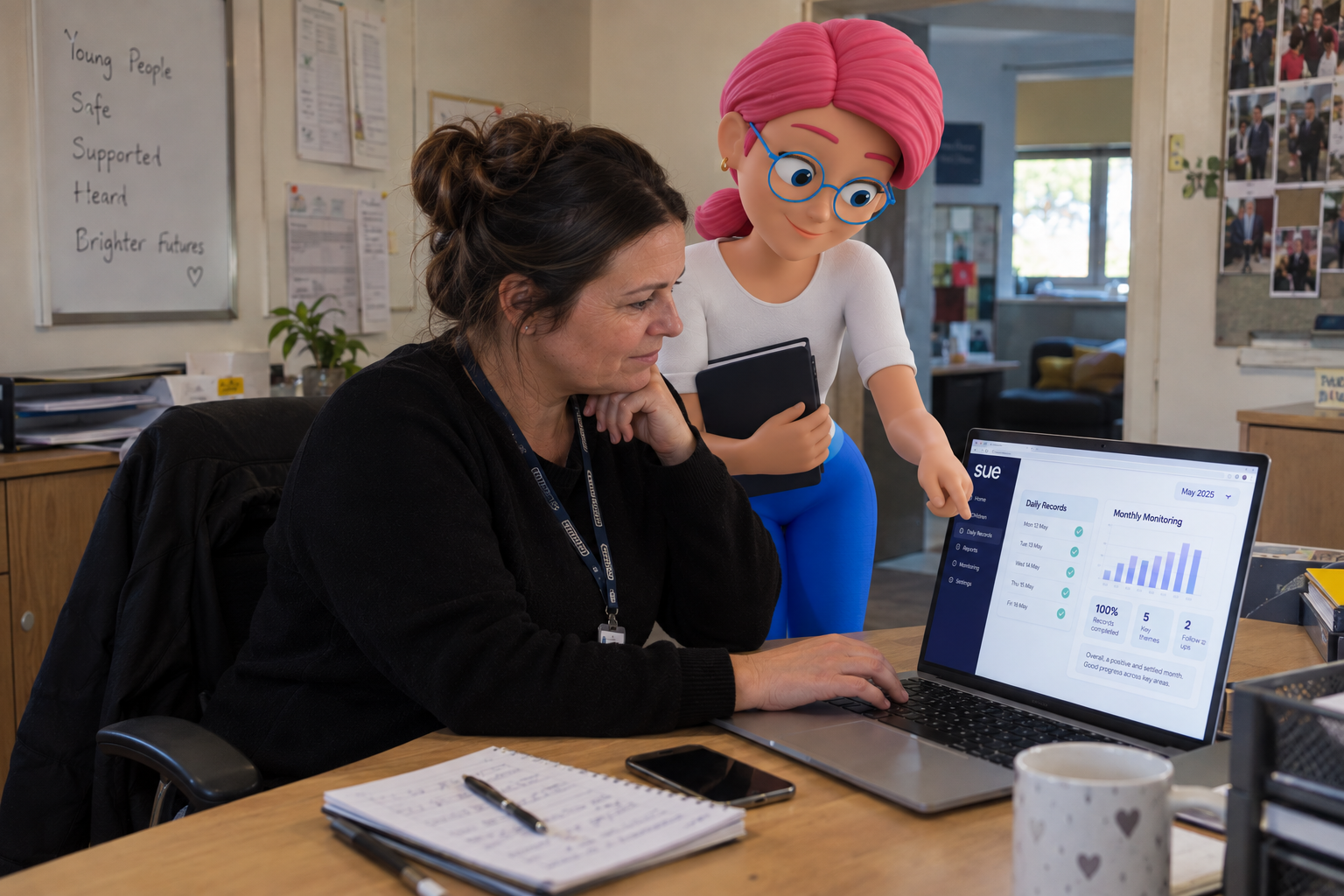
Sue Solutions has developed its supported accommodation software alongside the sector's evolving regulatory framework — working with providers as the requirements took shape, and building the platform's compliance architecture around what the standards actually require. That is a different proposition to a residential care platform with a supported accommodation add-on.


Recording Support Work, Not Just Incidents


The core work of supported accommodation is fundamentally different from residential care in ways that should shape every aspect of how software records it. In a registered children's home, the record is necessarily weighted toward what happens — incidents, meetings, interventions, observations across a continuous environment. In supported accommodation, the most important part of the record is often what changes.


A young person who could not manage a weekly budget six months ago, now managing it independently. Someone who avoided their housing appointments, now attending alone. Progress toward goals that were set at the start of the placement and that define what the service is for. This is the substance of good supported accommodation practice, and it requires recording tools that capture movement and development, not just events.


Good supported accommodation software supports goal-based recording, structured key work session notes that are oriented toward progress rather than incident, and longitudinal summaries that give managers, inspectors, and commissioners a coherent picture of each young person's journey through the service.


Dispersed Provision and Real-Time Accessibility


The operational model of supported accommodation is frequently dispersed. Young people live in individual flats, shared houses and community properties spread across a geographic area. Support workers travel between sites. Providers may operate across multiple localities with a management structure trying to maintain oversight of a physically distributed caseload.


Software that works for this model must be accessible from any location, must aggregate the picture across multiple sites without requiring manual collation, and must give managers and responsible individuals complete visibility without depending on individual sites to produce and submit reports separately. Sue Solutions supports providers operating dispersed provision across the UK, giving management and governance a real-time view of the whole organisation.


Risk Management in an Independent Living Environment


Risk management in supported accommodation is more complex in certain respects than in residential care, because the environment cannot be continuously monitored. Young people are living independently. Support workers visit rather than reside. The risk profile of each young person changes between visits, in circumstances the provider cannot directly observe.


Supported accommodation software needs to reflect this reality. Risk assessments must be dynamic and regularly reviewed. Escalation pathways need to be clear and accessible to lone workers who may need to raise a concern from a remote location. The record of risk management over time must demonstrate not just what the initial assessment said, but how it has evolved as the young person's circumstances have changed.


Pathway Planning as an Active Function


The purpose of supported accommodation is transition. Every placement has an end point, and the measure of the service's quality is what the young person is capable of when they reach it. Pathway planning is the structured process that defines what that end point looks like and maps the journey toward it. It deserves more than a single form completed at the start of the placement.


Good supported accommodation software treats pathway planning as a live process. Plans are regularly reviewed, updated as circumstances change, and directly linked to goal-based recording that captures progress against them. When a young person is ready to move on, the pathway plan provides a coherent account of their development through the service, and it follows them. That continuity is what the sector has too often been without.

Frequently Asked Questions


What is supported accommodation software?

Supported accommodation software is a care management platform designed specifically for providers running supported accommodation services for young people, typically aged 16 to 17. It manages support plans, risk assessments, key work session records, pathway planning, compliance documentation and, in the best platforms, financial management. Purpose-built supported accommodation software reflects the national standards and Ofsted inspection framework for this sector rather than being adapted from residential care or adult care software.


What should supported accommodation software include?

At a minimum, supported accommodation software should include goal-based support planning, dynamic risk assessment tools, key work session recording, pathway planning, Ofsted-aligned compliance documentation and management oversight tools that surface gaps in real time. Financial management integration and multi-site accessibility are also important for growing providers and those operating dispersed provision.


How is supported accommodation software different from children's residential care software?

While both serve the children's care sector, supported accommodation software is structured around a support-based rather than residential model. Records focus on progress and development toward independence. Risk management tools reflect an independent living environment where risk profiles change between visits. And the compliance architecture maps to the national standards for supported accommodation rather than the Children's Homes Regulations.


Sue Solutions has spent over eleven years building software for children's residential homes and supported accommodation providers across the UK. To find out how the platform supports more than 1,000 services, visit suesolutions.co.uk.


Book your free Sue V2 demo today

Hands forming a heart shape against a bright sky outdoors
May 5, 2026
The transition from care into supported accommodation is a critical point in a young person's life. Good supported accommodation software helps make the systems around that transition work better.
Person arranging small wooden house models on a desk beside a calculator and laptop keyboard
April 28, 2026
Not all children's residential care software is built equally. This guide covers what actually matters when you evaluate your options and the questions worth asking before you commit.
Hand writing a checklist in a notebook with a pen on a desk
April 21, 2026
Admin burden in children's homes is structural, not inevitable. The right children's residential care software removes the waste without removing the rigour. Here is how.
Blue “COMPLIANCE” text with arrows to words like law, rules, standards, policies, regulations, and transparency.
April 14, 2026
Ofsted inspections test documentation as much as they test care quality. Here is how the right children's residential care software changes your compliance position from day one.
Hands sorting through folders in a beige file organizer on a desk
April 7, 2026
Safeguarding records in children's homes are evidence, not admin
Scrabble tiles spelling “BUDGET” on a wooden desk with binder clips and sticky notes
March 31, 2026
Inadequate systems redistribute cost in ways that are hard to see and harder to reverse. Here is what running without proper children's residential care software costs a home.
Hands cupped around glowing people icons and a clock, symbolizing teamwork and time management.
March 17, 2026
Ofsted inspects supported accommodation providers under a specific framework with enforceable expectations. Here is how the right supported accommodation software helps providers meet them.
Hand on a laptop showing a colorful spreadsheet with multiple columns of data
March 10, 2026
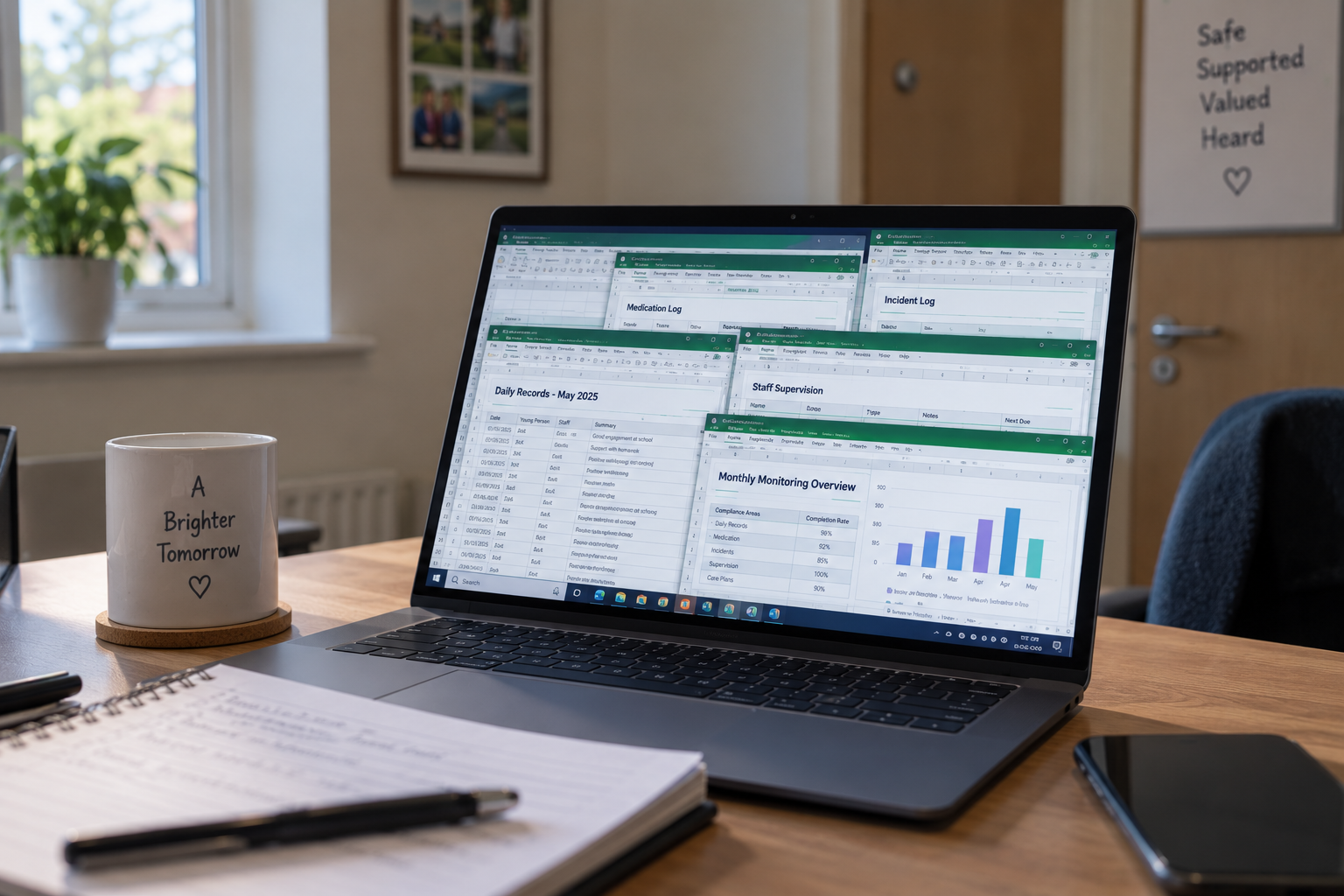
Spreadsheets carry more safeguarding and compliance risk than most supported accommodation providers realise. Here is what the move to proper software changes and why it matters now.
The word
March 3, 2026
Registered Managers and RIs: discover which compliance features actually matter in children’s residential care software, what red flags to avoid, and why platform architecture matters more than a features list.
Hand writing a checklist in a notebook beside a yellow sticky note and computer keyboard
February 10, 2026
Learn how to choose software that enhances governance & compliance for responsible individuals in children's residential homes. Get started today!
Show More