What to Look for in Children's Residential Care Software

Choosing children's residential care software is one of the most important operational decisions a home can make

Choosing the right children's residential care software is one of the most consequential operational decisions a registered home makes. The platform shapes how records are kept, how compliance is maintained, how managers oversee their teams, and how the home holds up under inspection pressure. Yet most providers approach the decision with limited information, and the market offers a wide range of options that differ significantly in quality, focus, and fit for purpose.

This guide covers what actually matters when evaluating children's residential care software and why the questions you ask before committing determine the quality of the system you end up with.


Built for This Sector, Not Adapted to It


The single most important question to ask any software provider is whether the platform was built for children's residential care or adapted from something else. Adult care software, generic case management systems, and multi-sector platforms can look credible in a demonstration but fall short in practice because they were not designed around the regulatory framework that children's homes operate within.

The Children's Homes (England) Regulations 2015, the Quality Standards, and Ofsted's inspection framework create documentation requirements that have no equivalent in other care settings. Placement plans, Reg 44 monitoring records, delegated authority documentation, missing episode logs and restraint records are specific instruments with specific expectations. A platform that approximates these rather than reflecting them produces records that require constant manual adjustment.


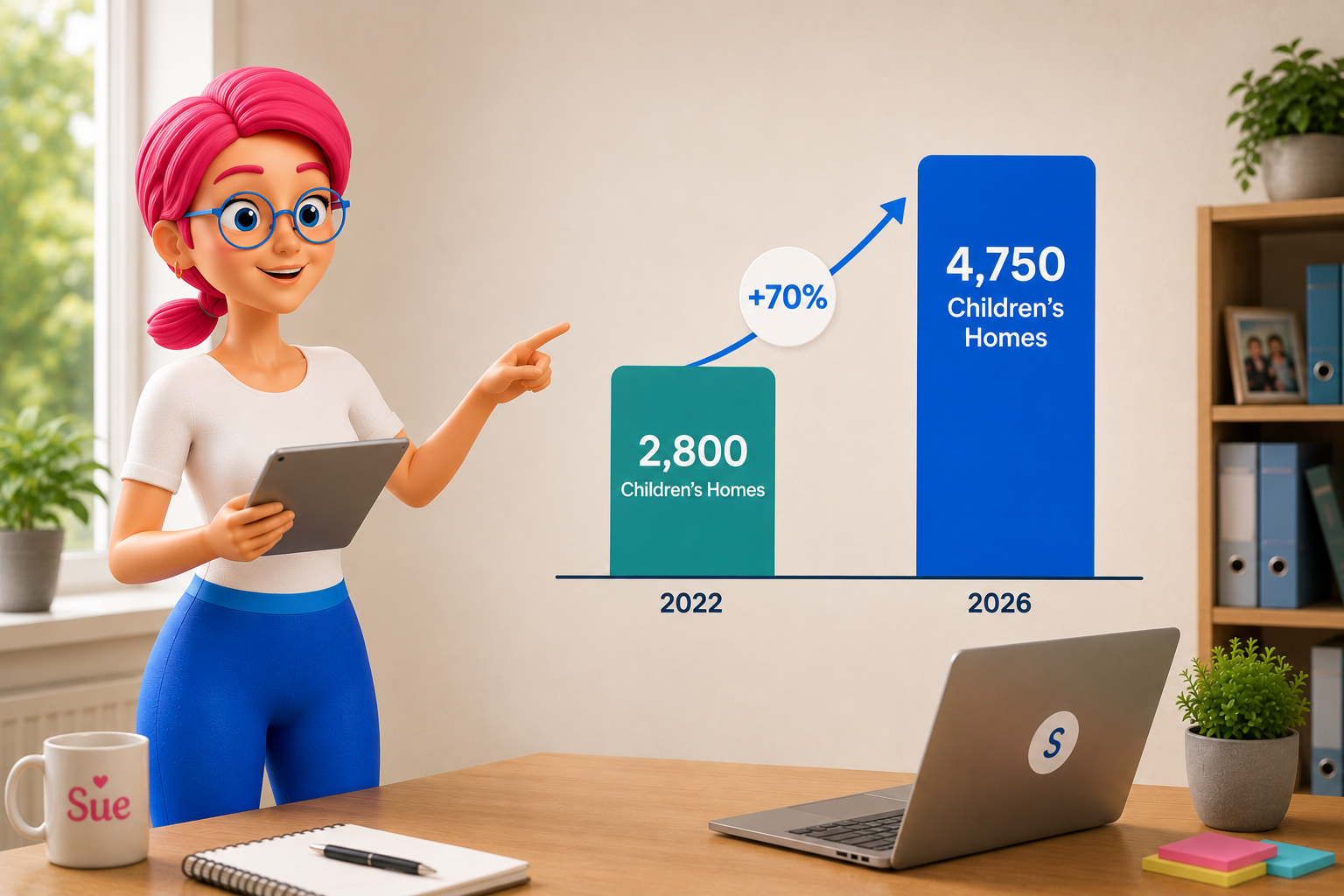
Sue Solutions was designed exclusively for children's residential homes and supported accommodation. Built by a team with professional backgrounds in the sector, it has been refined across more than 1,000 homes over eleven years. That specificity is evident at every level of how the platform works.


Ease of Use Is a Safeguarding Consideration


Children's homes run around the clock under significant pressure, with staff moving between demanding situations and documentation requirements in close succession. When a platform is difficult to navigate, records are completed later and less accurately. When templates are poorly designed, the quality of documentation varies across the staff team. When the system feels like an obstacle, people find ways round it.

Ease of use in children's residential care software is not a design preference. It is a safeguarding issue. The best platforms are the ones where completing a record correctly is the natural outcome of completing it at all. During any demonstration, watch how a support worker would complete a daily log, an incident record, and a medication entry. The process should be logical, prompt-led and considerably faster than the paper equivalent.

Compliance Built Into the Workflow, Not Around It


There is a meaningful difference between compliance tools that are built into a platform and compliance tools that have been added to one. The former shapes how every record is produced. The latter creates a secondary process that sits alongside the record and is used inconsistently.

In well-designed children's residential care software, meeting the regulatory standard is the path of least resistance. Mandatory fields are signalled before a record can be submitted. Risk assessments prompt review at defined intervals. Managers see outstanding compliance actions in real time, without having to audit individual records manually. This kind of architecture requires genuine sector knowledge to build. It cannot be achieved by adding a compliance checklist to a platform designed for a different purpose.


Safeguarding at the Core of the Platform


Children in residential care are among the most vulnerable young people in the country, and the software holding their records must reflect that. Good children's residential care software supports safeguarding through how it structures the documentation of concern, not just through data security measures.

When a concern is logged, the platform should prompt for the information that matters: who was present, what was observed, what action was taken, and who was notified. When patterns emerge across a young person's record over time, those patterns should be visible without a manager having to manually correlate individual entries. An automatic audit trail showing what was recorded, when, and by whom is not optional. In any safeguarding investigation, it is the foundation of the home's evidential position.


Operational Visibility for Managers and Responsible Individuals


The best children's residential care software brings care records, financial data and operational metrics into a single view. Placement costs, staffing expenditure, agency use and budget position all affect decisions that matter to care quality. When this information lives in a separate system, the picture available to leadership is always delayed and always partial.

Problems that would otherwise surface at month end become visible in time to address them. That early visibility is what effective governance actually looks like, and it is one of the clearest indicators of a platform built for the realities of running a children's home rather than one built for a different setting.


The Provider Relationship Matters as Much as the Product


One consideration that is often underweighted in software selection is the provider themselves. Does the support team understand the sector? When a compliance question comes up at short notice, is the person responding someone who knows what a Reg 44 visit involves? Does the platform evolve in response to regulatory changes, or does the provider operate at a distance from the sector they serve?


Sue Solutions has been embedded in children's residential care and supported accommodation for over eleven years. That relationship with the sector is part of what the platform provides, and it matters at the moments when software support matters most.

Frequently Asked Questions


What should children's residential care software include?

At a minimum, children's residential care software should include structured daily logs, incident recording, care and placement plan management, medication administration records, risk assessment tools, Reg 44 monitoring support, safeguarding documentation and financial management. Compliance oversight tools that surface gaps to managers in real time are equally important. The platform should reflect the language and requirements of the Children's Homes (England) Regulations 2015 and Ofsted's Quality Standards.


How do I know if my children's home needs new software?

Common signs include records that are frequently incomplete or inconsistent, managers spending significant time chasing staff for documentation, compliance gaps identified during Ofsted inspections, information duplicated across multiple systems, and financial data that has to be assembled manually from separate sources. If any of these are familiar, the issue is likely structural rather than a matter of staff practice.


What is the best children's residential care software in the UK?

The best children's residential care software is built specifically for the sector rather than adapted from adult care or generic case management systems. Key indicators include a compliance architecture mapped to the Children's Homes Regulations and Ofsted Quality Standards, structured safeguarding tools, integrated financial management and a support team with direct experience of the sector. Sue Solutions has supported more than 1,000 homes across the UK for over eleven years.


Sue Solutions offers free platform demonstrations to registered children's homes and supported accommodation providers across the UK. See how more than 1,000 homes manage their records, compliance and operations in one place. 


Book your demo today

Printed guides and colorful notes on a desk with a laptop, coffee cup, and pen-ready notebook
July 15, 2026
The Children's Homes (England) Regulations 2015, Explained One Point at a Time.
Sue Solutions beside a “How to Open a Children’s Home” checklist in an office setting
July 14, 2026
How to open a children's home in the UK, from model and registration to property, staffing and finance. What Ofsted and children need to see.
Stressed office worker at a cluttered desk, surrounded by floating notification icons and stacks of papers
July 13, 2026
7 practical ways to reduce admin in children's homes without losing control, from cutting duplication to choosing the right sector-specific tools.
Suze Manager's Tools dashboard on a tablet beside a notebook, showing analytics and task widgets
July 12, 2026
The top tools for care managers connect safeguarding, compliance, workforce and reporting, not just add another screen to check.
Two coworkers reviewing a laptop together at a desk in an office, with notebooks and a coffee mug nearby.
July 11, 2026
A real children's home software implementation example, from the first pain points through 12 weeks of rollout to what changes by day 90.
Laptop on desk showing a purple law infographic about staffing in a children's home
July 11, 2026
What training does the law require in a children's home? Level 3, Level 5, induction and CPD explained, with the regulations behind each.
Person holding a tablet showing a dashboard with colorful circular charts in a hallway
July 10, 2026
Poor data visibility across care homes lets small problems sit unseen until they are serious. Here's what it costs and how to fix it.
Person with pink hair points at a desktop monitor showing a spreadsheet on a wooden desk.
July 9, 2026
A residential care audit trail shows who did what, when, and what happened next. Here's why it matters more in children's homes than most places.
Person viewing a tablet dashboard with four colorful analytics charts in a hallway
July 7, 2026
Good care home KPI dashboard software connects compliance, safeguarding, staffing and occupancy so leaders can act before problems grow.
Person working at a desk with a large monitor showing a map and dashboard interface
July 6, 2026
The right placement planning tools support judgement, not replace it. Here's what to look for and how to protect the children already in your home.
Show More