
Number of Children's Homes in England Grows by 70% in Five Years
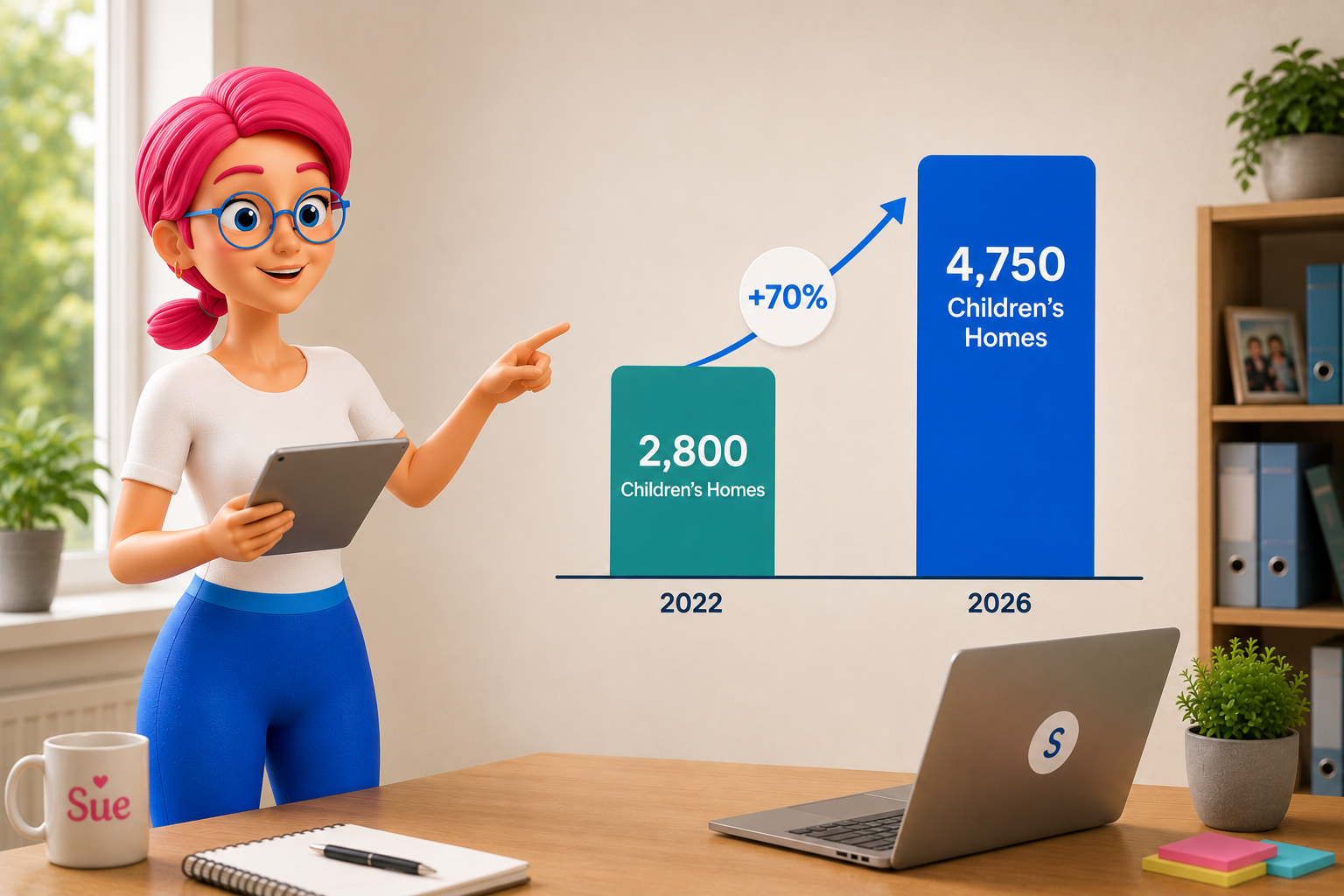
In the year to March 2026 the number of children's homes in England reached a record 4,747, up 20% in a single year and 70% higher than five years ago. Most of that growth has come from small, privately run homes.
Five years of relentless growth
The number of children's homes in England has risen every single year since 2022, climbing from 2,798 to 4,747. That is a 70% increase in five years. Registered places have grown more slowly, up 46% to 16,200, because the homes opening now are smaller than the ones that came before.
Children's homes and places in England, 2022 to 2026
One region has a quarter of the country's homes
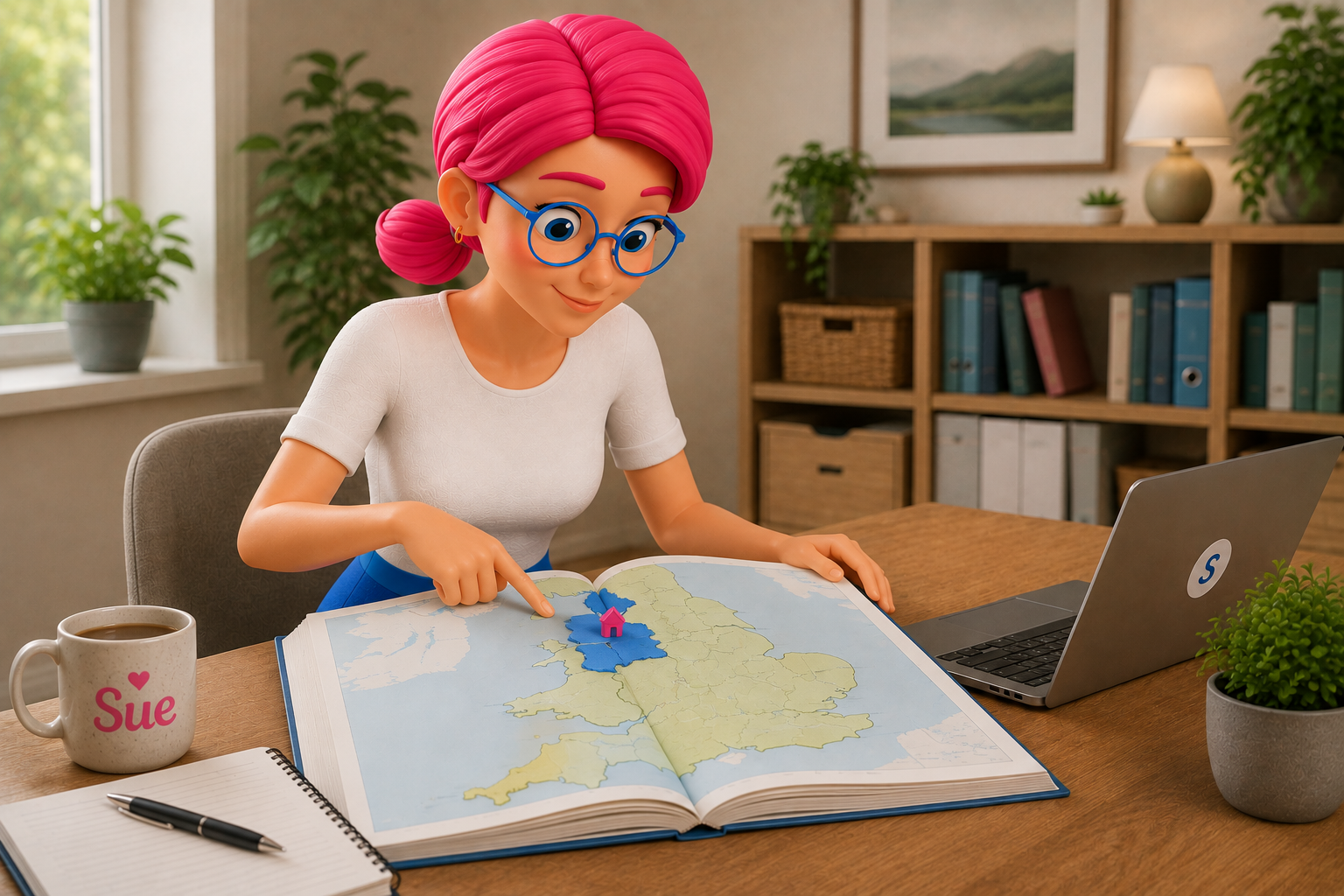
Children's homes are not spread evenly across England. The North West alone holds 26% of every children's home in the country , yet only 18% of England's children in care come from that region. The South West, by contrast, has just 300 homes. Tap a column heading to sort.
Children's homes by region, 31 March 2026
| Region | Homes | % of England | Places | Avg beds | Good/Outst. |
|---|---|---|---|---|---|
| North West | 1,252 | 26.4% | 3,584 | 2.86 | 82.4% |
| West Midlands | 723 | 15.2% | 2,392 | 3.31 | 85.1% |
| North East, Yorks & Humber | 647 | 13.6% | 2,237 | 3.46 | 89.7% |
| East Midlands | 606 | 12.8% | 2,027 | 3.34 | 85.9% |
| South East | 486 | 10.2% | 2,165 | 4.45 | 87.9% |
| East of England | 387 | 8.2% | 1,494 | 3.86 | 82.6% |
| London | 346 | 7.3% | 1,397 | 4.04 | 90.0% |
| South West | 300 | 6.3% | 887 | 2.96 | 83.6% |
More homes in one corner means more children placed far from home
When provision clusters in a handful of regions, children are often placed miles from their family, school and social worker. Keeping records straight, handovers tight and safeguarding visible across dispersed placements is exactly the problem good software is built to solve.
Half of all providers own just one home
Behind the growth is a long tail of small operators. England's 4,747 children's homes are run by 1,649 different organisations, and more than half of them own a single home. At the other end sit a few large groups, one of which owns 181 homes on its own.
Source: Ofsted, Children's social care in England 2026 (underlying data). Contains public sector information licensed under the Open Government Licence v3.0.
Single-home providers carry the same responsibilities as the biggest groups
A brand new single-home operator has to meet the same regulations, keep the same records and pass the same inspections as a group running a hundred homes, usually with a fraction of the back-office support. The rules do not scale down for newcomers.
As homes multiply, quality is under strain
Most children's homes in England are good. Across inspected homes, 85% are rated good or outstanding. But that leaves 626 homes, around 1 in 7, rated below good. And the region adding the most homes is the one with the lowest ratings.
Inspection outcomes, and the growth-versus-quality gap
4,305 homes with a published rating. 626 (1 in 7) are rated below good.
The region adding the most homes has the lowest ratings
The North West added 230 homes last year, more than any other region, and has the smallest homes on average. Its good-or-outstanding rate (82%) is the lowest in England. London grew fastest in percentage terms, from a much smaller base, and sits highest at 90%. Adding homes at the North West's scale puts real pressure on the systems that keep care consistent.
How we sourced the data
Every figure on this page comes from Ofsted's accredited official statistics, analysed by Sue Solutions. Nothing here is modelled or estimated by us.
Data sources and definitions
Using these figures
Further reading
Six short reads on what the 2026 data means, drawn from this study.

A growing sector needs systems it can trust
Sue Solutions is care management software built for England's children's homes, and only for them. As the sector grows and inspections come round more often, Sue helps your team keep records straight, evidence strong and young people at the centre. See how she fits your home.
Book a demoContains public sector information licensed under the Open Government Licence v3.0. Data: Ofsted, Children's social care in England 2026, and the Department for Education. Analysis by Sue Solutions. Please cite this page as the source.