England's Children's Homes Are Shrinking
The average children's home in England now has around 3.4 beds, down from 4.2 in 2020. Homes registered in the last year are smaller still, averaging close to three. As the sector has grown, homes have got steadily smaller, and the shift is one of the more quietly significant trends in the Ofsted data. For providers, a smaller home carries exactly the same regulatory weight as a large one, just with fewer people to carry it.
Ofsted's Children's social care in England 2026 release confirmed a trend that has been building for years. The number of homes has grown faster than the number of registered places, so the typical home keeps getting smaller. We looked at the whole picture in our analysis of the Ofsted children's homes data. At Sue Solutions we build children's homes management software, and the shift toward smaller homes changes the day-to-day maths of running one in ways that are worth spelling out.
How Much Smaller Homes Have Become
The direction has been consistent. A home that averaged more than four beds five years ago now averages closer to three, and the newest homes are smaller than the existing stock.
| Measure | Beds | What it tells you |
|---|---|---|
| Average home, 2020 | 4.2 | Where the sector started the decade |
| Average home, 2025 | 3.6 | The steady decline continues |
| Average home, 2026 | 3.4 | The typical home today |
| Newly registered homes | Around 3 | New supply is smaller than the average |
The reason is arithmetic before it is anything else. When the number of homes grows faster than the number of places, the average home has to shrink. On top of that, many new providers are deliberately choosing to register small, for two or three children rather than five or six.
The average children's home has lost almost a bed in five years, and the newest homes are smaller again.
Is Smaller Better? The Sector Is Divided
This is not a simple good or bad story, and it would be wrong to tell it as one. There is a genuine case for smaller homes. A home for two or three children can feel calmer and more personal, closer to family life than an institution, and that can help some children settle and stay put. Several councils have deliberately moved toward smaller group homes for exactly that reason.
There is also a note of caution, and it comes from within the sector. The Children's Homes Association has said there is limited evidence behind the shift to smaller homes and that it increases pressure on the recruitment of registered managers, since every home needs one regardless of how many children it houses. As reported by Community Care, the ADCS has raised similar questions about what the trend means for placement availability. The honest position is that size alone does not decide quality. A small home can be excellent or poor, and so can a large one.
What Smaller Homes Mean For The People Running Them
Whatever your view on the trend, the operational reality of a small home is clear. The regulatory load does not shrink with the bed count. A two-bed home meets the same Children's Homes Regulations 2015, keeps the same records Ofsted inspects, needs the same registered manager qualification, and faces the same unannounced inspection as a six-bed home. What changes is the number of people available to carry all of it.
In a large home, admin can be shared across a bigger team. In a small home, the same recording, oversight and compliance work falls on fewer shoulders, often the registered manager's. That is where the pressure builds.
- Every home needs its own registered manager, so smaller homes stretch skilled staff across more settings
- The recording and compliance workload per child is higher, because the fixed requirements do not scale down
- A single absence has a bigger impact when the team is small, making cover and continuity harder
- For a provider running several small homes, keeping standards consistent across them adds another layer of oversight
Smaller homes do not mean smaller responsibilities. The paperwork, the oversight and the inspection are the same. The difference is that a small team has less capacity to absorb them, which makes efficient systems more important in a small home, not less.
Making A Small Home Work
The providers who run small homes well tend to have one thing in common. They do not try to carry the structure in their heads. They put the recording, the task tracking and the oversight into a system that does the remembering for them, so the small team can spend its time with the children rather than on the filing.
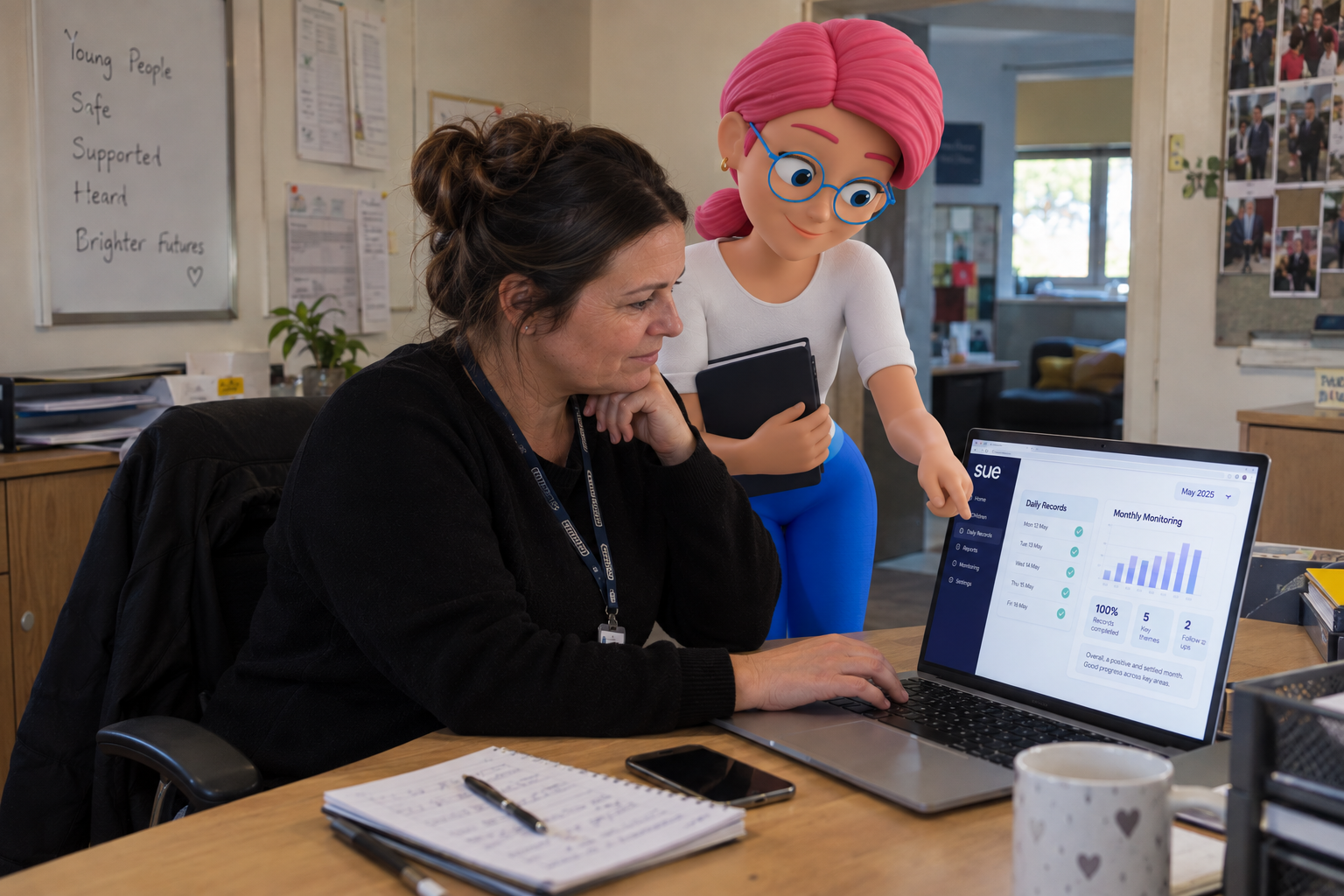
This is where sector-specific software matters most in exactly the setting where budgets are tightest. Good children's homes management software takes the fixed compliance load off a small team by prompting for what a record needs, flagging what is due, linking incidents back to plans and giving the registered manager a live view of the home without building reports by hand. For a provider running more than one small home, the same system keeps standards consistent across settings, which we look at in single home versus multi home systems.
Small homes may well be better for some children. They are only sustainable for the people running them if the systems underneath do the heavy lifting the small team cannot. Get that right and the size of the home becomes a strength rather than a strain.
Frequently Asked Questions
As at 31 March 2026 the average mainstream children's home in England had around 3.4 registered places, down from 3.6 the year before and 4.2 in 2020, according to Ofsted's Children's social care in England data. Homes registered in the most recent year were smaller still, averaging around three places. The long-term trend has been steadily downward as the number of homes has grown faster than the number of places.
Two things are happening at once. More homes are opening than places are being added, which pulls the average size down. And many new providers are choosing to register small homes, sometimes for two or three children. Supporters argue smaller homes can feel more like a family and improve placement stability. The Children's Homes Association has cautioned that there is limited evidence behind the shift and that it adds pressure on registered manager recruitment.
It depends, and the sector is divided. A small home can be calmer, more personal and easier to make feel like a real home, which can help some children settle. Others point out that very small homes spread registered managers and skilled staff more thinly across more settings, and that size alone does not determine quality. What matters most is the quality of care and oversight in the individual home, not the number of beds.
The regulatory requirements are the same whatever the size. A two-bed home has to meet the same Children's Homes Regulations 2015, keep the same records and pass the same inspection as a larger one, but usually with a smaller team and less back-office support. That makes efficient, sector-specific recording more valuable in a small home, not less, because there are fewer people to carry the administrative load.