Safeguarding Incident Recording Template. What Good Recording Looks Like In Children's Homes
After a difficult incident, nobody needs a blank page and a vague instruction to "write it up properly". In a children's home, the quality of your safeguarding incident recording template can shape what happens next: who is informed, what risks are picked up, how confidently managers review the event, and whether your record stands up to scrutiny later.
A safeguarding incident recording template should do far more than collect basic facts. It should guide staff through a consistent account, support sound decision-making, and reduce the risk of key details being missed when emotions are high and time is short. For children's homes balancing direct care, regulation and operational pressure, good recording is not paperwork for its own sake. It is part of keeping children safe.
What A Safeguarding Incident Recording Template Needs To Achieve
The best templates are not the longest ones. They are the clearest. A form that asks staff to repeat themselves across multiple boxes or interpret unclear wording creates weak records. Equally, a template that is too light-touch leaves managers piecing together what happened from fragments.
A useful safeguarding incident recording template should help staff capture the essentials in the right order, with enough structure to create consistency and enough flexibility to reflect real life. For children's residential care, context matters. Was there a known trigger? Had there been earlier concerns? Was the child's presentation different from normal? Were other children affected? These details can change the seriousness of an incident and influence the response.
The Five Sections Every Template Should Include
Child's name, date, time, location, staff on shift and who completed the record. These details are the foundation for any later review and should never be left incomplete.
What was seen, heard or disclosed, in plain language, avoiding conclusions that cannot be supported. Direct quotes are vital where a child has made a disclosure or allegation. Record their exact words.
What was done straight away to reduce risk? Was first aid needed? Was the child moved? Was another child protected from further exposure? Was a manager contacted? These actions must be visible, not buried in free text.
Who was informed, when and by whom? The record should show that each notification decision was considered, not just the notifications that were made. See the guidance below on who typically needs to know.
Is a strategy discussion required? Do behaviour support plans need updating? Should a risk assessment be reviewed? Does the child need a restorative conversation? This is where most templates fall short.
Who Needs To Be Notified And When
Notification requirements depend on the nature and seriousness of the incident. The record should show that the decision was considered, not just document the notifications that were made. Under Regulation 40 of the Children's Homes Regulations 2015, certain serious incidents must be notified to Ofsted within 24 hours.
Registered manager or on-call. No incident should be completed without the manager knowing, even if it seems minor at the time.
Child's social worker and placing authority. Timelines will vary but should be recorded clearly.
Police. Required where a criminal offence may have occurred or where a child is at immediate risk.
LADO. Required within one working day where an allegation is made against a staff member or volunteer.
Ofsted under Regulation 40. Serious incidents including missing episodes, restraint-related injury, and allegations must be notified within 24 hours.
Healthcare professionals, Independent Reviewing Officer, responsible individual and senior leadership. Document the decision either way.
Why Poor Recording Causes Bigger Problems Later
Most teams do not struggle because they do not care. They struggle because they are stretched. A careworker may have managed a distressed child, reassured others in the home, spoken to on-call, and then been expected to write a full record at the end of a long shift. If the template is poor, the record becomes either too sparse or too wordy.
How To Make The Template Work For Frontline Staff
The reality in a home is simple: if the form feels clunky, staff will either rush it or avoid it until later. Neither outcome helps. A template has to work under pressure, not only in theory.
That means using straightforward field names, a sensible flow, and prompts that sound like real operational questions. "What happened?" is clearer than "Outline the nature of the presenting safeguarding concern". Staff should not need to translate the form before they can complete it.
If a section asks "What did you observe?" and another asks "What are your concerns?" staff are more likely to record both accurately. This distinction matters when managers are reviewing patterns or when records are shared externally, for example during a multi-agency strategy discussion or child protection enquiry.
Training still matters. Even the best template will not fix inconsistent recording habits on its own. Teams need examples of what good incident recording looks like, when to escalate, and how to write clearly without editorialising. Staff training on recording quality is a regulatory expectation as much as a quality one.
What Digital Templates Add
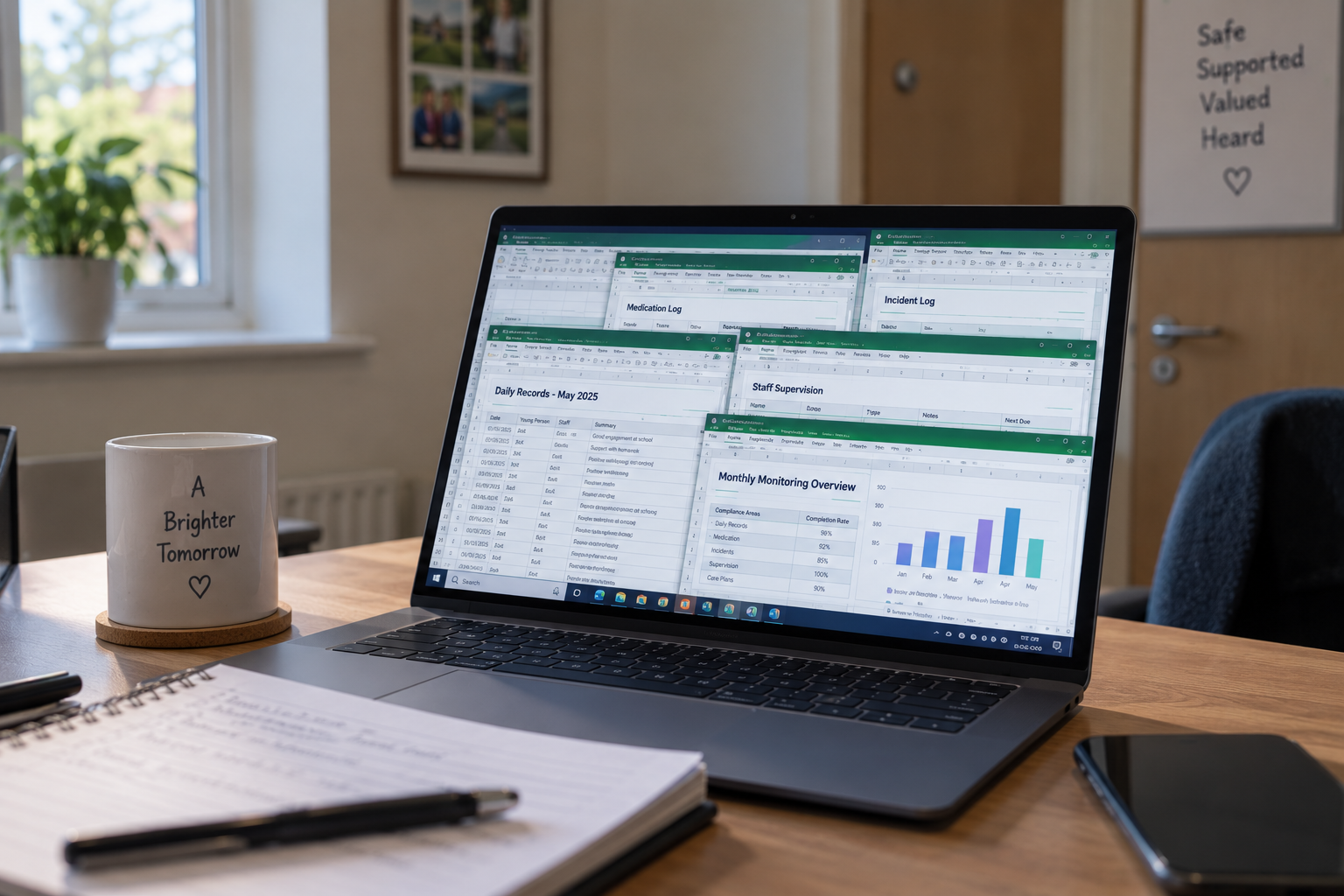
Paper forms and generic documents can work in small settings for a while, but they show their limits quickly. Records go missing. Handwriting causes confusion. Managers cannot easily track patterns across shifts, children or homes. Follow-up actions live in someone's notebook rather than in a visible workflow.
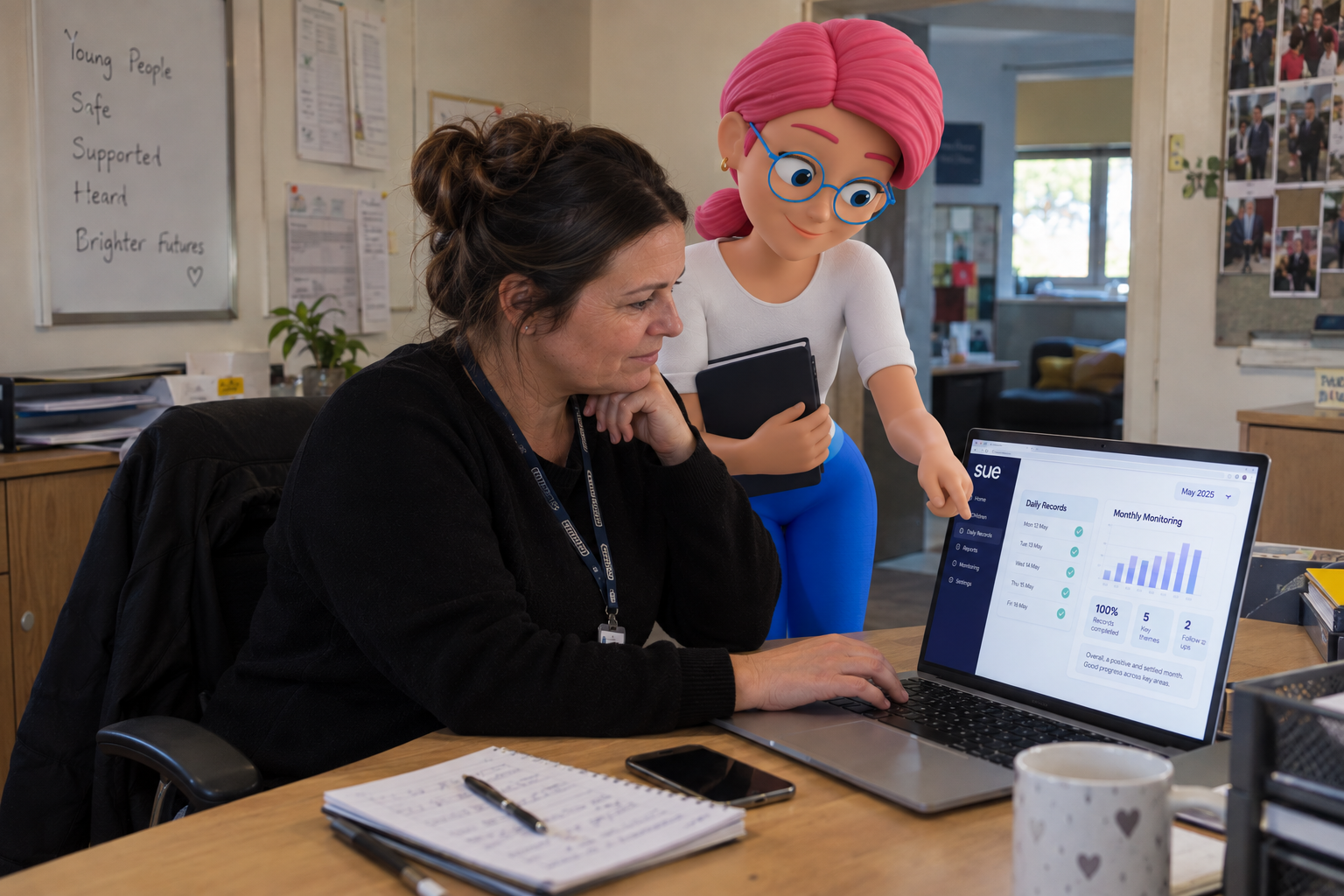
Sue Solutions includes safeguarding incident recording templates built around the Children's Homes (England) Regulations 2015, which gives homes a practical starting point rather than a blank page. The structure is already there. Teams adapt it to their service, and the system connects the record to notifications, follow-up tasks and management oversight from the same entry.
A digital safeguarding incident recording template changes the picture because it can turn a written account into an operational process. The same record can prompt notifications, trigger management review, link to a child's daily log chronology, and contribute to reporting across the service. That gives home managers and directors a clearer line of sight without adding another layer of admin.
For multi-home providers, consistency is one of the biggest gains. When every home records incidents differently, central oversight becomes messy. When everyone works from the same structure, leaders can spot recurring issues, review quality more fairly, and support homes before concerns escalate.
A safeguarding incident recording template is not successful because it ticks every box. It is successful because it helps adults respond consistently and well when something has gone wrong. The child must not disappear inside the form.
Sue Solutions. Built by a team who worked in the sectorCommon Mistakes To Avoid
Building the template around inspection anxiety rather than operational reality. If the form exists mainly to prove something later, it becomes too heavy for staff to use well in the moment. Inspection-ready recording starts with records that are practical and truthful.
Asking for duplicate information across several forms. If staff write the same details in the daily log, the incident form, a body map, an email update and a handover note, inconsistency becomes almost inevitable.
Relying entirely on free text or entirely on tick boxes. The best template uses both, each for the right purpose. Structure supports consistency. Narrative preserves professional context.
What Good Looks Like In Practice
A good record reads clearly from start to finish. Another staff member can understand what happened, what was done, who knows, and what still needs to happen. A manager can review it quickly, ask informed questions, and decide next steps. A senior leader can see themes over time rather than isolated pieces of paperwork.
For children's homes under pressure, that kind of clarity is not a nice extra. It is how you turn a difficult moment into a safer, more accountable response. When your recording process supports the people doing the caring, the whole home feels steadier for it.
Frequently Asked Questions
A strong template should include basic identifiers (child name, date, time, location, staff present), a factual account of what was seen or disclosed, immediate response actions, a notifications section covering who was informed and when, and a follow-up and review section. Each part should use plain language, separate fact from opinion, and prompt for context specific to residential childcare.
Sparse records leave gaps around timing, actions and notifications that weaken confidence during audits, safeguarding enquiries or inspection. Wordy records bury key facts in narrative and allow opinions to creep in. Working Together to Safeguard Children (2023) is clear that records must be accurate, timed and sufficient to support decision-making. Both Ofsted and the CQC identify delayed or incomplete records as recurring inspection findings.
As a minimum, the registered manager or on-call should always be informed. Depending on the incident, notifications may also be required to the child's social worker and placing authority, police, LADO (within one working day of an allegation involving staff), and Ofsted under Regulation 40 for specified incidents within 24 hours. The record should show that each notification decision was considered, not just the ones that were made.
A digital safeguarding incident recording template becomes more valuable as a home grows beyond a single site, as management oversight requirements increase, or when paper processes are causing delays in notifications, duplication or difficulty spotting patterns. Digital systems allow the same record to prompt notifications, trigger manager review, link to a child's chronology and contribute to provider-wide reporting without adding manual admin steps.