Sue Solutions › Insights › 7 Ways to Reduce Admin
7 Ways to Reduce Admin in Children's Homes
At a Glance
When a shift is already stretched, the last thing any children's home needs is another form, another spreadsheet, or another reminder chased by text and sticky note. The best ways to reduce admin are not about asking staff to work faster. They are about removing duplication, making information easier to capture, and giving every role, from careworker to director, a clearer, calmer way to work.
In residential childcare, admin is never just admin. It sits behind safeguarding, compliance, staffing, incidents, health appointments, handovers and Ofsted readiness, whether the service is a children's residential home or supported accommodation. That means the goal is not to do less recording for the sake of it. The goal is to cut wasted effort while protecting the quality, consistency and visibility that good care depends on.
What Causes Admin Overload in Children's Homes?
Most teams do not struggle because they are unwilling or disorganised. They struggle because the system around them creates extra work. A daily log might be written in one place, key details copied into a handover, then repeated again for a manager's oversight report. Medication records may live in one format, staff supervision notes in another, and incident follow-up somewhere else entirely.
Over time, small inefficiencies become the normal way of working. Staff spend valuable minutes hunting for the latest version of a document, managers chase overdue tasks manually, and leaders piece together a picture of performance from several sources. That is where pressure builds, not only in the volume of work, but in the constant mental load of trying to keep track.
This is not unique to children's residential care. Research into the wider care home sector has found managers spending around a fifth of their time on paperwork, often across more than 100 separate recurring documents that repeat the same information in different formats. The exact figures have not been measured separately for children's homes, but the pattern will feel familiar to most registered managers.
| Role | Where Duplication Hits Hardest | What It Costs Them |
|---|---|---|
| Care teams | Writing the same event into a daily log, a handover and an incident form | Less time with the child, more time re-explaining what already happened |
| Managers | Chasing overdue tasks manually across separate trackers | Reactive management instead of planned oversight |
| Directors and RIs | Compiling a group picture from reports that do not match each other | Delayed visibility of patterns that needed acting on weeks earlier |
If you want lasting change, reducing admin has to start with the operating model, not just individual effort.
7 Practical Ways to Reduce Admin
Cut Duplication Before You Cut Tasks
One of the biggest mistakes organisations make is trying to reduce admin by removing forms without looking at why those forms exist. In children's residential care, many records are necessary. The real issue is often that the same information is entered multiple times by different people for different purposes.
A better approach is to map where information begins, where it needs to go, and who needs to see it at each stage. If an incident is recorded once, it should feed management oversight, compliance review and trend reporting without staff rewriting it in three formats. If a shift note raises a safeguarding concern, escalation should happen through the same workflow rather than through separate messages and follow-up paperwork.
Standardise the Routine Work
Admin becomes heavy when every home, or every manager, develops their own version of the same process. One person logs incidents one way, another uses different wording, and a third keeps a separate tracker to stay on top of actions. That may feel manageable in one home, but it becomes risky and time-consuming across a wider group.
Standardisation does not mean making practice robotic. It means creating a reliable structure for routine tasks such as daily logs, incident recording, supervision schedules, audits, maintenance, training monitoring and placement documentation. There is a trade-off worth naming: too much rigidity frustrates experienced teams, but the answer is not endless flexibility either. The strongest systems give clear structure while still leaving room for professional judgement.
Bring Records, Tasks and Oversight Into One Place
Fragmentation is one of the most expensive forms of admin. A home might use emails for follow-ups, paper for some records, spreadsheets for compliance checks, and separate systems for staffing or incidents. Each tool may do part of the job, but together they create gaps, repetition and delay.
Bringing operational activity into one place helps teams stay informed and stay in control. Staff can record information as they work. Managers can see what is overdue and where support is needed. This is especially valuable in multi-home settings, where directors otherwise rely on retrospective reporting and only see a pattern once it has already affected quality or compliance.
Make Admin Easier at the Point of Care
If recording feels like an extra job done after the real job, it will always create strain. One of the best ways to reduce admin is to make the process easier in the moment, while the detail is fresh and the staff member is already engaged with the task.
That means straightforward forms, sensible workflows and prompts that reflect the reality of a children's home rather than generic software logic. The more a team has to rely on handwritten notes, memory or end-of-shift catch-up, the more time gets lost and the more likely records are to be inconsistent. A system can be technically thorough and still add to the burden if it takes too many clicks or uses language that does not fit the sector. Good design is not cosmetic. It is operational.
Automate Reminders, Follow-Ups and Routine Monitoring
Managers in residential childcare carry a heavy coordination load. They are not only checking what happened, but what needs to happen next: reviews, supervisions, training renewals, audits, actions from incidents, missing signatures, and countless other moving parts.
When that coordination depends on memory or manual trackers, admin grows quickly. Automated reminders and task monitoring reduce that pressure, so managers can focus on exceptions, risks and support rather than a constant hunt. Automation does need care. Too many alerts become background noise, so the point is to automate the routine, not flood staff with notifications they will stop noticing.
Use Reporting to Remove Work, Not Create More of It
Reporting should help you run the home better. Too often it does the opposite, with staff spending hours feeding spreadsheets because core data is stored in places that do not speak to each other.
A stronger model builds reporting from operational activity already taking place. If incidents, tasks, training and audits are being recorded properly, managers should be able to see that picture without assembling it by hand every week. Inspection readiness improves when evidence is current and accessible, and home managers spend less time producing information and more time using it to improve practice.
Choose Tools Built for Children's Residential Care
Not all admin systems are equal. Generic business software may handle tasks or documents reasonably well, but children's homes and supported accommodation services are not generic environments. They operate under intense regulatory scrutiny, with safeguarding responsibilities and role-based accountabilities that off-the-shelf tools rarely reflect properly.
Sector-specific systems reduce admin because they understand the work from the start, designed around incidents, handovers, placement information, compliance checks, staffing oversight and inspection expectations, the same principle that applies to supported accommodation as much as registered children's homes. That fit shortens training time, improves consistency, and reduces the workarounds teams build when a system does not match reality.
This is where providers need to be honest about their own context. A single home may cope for a while with a patchwork of tools and manual processes. A growing group usually cannot. As complexity increases, the cost of fragmented admin rises with it, and investing earlier in the right operational backbone can prevent a great deal of stress later.
The homes that reduce admin most effectively are not the ones demanding more from already busy staff. They are the ones building clearer workflows and better visibility around the people doing the work.
Reducing admin in a children's home is not about stripping things back until records disappear. It is about turning chaos into calm, so your team can spend less time chasing paperwork and more time giving young people the attention they need. If a process adds effort without adding clarity, control or better care, it is worth changing.

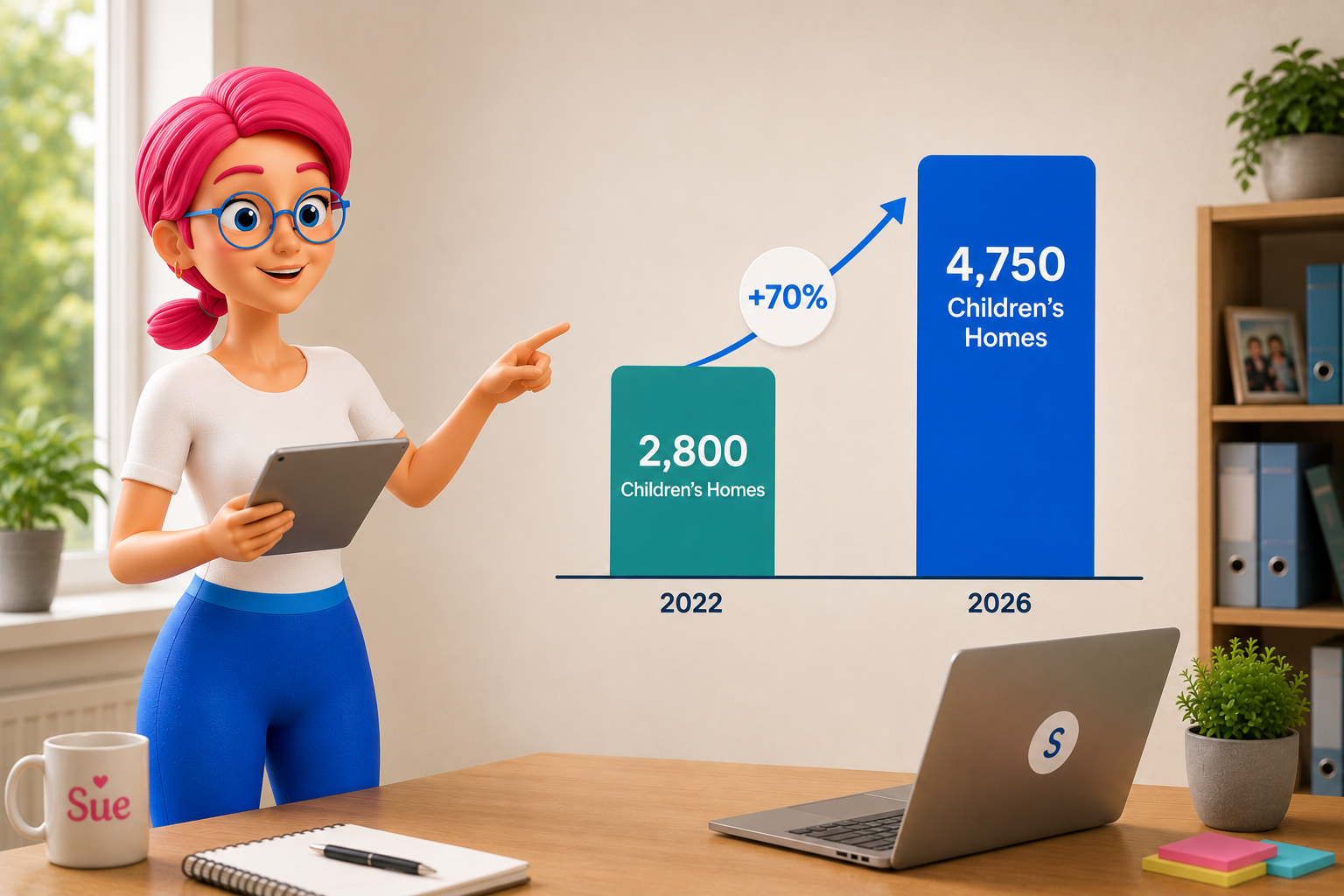
Sue Solutions cuts duplication by design, so a record entered once feeds oversight, compliance and reporting automatically. Built by people who worked in residential childcare and supports over 1,000 UK homes.
Book A Demo →Frequently Asked Questions
Most teams do not struggle because they are unwilling or disorganised. They struggle because the same information gets entered multiple times in different formats for different purposes. A daily log might be written once, copied into a handover, then repeated again for a manager's oversight report, and small inefficiencies like that become the normal way of working.
Cut duplication before you cut tasks. Most records in children's residential care are necessary, so the real win comes from making sure information entered once can feed management oversight, compliance review and trend reporting automatically, rather than being rewritten by hand in three different formats.
No. Reducing admin in a children's home is not about stripping things back until records disappear. It is about removing wasted effort while protecting the quality, consistency and visibility that good care depends on. If a process adds effort without adding clarity, control or better care, that is what is worth changing, not the recording itself.
Children's residential homes and supported accommodation services operate under intense regulatory scrutiny, with safeguarding responsibilities and role-based accountabilities that off-the-shelf business software rarely reflects. Sector-specific systems reduce admin because they are designed around incidents, handovers, placement information, compliance checks and inspection expectations from the start, which shortens training time and reduces the workarounds teams build when a system does not match reality.
Research into the wider care home sector has found managers spending around a fifth of their time on paperwork, often across more than 100 separate recurring documents that repeat the same information in different formats. That figure has not been measured separately for children's residential homes, but the underlying pattern of duplication is one most registered managers will recognise, and it is exactly what removing duplication at the source is designed to fix.