Responsible Individual Oversight Tools For Children's Homes
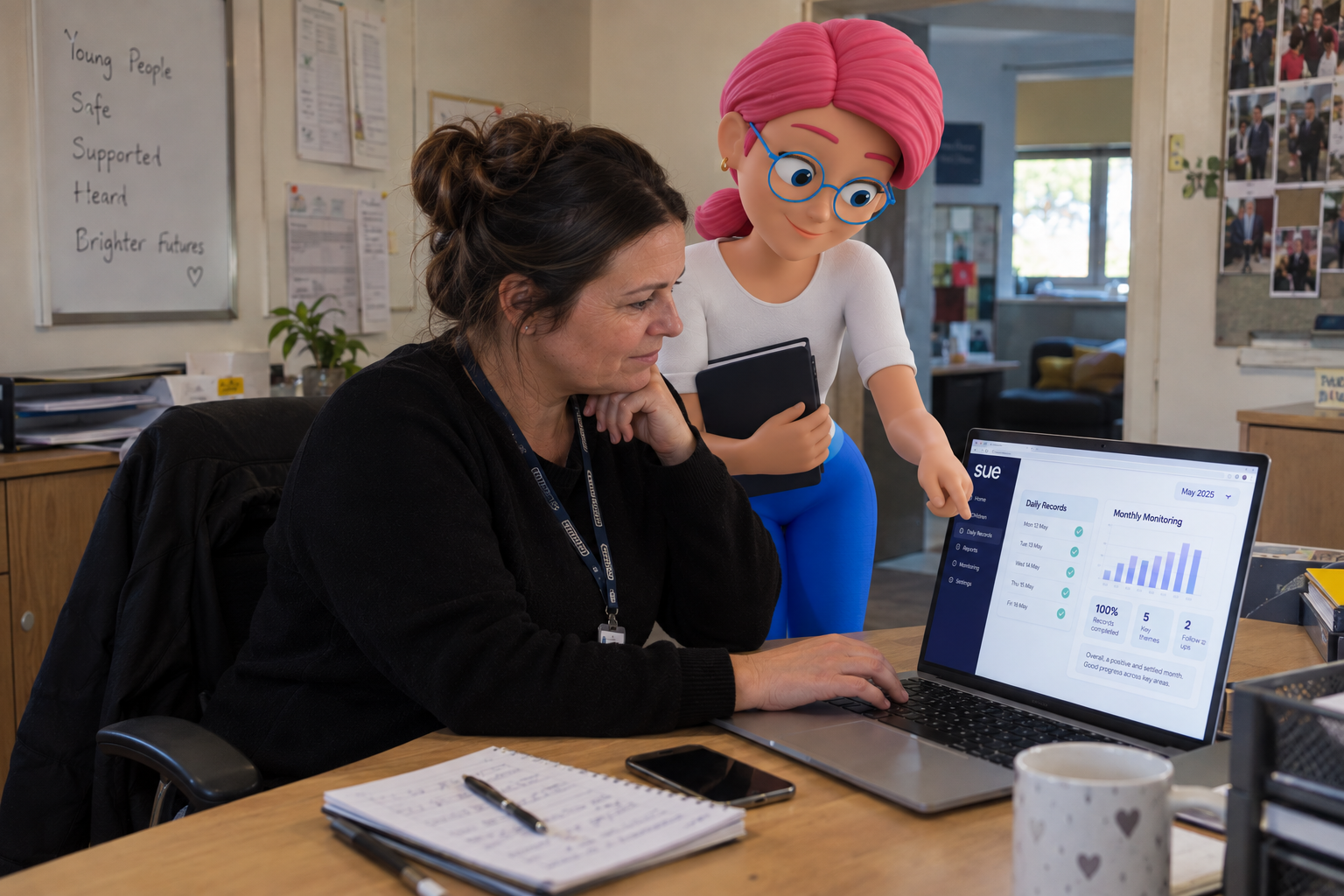
Responsible individual oversight tools help you answer a small number of serious questions quickly. What is happening in each home right now, what needs attention, where is risk rising, and are managers following through. Done well, they do not add another layer of admin. They give you a clearer line of sight when it counts.
If you are the Responsible Individual for a children's home, you already know the pressure does not sit neatly in one box. You hold oversight of safeguarding, staffing, incidents, compliance, culture, quality of care and organisational accountability, often across more than one service. Oversight here is not passive. It runs continuously and gets tested under scrutiny. When an incident happens, when a pattern starts to emerge, or when Ofsted asks how leadership maintains control, vague reassurance is not enough. You need evidence, context and confidence in the information in front of you.
What Responsible Individual Oversight Tools Should Do
Good responsible individual oversight tools should let you see, at any moment, what is happening in each home, what needs attention, and whether managers are following through. They should help you check that staff performance, training and records are where they need to be, and evidence your oversight without chasing updates from three different systems and a pile of emails.
That means they are more than dashboards. They should bring operational data together in a way that supports judgement. A red flag on its own is rarely enough. You need to see what sits behind it, whether that is repeated missing from home incidents, medication errors, overdue supervisions, recurring complaints, gaps in sanctions recording or patterns in restraint reporting. The real test is whether it helps you spot something early enough to do something about it.
Why Spreadsheets Stop Working
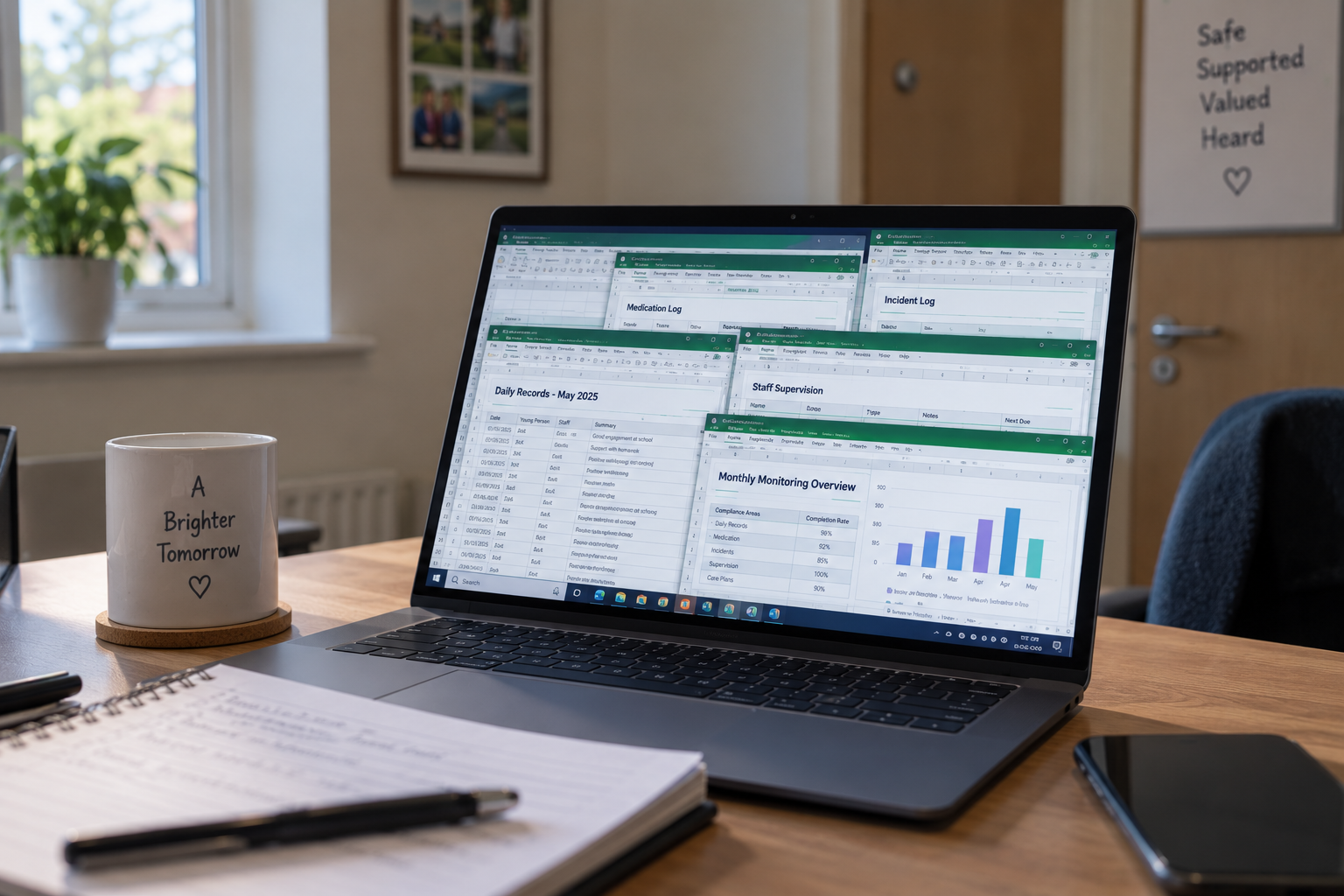
Spreadsheets stop working because oversight spread across separate files slows your response and hides the patterns that matter. Most providers start with workarounds. A spreadsheet for audits, a folder for Regulation 44 reports, a separate HR system, handwritten handover notes, emails for incidents, and maybe a central document tracking training. That can just about hold together in a single home with low turnover and a very experienced manager. Once services grow, staff change, or inspection pressure rises, the cracks show.
The problem is not only that information is spread out. Fragmented information slows your response. By the time a concern reaches you, it may already have been building for weeks. A missed action after an incident, repeated overdue checks, or a drop in recording quality often starts as a small signal. If your oversight depends on someone manually spotting it and escalating it, you are relying too heavily on chance.
Sector fit does a lot of work here. In a children's home the operational detail matters. Generic business reporting will not always reflect the things that carry the most weight in care, such as safeguarding patterns, home level compliance tasks, key work completion, how stable placements are, supervision and training frequency, allegations handling or the quality of day to day records.
What RI Oversight Looks Like In Practice
The strongest oversight tools give you both the wide view and the ability to drill down. At group level you need to see performance across homes without losing the detail that explains it. At home level you need confidence that the manager's picture matches the recorded evidence.
That usually covers oversight of incidents, restraints, complaints, missing from home episodes, medication, staffing levels, training expiry, supervision completion, audits, actions, documents and occupancy. Data alone is not the aim though. Earlier intervention and stronger governance are, and the example below shows the difference.
Incidents are recorded, staffing is stable and audits are being completed, so at first glance nothing stands out. But if you can also see that behaviour incidents are rising, debriefs are not consistently signed off, and several staff are nearing mandatory training expiry, the picture changes. A good oversight tool helps you catch that early and have the right conversation with the manager before it becomes a bigger problem.
What To Look For In A System
Five things tend to matter in a children's home oversight system, whatever your size or structure. They are current information, role-based views, actions rather than only alerts, inspection-ready reporting, and recording that frontline staff will use without a fight. No single feature makes a tool right for every provider, but these five hold up across the board.
-
Current information
Oversight based on week old updates is weaker than it looks. If incidents, actions and compliance tasks are logged in real time, you are not waiting for a monthly report to find out something has drifted.
-
Role-based views
You do not need the same view as care staff or home managers. You need high level visibility, trends, exceptions and accountability trails, without wading through every operational screen.
-
Actions, not just alerts
Identifying an issue is one thing. Assigning follow up, tracking progress and seeing whether it was resolved is another. Oversight should not end at awareness.
-
Inspection-ready reporting
Not paperwork for its own sake, but the ability to evidence how leaders monitor performance, challenge concerns, review incidents and maintain standards across the service.
-
Usability on the front line
If a system is awkward for frontline teams, the quality of data suffers, and weak data makes senior oversight less reliable. Good governance starts with good recording, so the tool has to work for the people entering the information as well as the people reviewing it.
The Balance Between Oversight And Interference
Good oversight strengthens managers rather than undermining them. It does not mean hovering over every home. It means knowing when to step in, when to ask questions and when to let a capable manager lead. A system that encourages constant top down checking without context tends to create defensiveness and noise rather than improvement, which is the line to walk.
| Oversight that helps | Oversight that gets in the way |
|---|---|
| Surfaces exceptions, patterns and unresolved actions | Pushes every operational detail to senior level |
| Prompts the right conversation with the manager | Replaces the manager's judgement with checking |
| Flags a rising concern before it escalates | Generates alerts nobody has time to read |
| Leaves the RI informed and proportionate | Leaves major concerns buried in local systems |
That distinction matters most in multi home groups. If every small issue becomes an RI issue, the model is not efficient. If major concerns stay buried in local systems, the model is not safe. Good tools help you sit in the middle, close enough to act but not so close that you take over, which is also why reporting across several homes deserves attention when you choose a system.
Why Sector Fit Matters In Children's Residential Care
Children's homes are not generic care environments, and this is just as true for supported accommodation, so oversight tools should not treat either as if they were something else. The pressures, the safeguarding responsibilities and the regulatory expectations all sit apart from adult or general care. Software designed for residential childcare tends to outperform adapted systems from other sectors because it understands the language of the home, the workflow of recording an incident, the importance of chronology, and the need for role based accountability from careworker through to director.
For you that sector fit usually translates into better questions and better evidence. You are not forcing residential care processes into a system built for something else. You are working with a platform that reflects the way your homes run, and that reflects how risk and safeguarding are recorded and reviewed day to day. At Sue Solutions that has always mattered to us. Oversight only works when the system understands the reality on the ground.
Better Oversight Should Reduce Pressure, Not Add To It
One concern we hear often is that a new system simply creates more data, more notifications and more pressure on stretched teams. That can happen when software is poorly designed or introduced without a clear purpose. The right oversight tools do the opposite. They reduce duplication, make information easier to trust, and cut the time spent chasing updates. Rather than asking managers to produce separate reports for every issue, the reporting should come from the day to day operational record.
The value shows up as fewer blind spots, not more admin, and as clearer priorities rather than a louder stream of alerts. Used this way, the system sits behind your judgement instead of standing in for it, and that can change the quality of leadership across a service. You spend less time gathering fragments and more time leading well, supporting managers, spotting trends, asking sharper questions and keeping young people at the centre of decisions. The same principle shapes how support plans are monitored across a group.
The best oversight tools do not pretend to remove the weight of responsibility. They help you carry it properly, with clearer evidence, earlier warnings and a steadier grip on what is happening across your homes.
Frequently Asked Questions
They are the software features that give a Responsible Individual a live view across one or more children's homes, bringing together incidents, restraints, complaints, missing from home episodes, medication, staffing, training, supervision, audits and actions. The point is not just a dashboard. It is to help an RI see what needs attention, where risk is rising and whether managers are following through, with the evidence to show that oversight is happening.
The Responsible Individual holds strategic oversight of the home and is accountable for the quality of care, safeguarding, staffing and compliance. Under the Children's Homes (England) Regulations 2015 the RI must be a suitably senior person in the organisation, cannot also be the registered manager, and is expected to support and challenge the manager while satisfying Ofsted that leadership maintains control.
General reporting software rarely reflects the things that matter most in residential childcare, such as safeguarding patterns, key work completion, how stable placements are, supervision frequency, allegations handling and the quality of daily records. A system built for the sector surfaces those directly, so an RI works with information shaped around how a children's home really runs.
They make it possible to evidence how leaders monitor performance, review incidents, challenge concerns and close actions across the service. Rather than assembling that picture under pressure, an RI can show a live trail of oversight, which is exactly what inspectors examine when they test governance and assurance.
They should not. Good oversight highlights exceptions, patterns and unresolved actions rather than pushing every small detail to senior level. Used well, it strengthens a capable manager by surfacing issues early and supporting the right conversation, rather than encouraging constant top down checking.