What Ofsted Looks For In Children's Home Records
Ofsted inspectors look for records that show the impact of care on a child, not the sheer amount of it. Under the Social Care Common Inspection Framework, they case-track individual children, sample records like care plans, risk assessments and incidents, and check that the records, staff practice and leadership oversight all tell the same story. A busy log full of routine entries is not evidence of quality. A record that shows what happened, why a decision was made and how the child experienced it is.
Most children's homes prepare for inspection by making sure the files are full. That instinct is understandable and, on its own, slightly misdirected. Volume is easy to produce and tells an inspector very little. What an inspection tests is whether the story your records tell matches the story staff tell, the story leadership oversight tells, and the lived experience of the child in front of them. Get that alignment right and recording stops being an inspection chore. It becomes the evidence that your care is understood, managed and reviewed.
How Ofsted Reads Your Records
Inspections of children's homes run under the SCCIF, which Ofsted updated for children's homes on 1 April 2026. All inspections are unannounced, so an inspector sees the home on an ordinary day rather than a version assembled for the occasion. The framework holds three headline judgements, the experiences and progress of children, how well children are helped and protected, and the effectiveness of leaders and managers. Every record an inspector reads is weighed against those three.
Inspectors do not read a home's files cover to cover. They build evidence through case tracking, following one child's experience in depth, sampling records across the home, observing daily life, and talking to children, staff, the registered manager and the responsible individual. The point of pulling from so many sources is to see whether they agree.
When those three line up, records are doing their job. When they contradict each other, a strong-looking file counts for little. An inspector who hears one thing from a child and reads another in the log will trust the child, and then start asking why the record says something different.
Why Volume Is Not The Same As Evidence
Ofsted has been plain that inspectors spend less time on policies and procedures and more on the impact of care on children's lives. That single shift explains most of what separates a record that helps from one that does not. A daily log can run to three paragraphs and still say nothing an inspector can use, if it records routine without meaning.
| Recording volume | Recording evidence |
|---|---|
| A long entry describing the shift hour by hour | A short entry showing what mattered and why it mattered |
| "Spoke to the young person about their behaviour" | What was said, how they responded, and what changed as a result |
| An incident logged with the bare facts | The incident, the response, the follow-up, and the review that closed it |
| Repeated entries that never link to a plan | Entries that connect back to the care plan and update it |
| A file that proves activity happened | A trail that shows a child was understood and helped |
The test worth applying to any record is simple. If an inspector read only this, would they understand what happened, why a decision was taken, what was done next, and how the child experienced it? If the answer is no, more words will not fix it. A tighter, clearer record will.
Inspectors are not looking for a busy system full of words. They are looking for care that is understood, managed and reviewed.
How To Record The Voice Of The Child
The child's voice and lived experience run right through the SCCIF, and they are where records most often fall short. It is easy to write about a young person and hard to write from their experience, especially at the end of a difficult shift. Getting this right is one of the clearest signals to an inspector that a home understands the children it looks after.
Good practice guidance across the sector is consistent on how to do it. Record what a child said in their own words rather than a worker's interpretation, because a direct quote carries far more meaning than a paraphrase. Capture how they seemed and how they responded, not only what was done to or for them. Above all, write records a child could one day read and understand, with their own contributions clearly shown, because many care leavers do exactly that.
Instead of
"Young person was difficult at teatime and refused to engage."
Record
"J left the table saying 'nobody ever listens to me'. Staff sat with him afterwards. He said he felt talked over in the house meeting. We agreed he would chair the next one."
- Use direct quotes. What the child said, in their words, not a summary of it
- Separate fact from opinion. An inspector, and later the child, should see which is which
- Record close to the moment. The voice fades and softens if it waits until the end of the week
- Show how their view shaped the plan. Capturing a wish means little if nothing follows from it
- Write for the child to read one day. Careful, non-judgemental language, free of jargon
None of this asks for longer records. It asks for records centred on the child rather than the task, which are usually shorter and always more useful. A system that lets staff log entries quickly during the shift makes capturing the voice in the moment realistic rather than aspirational.
The Records Ofsted Inspectors Ask To See
Inspectors draw on a wide spread of records, and they cross-check them against each other. Care plans, risk assessments, daily logs, incident and missing from home records, complaints, health and education records all come into play, alongside the leadership oversight that sits above them.
The monthly independent monitoring visit under Regulation 44 and the six-monthly quality of care review under Regulation 45 are core oversight records, and inspectors use them to build their lines of enquiry before they arrive. If your own monitoring already flags an issue and shows what was done, that reads as a home that knows itself.
Notifications of serious events under Regulation 40 must be made without delay, and inspectors check they are complete and consistent with the rest of the record. Annex A, the information a home supplies at inspection, needs to be accurate and match what the files show. A contradiction between Annex A and the records is a quick way to raise doubt.
The connecting thread is consistency. A care plan that references a risk the risk assessment does not mention, an incident with no follow-up, a safeguarding concern recorded but never closed out, each is a small crack an inspector will widen with questions. Records that link to one another close those cracks before they open.
How To Keep Records That Stand Up Year Round
Because inspections are unannounced, the only workable position is to be ready every day rather than scrambling when the call comes. That sounds demanding, but it is easier than periodic panics, and it rests on a few habits more than on heroics.
Record close to the event, so the trail is current and the detail is real rather than reconstructed. Keep the child's voice and the manager's oversight visible as you go, so they are part of the record rather than something bolted on later. Make sure notifications, Reg 44 and Reg 45 reports and Annex A stay consistent with the daily record, since inspectors read across all of them. This is the daily discipline behind genuine Ofsted compliance, and it is a world away from preparing for inspection as an event.
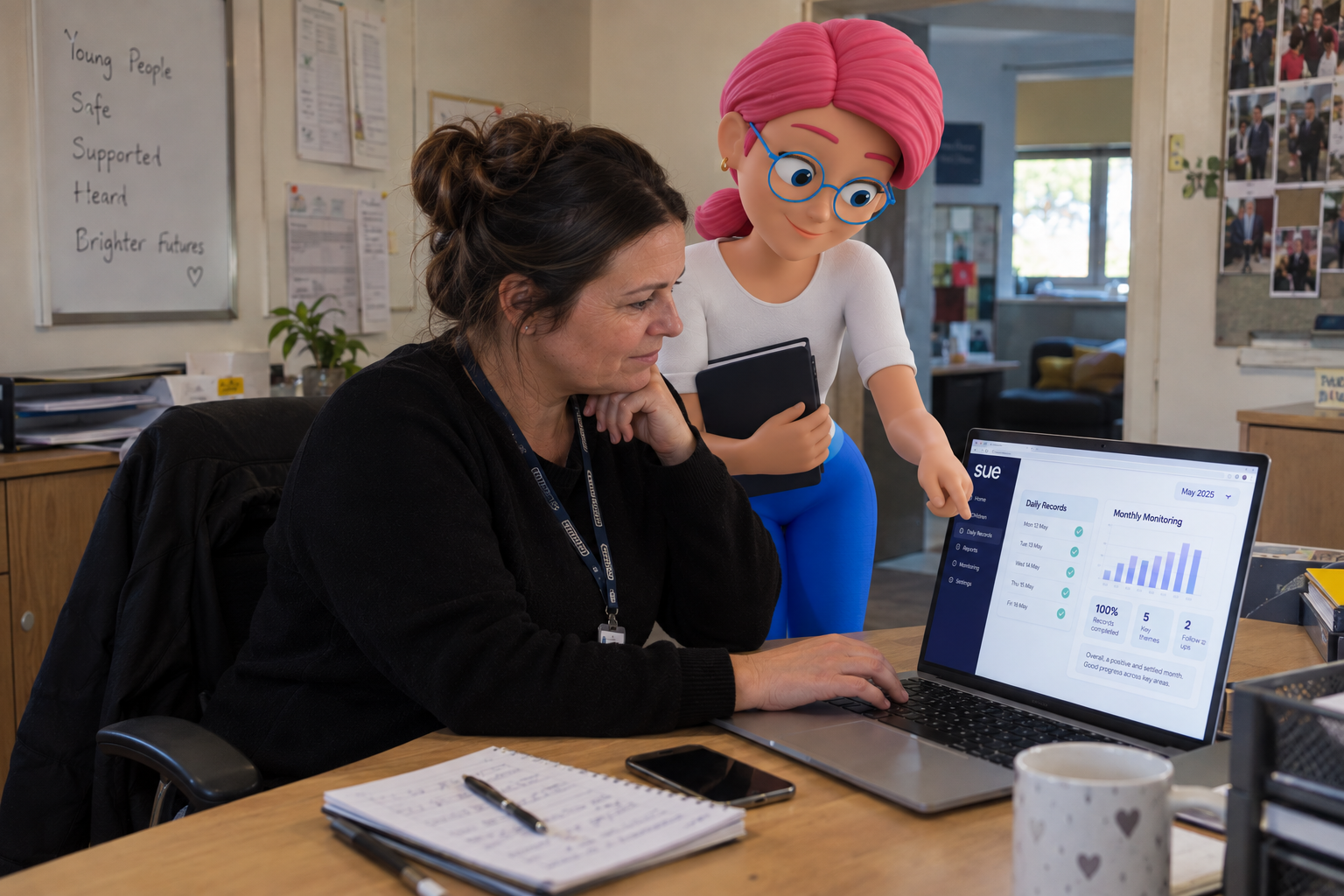
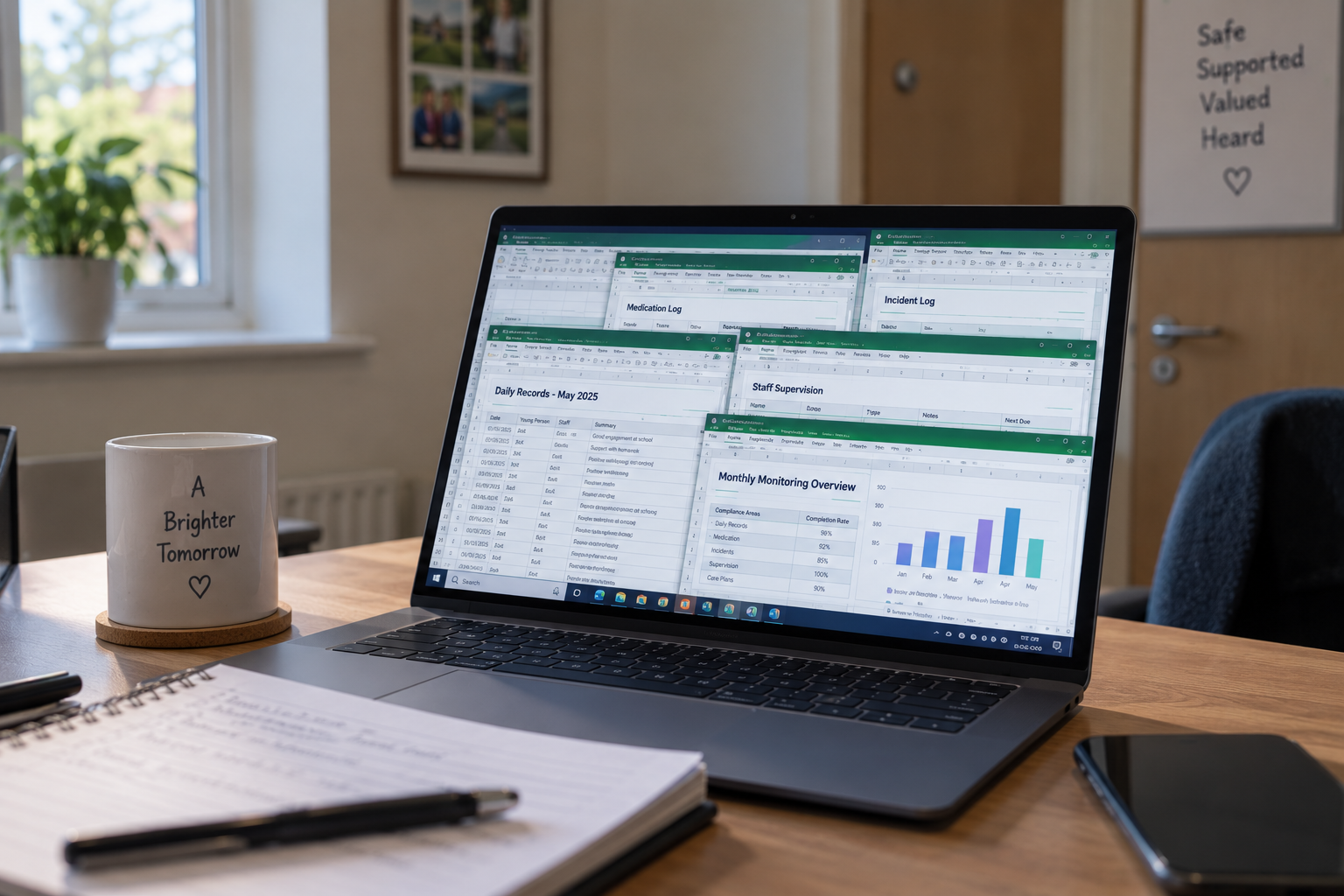
A well-built recording system supports this without adding load. It can surface overdue reviews, incomplete actions and gaps before they become findings, link incidents back to plans, keep training compliance visible, and give a registered manager a live picture rather than an end-of-month reconstruction. The point is not the software itself. It is that the evidence stays current because the system keeps it current, which frees staff to spend their attention on the children rather than on the filing.
Where Recording Systems Help And Where They Do Not
A system earns its place here by making good recording the path of least resistance. If capturing the child's voice, linking an incident to a plan and closing an action are quick to do, staff do them. If they are awkward, staff work around them and the evidence thins out. The right platform reflects the language and workflows of children's residential care, prompts for what a record needs, and shows managers where oversight is slipping while there is still time to act.
What a system cannot do is manufacture quality that is not there. Inspectors see through records that are complete but hollow, and no dashboard turns weak practice into strong evidence. The value of a sector-specific platform like Sue Solutions is narrower and more honest than that. It takes the effort out of good recording so that strong practice shows up clearly in the file, links each entry back to the child's plan, and keeps the whole picture connected across one home or several. The care is yours. The system just makes sure the record does it justice.
Frequently Asked Questions
Under the SCCIF, inspectors look for records that evidence the impact of care on a child, not the volume of it. They case-track individual children, sample records like care plans, risk assessments and incidents, and check that the records, staff practice and leadership oversight all tell the same story. The child's voice and lived experience should be visible, and fact should be clearly separated from opinion.
Not more, better. Ofsted has been clear that inspectors spend less time on policies and procedures and more on the impact of care on children's lives. A long log full of routine entries is not evidence of quality. What counts is whether a record shows what happened, why a decision was made, what was done next and how the child experienced it.
Capture what the child said in their own words as a direct quote rather than a worker's interpretation, and record it close to the moment so it is not lost. Note how they seemed, how they responded, and how their view shaped the plan. Good practice is to write records a child could one day read and understand, with their contributions clearly shown and fact separated from opinion.
Inspectors draw on care plans, risk assessments, daily logs, incident and missing from home records, complaints, health and education records, and leadership oversight including Regulation 44 and Regulation 45 reports and Regulation 40 notifications. They also use the home's inspection history and Annex A, which must be accurate and consistent with the rest of the record.
Treat readiness as a daily habit rather than a scramble before the unannounced call. Record close to the event so the trail is current, keep the child's voice and manager oversight visible as you go, and make sure notifications, Reg 44 and Reg 45 reports and Annex A stay consistent. A system that surfaces overdue actions and gaps helps managers keep that state without evening catch-ups.