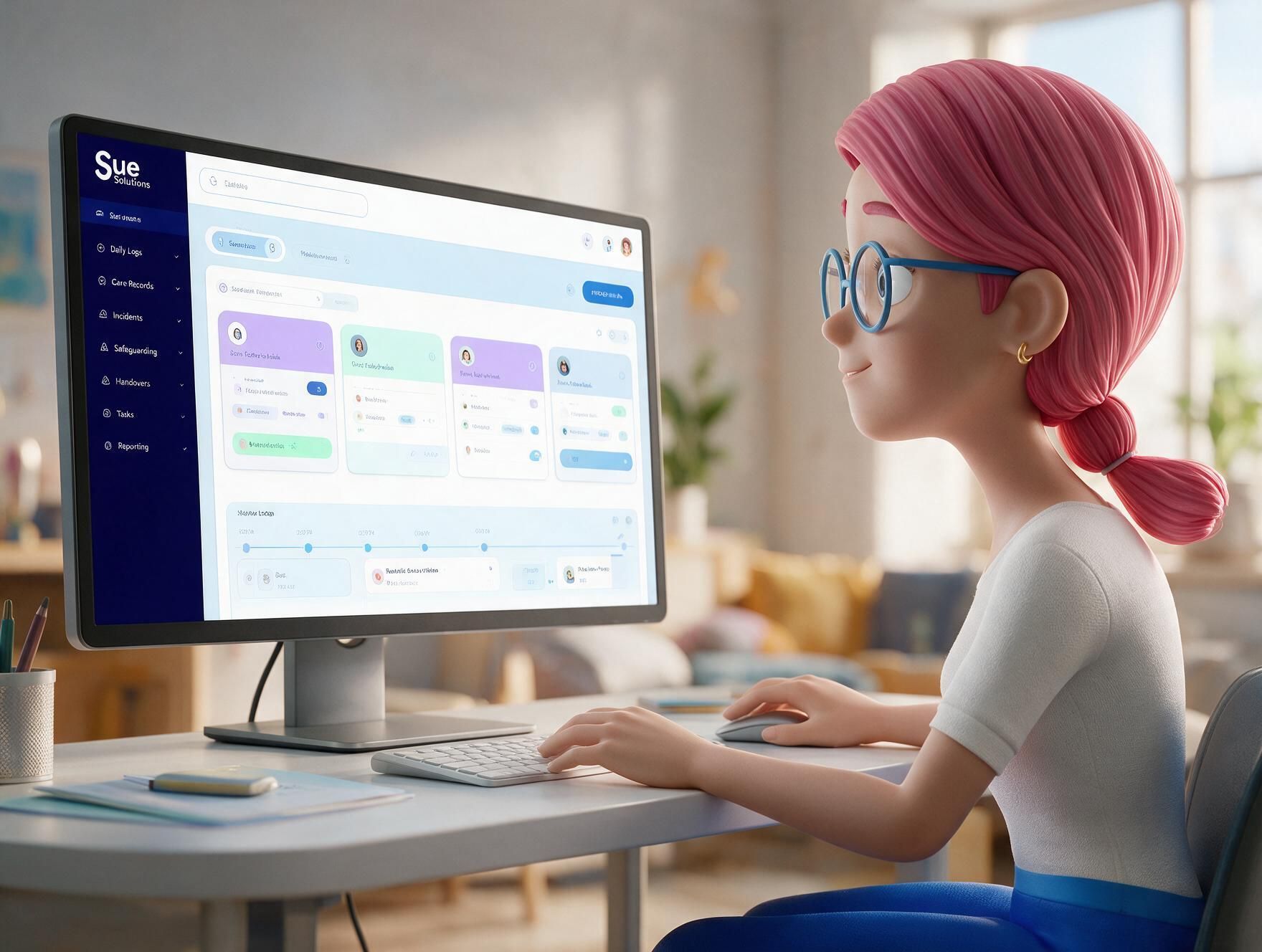
The Future Of Children's Home Technology
The future of children's home technology is not about adding more screens to residential care. It is about giving the right people a clear, current picture of what matters, so they can spend less time chasing information and more time being present for young people.
That holds just as much for supported accommodation, and the gains are practical ones, shaped by safeguarding, Ofsted and the daily reality of a shift, not by the latest device.
Take an early morning handover. If the context the next shift needs is sitting in a notebook, a colleague's memory or an unread email, the team starts the day guessing. Technology's job in a children's home is not to add screens. It is to put a clear, current picture of what matters in front of the people who need it, when they need it.
What Does the Future of Children's Home Technology Look Like?
The most useful thing technology can do for a children's home or a supported accommodation service is join up the everyday record, so nothing depends on one person remembering the right thing at the right time. That is a less exciting idea than automation, and far more useful on a real shift.
- Tools adapted from adult or general care
- Systems that never mention safeguarding
- Predictive scoring of children or staff
- Another screen that sits beside the others
- One record across homes and supported accommodation
- Overdue actions visible while there is time to act
- Patterns a manager can see and question
- Evidence built day by day, not the week before
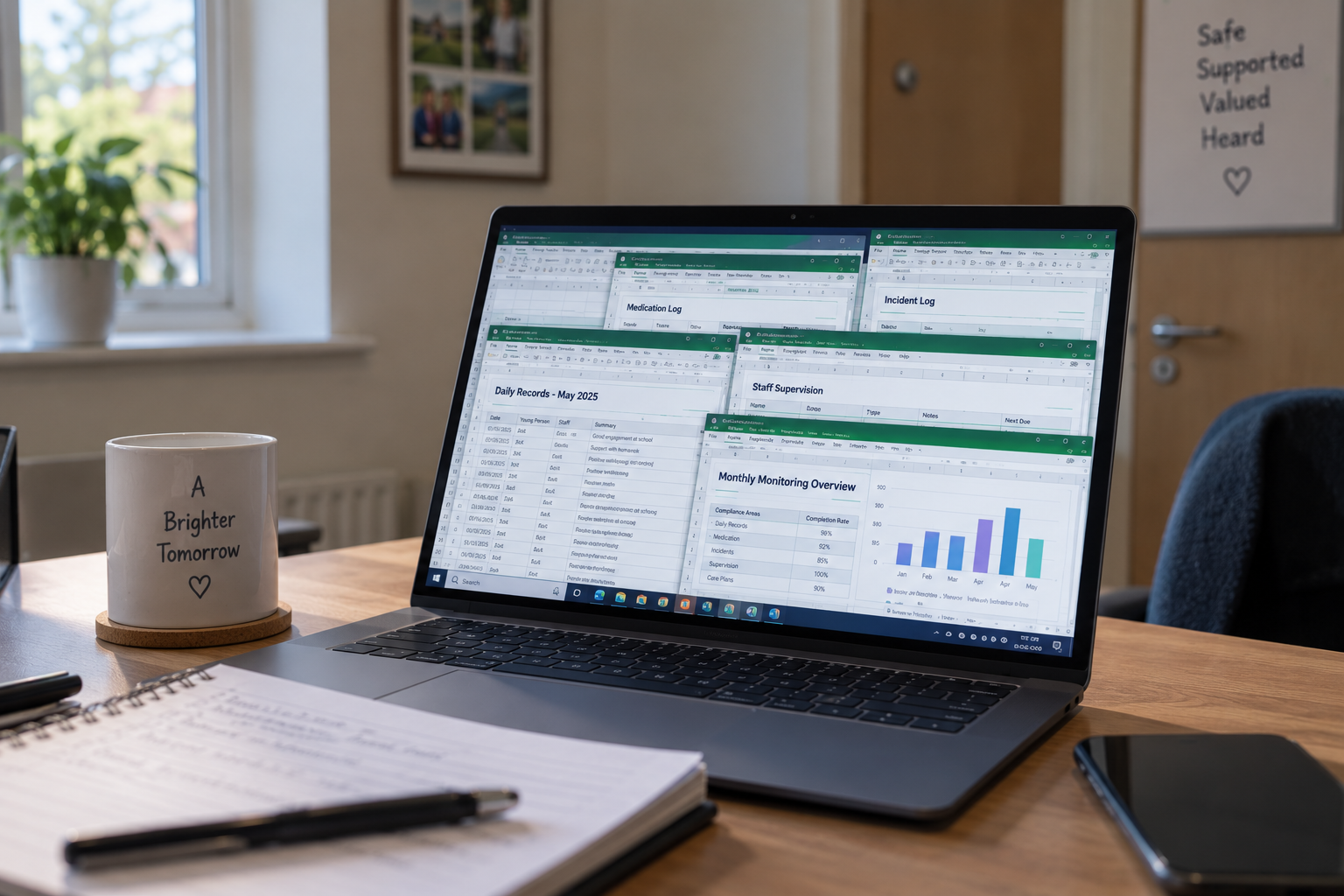
Careworkers need to record observations, key work, daily events and concerns without copying the same thing across paper, spreadsheets and separate apps. Registered managers need to know whether essential tasks are done, where risk is escalating, and whether the home is working in line with its own policies. Responsible individuals and directors need real oversight across homes, without asking already stretched managers to build reports from nothing. When those needs sit in separate systems, small gaps turn into operational risk: a missed follow-up goes unnoticed, an incident trend is hard to see, a training expiry surfaces at the worst possible moment.
The point of connecting these is not to watch staff. It is to hold one shared, accurate account of care and management, so a manager can ask a better question early, offer support where it is needed, and show how a decision was reached. That connection is the real work behind children's home management software, and it matters far more day to day than any gadget.
From Retrospective Reporting to Live Visibility
Too much reporting in residential care happens after the fact. Teams pull evidence together when an inspection looms, an audit falls due, or a serious concern needs review. That creates pressure, and it can hide the difference between a home that is well run and one that is simply quick at finding documents.
The next generation of technology should make readiness ordinary. If records are completed consistently, actions are assigned clearly, and managers can see what is overdue, the evidence builds day by day. Ofsted preparation stops being a scramble and becomes a by-product of sound operational control. This matters most for providers growing from one home to several, where what once worked on personal knowledge no longer scales, and a manager should not have to become a full-time administrator to keep leaders informed. That is the case for multi home reporting and for visibility across homes done through role-specific views rather than manual reporting.
The best inspection preparation is a home that was already running well, with the evidence to show it.
Will More Technology Make a Children's Home Feel Less Personal?
There is a fair worry that more technology could make a children's home feel impersonal. The risk is real if a system is designed around compliance alone, or if staff spend their shifts filling in forms instead of being with young people.
The answer is not to reject digital tools. It is to choose ones that take away needless repetition. A well-designed platform cuts repeated entry, prompts staff at the right moment, and brings related information together, so it is easier to write a meaningful record of a young person's day than to fire off the quickest possible tick-box. For a careworker, that means less uncertainty about what needs doing and a clearer handover to the next shift. For a manager, fewer folders to check and more time for supervision and coaching. For a director, earlier assurance that policies are being followed.
Less doubt about what is outstanding, the current plan to hand, and a handover the next shift can trust.
Fewer folders to chase, overdue actions in view, and time returned to supervision and relationship-building.
Earlier assurance that policy is followed, patterns across homes in sight, and a firmer basis for investment.
The outcomes that matter most are undramatic. A shift that feels organised. A manager who has the full context before making a call. A young person who does not have to repeat their story because the team already holds it accurately. Good technology gives the adults more capacity to care well.
Artificial Intelligence Needs Clear Boundaries
AI will be offered to care providers more and more, for drafting summaries, spotting patterns across large volumes of records, and helping teams find information. Used with care, it can cut time spent searching and help leaders notice recurring themes, such as repeated missing from home episodes or gaps in follow-up, the kind of pattern a live risk assessment system keeps in view. What it cannot do is understand the whole context of a child's history, a hard family contact, or a change in behaviour that a trusted adult has noticed. It should raise questions for a person to weigh, never hand back an answer to be accepted unchecked.
This is not only good practice, it is the regulator's position. Ofsted supports the use of AI where it improves the education and care of children, but it does not require providers to use it, and it does not directly inspect the quality of AI tools. Instead it looks at the impact of AI use on children's experiences and outcomes, and it holds leaders accountable for making sure that use does not work against a child's best interests.
So the sensible position is not to fear AI or to hand it the wheel, but to keep it firmly bounded. Be especially wary of tools that claim to predict risk or rate children and staff. A decision that affects a young person's safety, placement or future has to stay accountable to a trained person. These are the lines worth holding.
- A safeguarding or placement decision, or anything that touches a child's safety or future, stays with a person. It is not something to automate.
- If nobody on the team can say what a recommendation is based on, that is a reason not to trust it.
- AI can draft a summary or surface a pattern, but a suitably trained person still reads it and signs it off.
- Everyone should be able to see what the tool draws on, what it has no way of knowing, and how its output gets checked.
Why Is Data Protection Part of Safeguarding?
As systems become more connected, information governance only matters more. A children's home holds highly sensitive information, and convenience must never come before privacy, access control or accurate records. The future asks providers to be clear about who can see what, why they need that access, and how changes to records are tracked.
Strong permissions, audit trails, secure storage and sensible retention are not technical extras. They are part of safeguarding, and they protect staff, managers and the organisation when a decision has to be understood later. There is a balance to hold. Information should not be locked so tight that staff cannot act safely, but nor should it sit open to everyone by default. A good system recognises that the person writing a daily record, the manager reviewing an incident, and the responsible individual overseeing governance each need a different level of access and detail. That is the thinking behind proper audit trails and role-based access.
What Should You Look For Before Investing?
The market will keep growing, and not every product built for general care, HR or business administration will fit children's residential care. Before adopting a new platform, test whether it reduces real work rather than simply digitising old processes.
- Usable on a busy shift. Can staff record confidently mid-shift, or does it slow them down?
- Built for this sector. Does it reflect the language and workflows of children's homes, not care in general?
- Answers real questions. Can reporting answer what leaders are really asked, about incidents, actions, training and oversight?
- Supported properly. What do implementation and ongoing support look like? A system only creates control when people use it consistently.
Purpose-built platforms are designed around these realities: supporting frontline recording while giving managers and leaders the visibility to act before small issues grow. The right choice depends on the size of the organisation, its current processes and its plans for growth. A newly registered home may need simple structure and the confidence that nothing is missed. A multi-home provider may need consistency, comparative reporting and stronger governance across sites. In both cases the goal is the same: technology should fit around good care practice, not force good care to fit around software. If you are weighing this up, our guide to switching to children's home specific software covers what a move really involves.
The most promising future is not a fully automated children's home. It is a better-supported one, where records are reliable, responsibilities are clear, and the people caring for children have more time, more context and more confidence to do the parts of the job a machine never can. Sue Solutions was built for that, by people who worked in the sector, across children's residential homes and supported accommodation.
Frequently Asked Questions
For children's residential care and supported accommodation, the near future is one trusted operational record that follows the work as it happens. The gains come from joining up recording, oversight and evidence so responsibilities, deadlines and risks are visible to the people accountable for them, which gives staff more time with young people rather than more screens to check.
No, and it should not. AI can help draft summaries, surface patterns in large volumes of records and speed up finding information, but it cannot understand a child's history, a difficult family contact or a change a trusted adult has noticed. Ofsted holds leaders accountable for the impact of any AI use on children, and does not inspect the tools themselves, so safeguarding judgement has to stay with suitably trained people.
Ofsted supports the use of AI where it improves the education and care of children, but it does not require providers to use it, and it does not directly inspect the quality of AI tools. Instead it considers the impact of AI use on children's experiences and outcomes, and holds leaders responsible for making sure that use does not work against a child's best interests. This is set out in Ofsted's published guidance on how it looks at AI during inspection and regulation.
It can, if a system is designed around compliance alone or expects staff to spend shifts filling in forms. The way to avoid it is to choose technology that removes repeated entry, prompts staff at the right time and brings related information together, so it is easier to write a meaningful record than a rushed tick-box one. Done well, it gives adults more capacity to be present.
Test whether it reduces real work rather than just digitising old processes. Ask whether staff can use it confidently on a busy shift, whether it reflects the language and workflows of children's homes, whether reporting answers the questions leaders are really asked, and what implementation and ongoing support look like. A system only creates control when people understand it and use it consistently.