Responsible Individual First 90 Days Checklist
A new responsible individual should spend the first 90 days learning the home before changing it, then building a steady way to see records, actions and risks between visits. The job is to supervise the management of the home and answer for it to Ofsted, and you can only do that once you understand how the home really runs. This plan breaks the first three months into three phases, with a checklist for each.
Taking on the responsible individual role is a step up in accountability, whether you have come from managing a home yourself or from a director's seat. You are now the named person Ofsted holds to account for the home, the one expected to know it well and to support, guide and challenge the registered manager where needed. That is a lot to pick up at once, so the sensible approach is to sequence it rather than try to do everything in week one.
What Does A Responsible Individual Do
The responsible individual supervises the management of a children's home and acts as the provider's point of accountability to Ofsted. Where the provider is an organisation, Ofsted needs a named, fitness-assessed person who answers for it, because you cannot hold a company itself to account the way a regulator needs to. You are the bridge between the board or directors and the daily running of the home.
The duties carry real weight. You satisfy yourself that the home runs in line with its Statement of Purpose and meets the Quality Standards, you lead the home towards the Leadership and Management Standard, and you carry out or arrange the monthly monitoring visit. Understanding that scope shapes how you spend the first 90 days, since the whole plan below builds towards doing those things with evidence behind you.
Regulation 26 of the Children's Homes (England) Regulations 2015 covers the fitness of the responsible individual. It requires you to have the capacity, experience and skills to supervise the management of each home you are nominated for. Where you cover more than one home, you must be able to show you can supervise each one individually as well as all of them together.
Days 1 To 30, Learn The Home Before You Change It
The first month is for understanding how the home runs before you start reforming it. New RIs who arrive and immediately start changing systems tend to lose the manager and the team before they have earned any trust. Read first, listen hard, and resist the urge to fix things you do not yet fully understand.
Read The Documents That Define The Home
Start with the Statement of Purpose, because much of your job is checking the home delivers what it promises. Read the children's guide, the locality risk assessment, the most recent Ofsted report and any action plan attached to it, the safeguarding policy and the last few months of incident records. You are building a mental model of the home, its children and its pressure points.
Meet The Manager And The Team Properly
Your working relationship with the registered manager will shape everything. Meet early, be clear that you are there to support as well as hold to account, and ask how they would like to escalate concerns to you. Meet the wider team too. The staff on shift will tell you more about how the home really feels than any document.
Get An Honest Baseline
You need a clear starting position on records, staffing, training compliance and outstanding actions. Where are records inconsistent. Which supervisions are overdue. What is sitting unresolved from the last inspection. This baseline is what you will measure progress against, so it is worth getting right.
- Read the Statement of Purpose, children's guide and locality risk assessment
- Review the latest Ofsted report and any action plan in full
- Meet the registered manager and agree how they escalate to you
- Spend time in the home with staff on shift, not just in the office
- Establish a baseline on records, incidents, training and open actions
- Check how staff training and vetting are currently tracked
Days 30 To 60, Build Your Oversight Rhythm
By the second month you understand the home well enough to set up how you will keep watch over it. The core problem every RI faces is simple to state and hard to solve. You are accountable for what happens in the home every day, but you are not there every day. Oversight is really the answer to that gap.
Decide How You Will See Between Visits
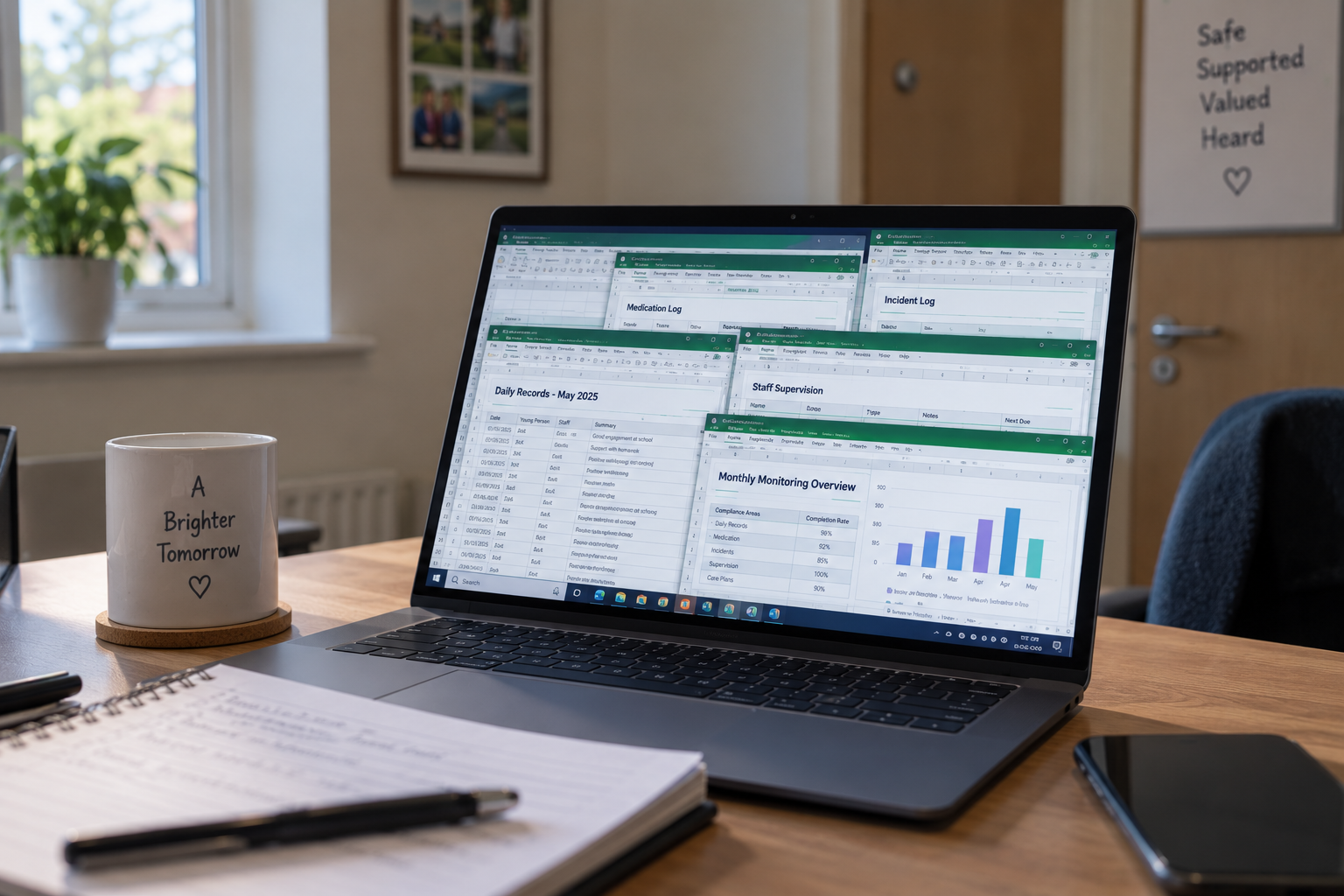
Oversight that leans on a monthly visit and a manager's verbal reassurance in between will always be playing catch-up. What you want is a live view of records, open actions and emerging risks whenever you need it, so your visit confirms what you already broadly know rather than being the only time you find out. The right management system earns its place here, because chasing updates by email and spreadsheet stops scaling the moment you are responsible for more than one home. Live support plan monitoring tells you whether a young person's plan is being followed without waiting for the visit to find out.
Agree Escalation With The Manager
Set clear expectations for what reaches you immediately, what comes in a weekly summary, and what waits for the monthly visit. A serious safeguarding incident should never sit in a queue. Agreeing these thresholds now saves confusion later and protects both of you.
Prepare For Your First Regulation 44 Visit
Your first monthly monitoring visit sets the tone. Go in with a structure, look at the things the regulation asks you to assess, and write the report so it shows genuine scrutiny rather than a walk round. The point is not to catch the manager out. It is to evidence that someone independent is checking the home is safe and well run.
Regulation 44 requires a monthly monitoring visit to each home, carried out by the responsible individual or a suitable person on their behalf. It must assess the condition of the premises, the conduct of the home and whether children are receiving appropriate care, and it results in a written report to the registered provider. You can read the full wording in Regulation 44 on legislation.gov.uk. Treat it as your main formal evidence of oversight.
- Choose how you will see records and actions between visits
- Agree escalation thresholds with the manager in writing
- Set a visit schedule that reflects the home's level of risk
- Run your first Regulation 44 visit against a clear structure
- Write a monitoring report that shows real scrutiny and follow-up actions
- Check outstanding actions from month one are being closed
Days 60 To 90, Turn Oversight Into Governance
By the third month, single visits and one-off checks should start joining up into something that looks like governance. You are no longer just seeing what happened last week. You are spotting patterns, evidencing quality over time, and settling a routine you can sustain.
Look For Patterns, Not Just Events
A single incident tells you what happened that day. The same kind of incident three times in a month tells you something about staffing, training or a particular young person's needs. Good oversight at this stage is about connecting individual records into a picture, which is far easier when your information sits in one place rather than across separate systems.
Evidence How The Home Meets The Quality Standards
Ofsted will want to see that you can show, not just say, how the home meets the Quality Standards, and strong Ofsted compliance rests on that evidence being ready rather than assembled in a rush. Build the habit of keeping it current, so a monitoring report, a supervision record and a trend across incidents all point the same way. An inspector can tell the difference between an RI who has the evidence to hand and one who is hoping the home is fine.
Settle A Routine You Can Keep Up
Whatever you put in place has to survive a busy month. Decide the cadence of visits, reports, manager supervisions and data reviews you can realistically hold, and protect it in the diary. If oversight only happens on the quiet weeks, it will not hold up when a home hits a difficult one.
- Review incident, safeguarding and complaint trends across the quarter
- Check the home against its Statement of Purpose and the Quality Standards
- Keep evidence of oversight current rather than assembled before inspection
- Confirm the manager has the support and resources they flagged
- Set a sustainable cadence of visits, reports and data reviews
- Review performance across every home you are responsible for
What Changes When You Oversee More Than One Home
Everything above holds for a single home. Across several, the weak points show up faster. A visiting schedule that felt manageable for one home becomes a diary problem across four. Chasing updates by email works until it quietly does not, and by the time a pattern surfaces in a spreadsheet it may already be affecting a child.
| Records to keep across | Why it matters to an RI |
|---|---|
| Incidents | Frequency and type reveal risk and training gaps before an inspection does |
| Safeguarding | Serious concerns need to reach you at once, with a clear trail of what followed |
| Staffing | Vacancies, turnover and agency use shape the quality of care a home can give |
| Training | Overdue mandatory training is a common and avoidable inspection finding |
| Actions | Open actions that never close are where oversight most often slips |
Regulation 26 allows one RI to cover several homes only where they have the capacity to discharge the monthly visiting and oversight duties for each. In reality, that capacity depends heavily on how well you can see each home without physically being in it. Clear handover records between shifts feed straight into that view, so what happened overnight is not lost by the time you look. A live view across homes is the difference between real oversight and a monthly catch-up that hopes for the best. It also frees you to spend your time where the risk sits, rather than spreading attention evenly across homes that need very different levels of it.
The first 90 days are not about proving you can change everything at once. They are about understanding the home, setting up a way to see it clearly, and building evidence that it is safe and well led. Do that, and the oversight role stops feeling like a monthly scramble and starts feeling like something you have a real grip on.
Frequently Asked Questions
Learn the home before changing it. In the first month, read the Statement of Purpose, meet the registered manager and staff, and build an accurate picture of records, incidents, staffing and compliance. You cannot supervise the management of a home you do not yet understand, so early listening matters more than early decisions.
Under the Children's Homes (England) Regulations 2015, the responsible individual supervises the management of the home, satisfies themselves it runs in line with its Statement of Purpose and meets the Quality Standards, and acts as the provider's point of accountability to Ofsted. Regulation 26 covers their fitness for the role, and Regulation 44 requires a monthly monitoring visit with a written report.
A Regulation 44 visit is the monthly monitoring visit a responsible individual, or a suitable person on their behalf, carries out at each children's home. It assesses the condition of the premises, the conduct of the home, and whether children are receiving appropriate care, and results in a written report to the registered provider. It is a core part of how an RI evidences oversight.
At least monthly, through the Regulation 44 visit. Many RIs visit more often, particularly when a home is newly opened, under scrutiny, or working through a period of change. Visiting frequency should reflect the level of risk and how well the RI can already see what is happening between visits.
By having a reliable way to see records, actions and risks across every home between visits, rather than relying on separate spreadsheets and retrospective updates. Regulation 26 allows an RI to be nominated for several homes only where they genuinely have capacity to discharge the monthly visiting and oversight duties for each, so live visibility across homes becomes the difference between real oversight and a paper exercise.