A Practical Guide To Children's Home Compliance
Children's home compliance is the everyday evidence that children are safe, heard and well cared for, not a separate job that starts when Ofsted calls. For UK providers it sits mainly within the Children's Homes (England) Regulations 2015 and the nine Quality Standards, alongside safeguarding, staffing, health and safety and data protection. The central test is simpler than the pile of requirements suggests, can you show that your care and oversight consistently promote each child's welfare. This guide covers the standards, the habits and the records that let you answer yes.
A missed supervision, an incident report finished three days late, a training certificate sitting in an inbox, none of these on its own tells the whole story of a home. Together, they can make a good home hard to lead and harder to evidence. Compliance is really the set of routines that make good practice repeatable across every shift, so that when the right information is captured at the right time, managers spend less energy chasing paperwork and more time leading the home.
What Children's Home Compliance Really Means
For providers in England, compliance sits across the Children's Homes (England) Regulations 2015, the nine Quality Standards, the Guide to the regulations, registration requirements and Ofsted's inspection expectations. It also reaches into safeguarding arrangements, safer recruitment and employment practice, health and safety, data protection and any local procedures that apply to the home. If the home also runs supported accommodation for 16 and 17 year olds, that is a separate framework again, with its own registration and standards.
That can read as a daunting stack of obligations. The central question underneath it is simpler. Can you show that your decisions, your care and your oversight consistently promote each child's welfare. A strong home does not rely on one experienced manager holding everything in their head. It has clear routines that make good practice repeatable across shifts, at weekends, during staff absence and when the home is busy, and records that explain not just what happened but what the home learned and did next.
The Nine Quality Standards At The Heart Of It
The nine Quality Standards are the framework Ofsted inspects every registered home against. They sit in Regulations 6 to 14 of the 2015 Regulations, prescribed by Regulation 4, and each opens with a child-focused outcome and then sets out what the home must do to deliver it. Regulation 5 sits across all nine and is easy to overlook, it requires the home to work with the wider system around each child, because no home meets every need alone.
| Regulation | Quality Standard |
|---|---|
| Reg 6 | Quality and purpose of care , care from staff who understand the home's aims and each child's needs |
| Reg 7 | Children's views, wishes and feelings , children are consulted and their voice shapes their care |
| Reg 8 | Education , children are helped to attend, engage and make progress in learning |
| Reg 9 | Enjoyment and achievement , children take part in activities and develop their talents and interests |
| Reg 10 | Health and well-being , physical, emotional and mental health needs are identified and met |
| Reg 11 | Positive relationships , children build stable, trusting relationships and manage feelings safely |
| Reg 12 | Protection of children , children are kept safe and helped to keep themselves safe |
| Reg 13 | Leadership and management , the home is led well, with oversight that drives quality |
| Reg 14 | Care planning , each child has a clear, current plan that guides their care |
Treating these as nine separate boxes misses the point. In a well-run home they overlap, a positive relationship is what makes a child feel safe enough to share a worry, and that in turn feeds protection and care planning. The standards describe one joined-up picture of good care, and your records should be able to show that picture rather than nine disconnected files.
Start With The Child's Lived Experience
The strongest compliance begins with the child rather than the form. A record can be technically complete and still weak if it does not explain the child's wishes, how they presented, the context of an incident and the support offered afterwards. This is exactly what an inspection looks for, so it is worth building in from the start rather than adding on later.
Care plans, placement plans, risk assessments and key work records need to stay live. They should reflect changing needs, relationships, education, health, identity and family time. A risk assessment copied forward without review creates false reassurance, and a plan rewritten constantly without a clear note of what changed leaves staff unsure what is current. The aim is a visible thread. If a young person is anxious after family contact, the team should be able to see how that was recognised, what support was offered, whether professionals were told and whether the plan was reviewed. That thread is meaningful evidence of child-centred care.
A record that begins with the child, not the form, is the one that holds up when it matters most.
Build Compliance Into The Rhythm Of The Home
A manageable operating rhythm turns a large compliance burden into smaller, visible actions. The exact timetable depends on the size of the provider, the needs of the children and the home's risk profile, and a newly registered service usually needs closer management checks while routines settle. The shape below tends to hold whatever the size of the home.
The thing that makes a rhythm work is ownership. Every task should have a named person, a due date and an outcome, and an overdue action needs to be visible early enough for someone to step in, rather than discovered while preparing for an inspection. A larger group needs consistent processes across its homes, but should be careful that standardisation does not harden into a tick-box exercise that ignores each home's circumstances.
Keep Policies Active, Not Filed Away
Policies earn their place only when staff know how to apply them at 2am, during a difficult phone call or after an unexpected incident. Induction, team meetings, supervision and reflective discussion are where policy meets real situations. When a policy changes, record how staff were told, what learning was done and whether practice was checked afterwards, because circulating a document rarely proves understanding on its own.
Make Recording Timely And Purposeful
Late recording leaves gaps in safeguarding information and weakens confidence in the whole account. Teams need protected time, clear expectations and practical systems to record while detail is fresh. Good records are factual, respectful and proportionate. They separate observation from interpretation, avoid judgemental language, and capture the child's voice wherever possible. They also show management review, particularly where an incident, complaint, allegation, missing from home episode or restraint needs follow-up. Strong handover records carry that detail safely from one shift to the next, so a concern raised at night is not lost by the morning.
Safeguarding Is Everyone's Line Of Sight
Safeguarding cannot sit with the designated safeguarding lead alone. Care workers need to know what to do if they are worried, who to contact, how to escalate and where to record it. Managers need assurance that referrals, notifications and follow-up have happened within the required timescales. The statutory backdrop here moved recently, so it is worth checking your arrangements against the current version rather than the one you trained on.
Working Together to Safeguard Children was updated in March 2026, replacing the 2023 edition, with a stronger emphasis on early help, family support, multi-agency accountability and anti-racist practice.
Ofsted's Social Care Common Inspection Framework for children's homes was updated on 1 April 2026, keeping children's lived experience at the centre of inspection.
The Children's Wellbeing and Schools Act 2026 introduced new Ofsted enforcement powers, including a more proactive approach to unregistered provision.
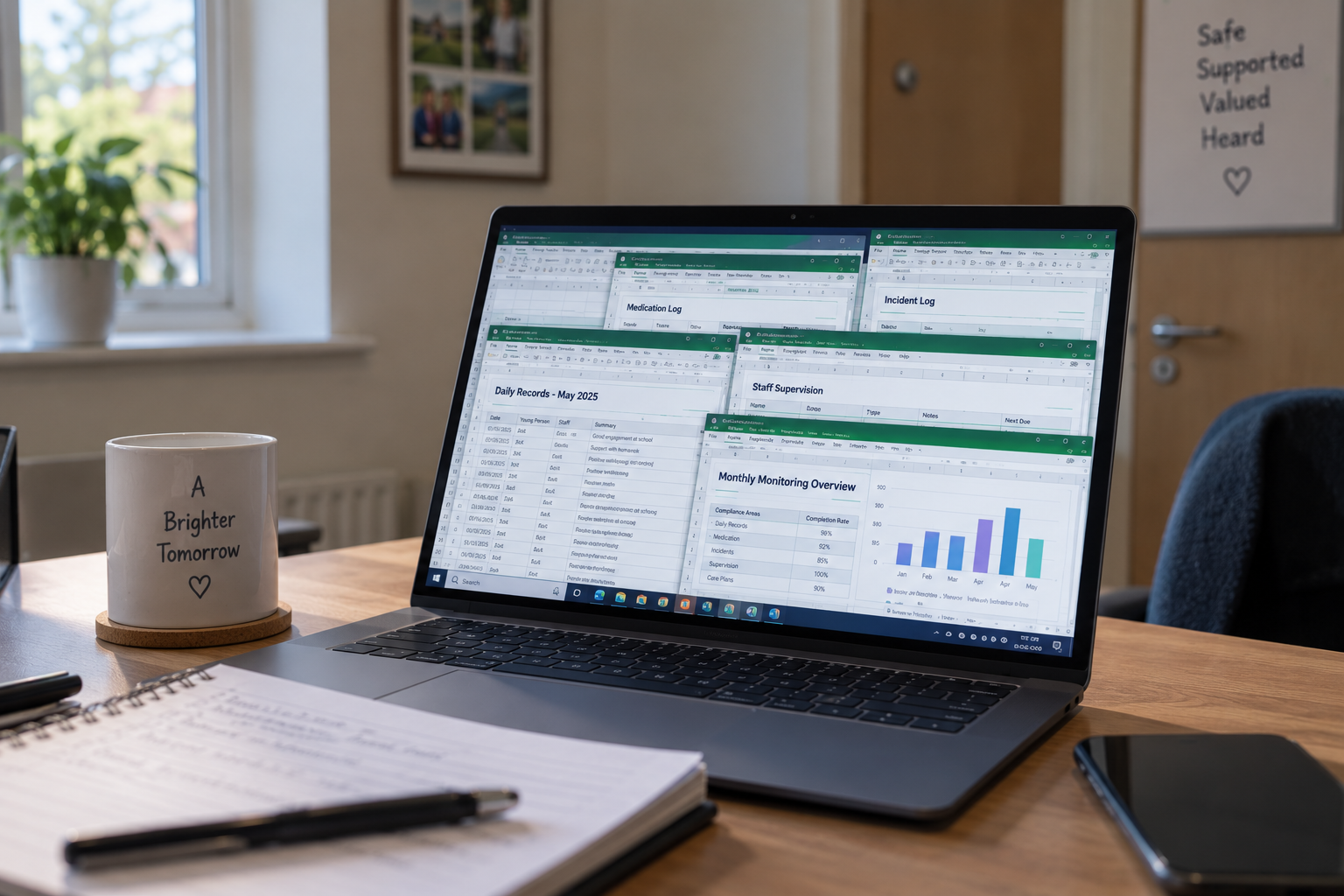
Patterns matter as much as single events. Repeated missing episodes, low-level peer conflict, medication errors, self-harm indicators or signs of exploitation may point to a risk no single report makes obvious. Regular review is how a team moves from reacting to incidents towards preventing them. Clear safeguarding recording supports that, because when information is scattered across paper files, shared drives, emails and personal notes, the connections that matter are the ones most easily missed. A single operational record gives managers and leaders a more reliable picture of what is happening across the home.
Give Staff The Structure To Succeed
Children experience the quality of the workforce every day, so staffing compliance is care quality, not paperwork. Safer recruitment checks, references, right to work evidence and role suitability must be complete and accessible before someone starts. The Regulations are specific about qualifications, and inspectors do ask to see them.
Under Regulation 28, the registered manager must hold the Level 5 Diploma in Leadership and Management for Residential Childcare, or an equivalent, within three years of starting to manage the home. Under Regulation 32, care staff need the Level 3 Diploma for Residential Childcare, or an equivalent, usually within two years of starting in a care role, and providers must follow safer recruitment for every appointment.
Workforce compliance continues long after appointment. Training should match the home's needs and each person's role, and mandatory learning, refreshers, competency checks and specialist development all need oversight. A training matrix shows what is due, but it cannot on its own prove that learning has changed practice, which is where supervision, observation and reflective conversation come in. Supervision should be purposeful, a space to discuss safeguarding, wellbeing, conduct, development, casework and the emotional weight of the role. Managers need supervision and support themselves, because a provider that expects a manager to carry every operational risk alone tends to lose visibility when pressure rises.
Prepare For Inspection By Being Ready Every Week
Inspection readiness is not about producing perfect files. Inspections run under the SCCIF and are unannounced, and inspectors spend less time on policies and more on the impact of care on children's lives, testing whether the records, staff practice and the child's own account tell the same story. Clear evidence helps, and so does candid reflection about what the home is working on.
Keep a close eye on the home's statement of purpose and make sure practice matches what it promises. Review complaints, incidents, missing from home events, restraints, notifications, feedback and audits for themes, then record the action taken, who was responsible and whether it worked. One question is useful in every management review.
- If an inspector asked why we made this decision, could we explain it clearly and show the evidence?
- Does the child's voice appear in this record, in their words where possible?
- Has this incident, complaint or concern been followed up and closed, with management review visible?
- Do our Regulation 44 and Regulation 45 reports match what the daily records show?
If the answer to the first is no, the fix is not to wait for the next audit cycle. Put the gap right while the information and the learning are still current, which is the whole point of being ready weekly rather than annually.
Use Digital Systems For Control, Not More Admin
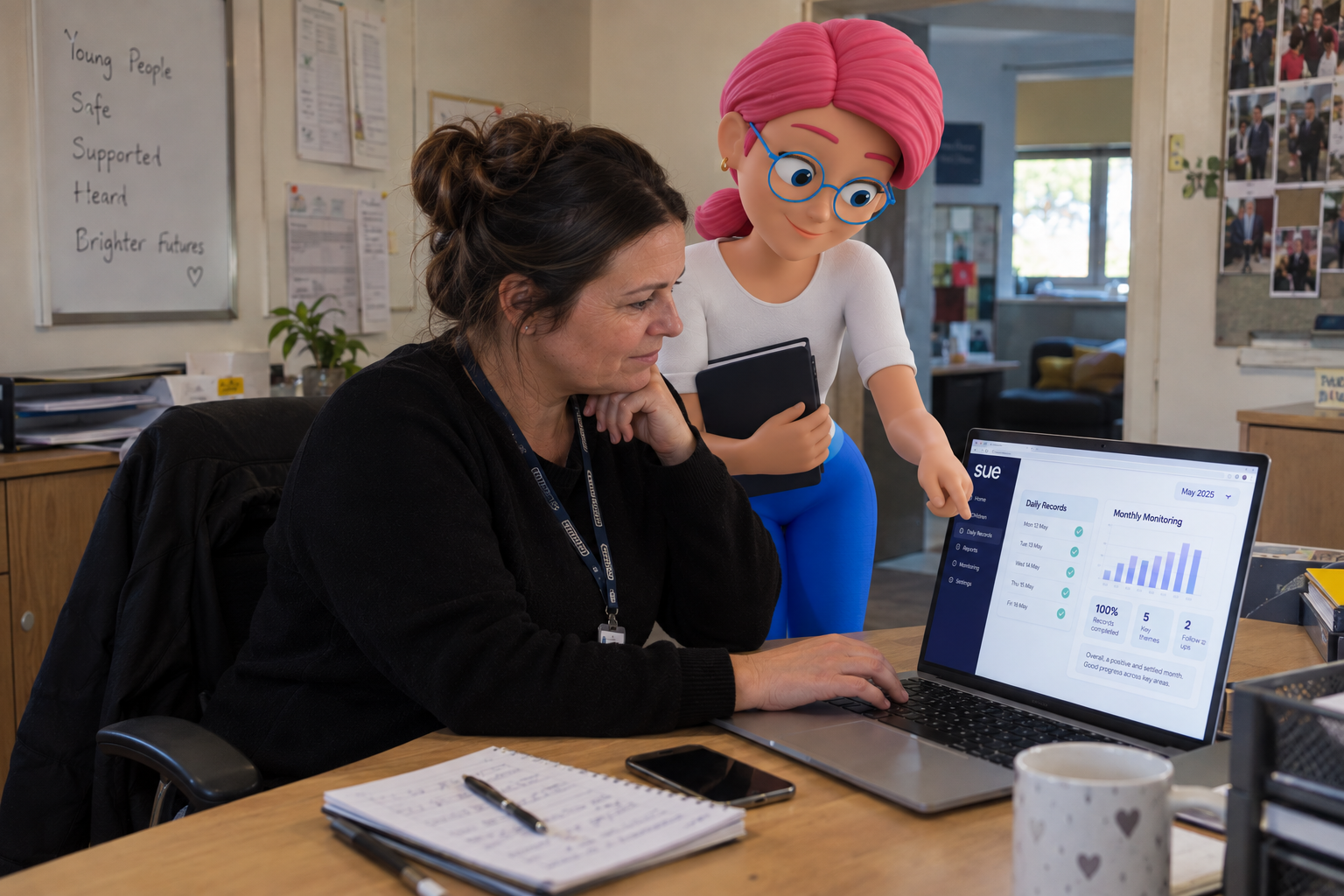
Technology should reduce duplication rather than add another place to log in. A system that brings care records, incident management, tasks, training, documents and daily logs into one workflow can prompt timely action, make overdue items visible and give leaders oversight without managers building reports by hand. For a single home that means fewer missed checks and more time on the floor. For a group, it means directors and responsible individuals can see variation between services before it becomes a serious problem.
Digital oversight still needs professional judgement. A dashboard can flag that a risk assessment is overdue, but it cannot decide whether the assessment properly reflects a child's current risks. Use the data to ask better questions, then use management experience and the child's voice to make the decision. Sue Solutions is built around these day-to-day realities of children's residential care, helping each role keep sight of what needs attention.
The Standard To Aim For
The most reassuring children's homes are not the ones with the most paperwork. They are the homes where staff know the children well, leaders can see what is happening, concerns are acted on quickly and learning becomes part of ordinary practice. Build that consistency one routine at a time and compliance stops being about surviving inspection pressure. It becomes the ordinary evidence that every child is getting the safe, thoughtful care they deserve.
Frequently Asked Questions
Children's home compliance sits mainly within the Children's Homes (England) Regulations 2015, including the nine Quality Standards, and the Guide to the regulations. It also reaches into safeguarding under Working Together to Safeguard Children, safer recruitment and staff qualifications, health and safety, data protection, registration requirements, and the monitoring duties under Regulations 44 and 45. The central test is whether you can show your care and oversight consistently promote each child's welfare.
They are set out in Regulations 6 to 14 of the Children's Homes (England) Regulations 2015 and prescribed by Regulation 4. They are the quality and purpose of care standard, the children's views, wishes and feelings standard, the education standard, the enjoyment and achievement standard, the health and well-being standard, the positive relationships standard, the protection of children standard, the leadership and management standard, and the care planning standard. Regulation 5 sits across all nine and requires the home to engage with the wider system around each child.
Under Regulation 28, the registered manager must hold the Level 5 Diploma in Leadership and Management for Residential Childcare, or an equivalent, within three years of starting to manage the home. Under Regulation 32, care staff must have the Level 3 Diploma for Residential Childcare, or an equivalent, usually within two years of starting in a care role, and providers must use safer recruitment procedures for every appointment.
By treating readiness as a weekly habit rather than a scramble before the unannounced call. Inspections run under the SCCIF, which focuses on the impact of care on children's lived experience rather than the volume of paperwork. Keeping records current, the child's voice visible, and monitoring under Regulations 44 and 45 consistent means the evidence is already there when inspectors arrive.
Yes. The Children's Homes (England) Regulations 2015 remain in force with no outstanding amendments. The wider framework has moved on around them, with the SCCIF updated on 1 April 2026, Working Together to Safeguard Children updated in March 2026, and new Ofsted enforcement powers on unregistered provision under the Children's Wellbeing and Schools Act 2026, so it is worth checking your safeguarding and oversight against the current versions.