What A Residential Care Reporting System Should Do
A residential care reporting system should bring order to the paperwork of a children's home, not add another layer of it. At its best it connects three things, quick frontline recording for careworkers, clear oversight for managers, and organisational reporting for directors and responsible individuals. The test is not how modern it looks in a demo. It is whether staff can record clearly at the end of a long shift and leaders can see a problem forming before it becomes serious.
Paperwork rarely arrives one item at a time in a children's home. It lands all at once, handover notes, incidents, missing from home episodes, medication records, key work updates, staff training, audits, supervision, complaints and safeguarding concerns. A reporting system earns its place by making that load lighter and the information easier to trust, which is a higher bar than simply storing everything in one place.
Why A Residential Care Reporting System Matters
In children's residential care, reporting is not a back-office task. It sits at the heart of safeguarding, quality assurance and daily continuity of care. When records are delayed, inconsistent or spread across different places, the cost is not just inconvenience. It can mean missed patterns, weak accountability and real pressure when Ofsted asks for evidence.
A good system reduces those risks by helping the right information reach the right people at the right time, across frontline records, management oversight and organisational reporting. If one of those layers is weak, the whole picture becomes harder to trust. That is truer still for providers running more than one home, or a mix of homes and supported accommodation. One service might be recording carefully while another leans on shortcuts and memory, and without a consistent structure, leaders can assume standards are stronger than they are. Good safeguarding recording depends on that consistency being built in rather than hoped for.
What Good Reporting Looks Like For Each Role
Fragmentation usually starts with one fact. Different roles need different things from the same data. A careworker wants ease and clarity at the end of a shift. A manager wants oversight and follow-up. A director wants patterns and risk indicators without operational detail they do not need daily. A system that serves all three, without forcing everyone into the same view, is doing its core job.
| Careworkers | Managers | Directors and RIs |
|---|---|---|
| What each role needs from reporting | ||
| Simple daily recording that reflects shift work, quick to complete and clear to read back | Visibility of incidents, trends, record gaps and whether actions were followed through | Assurance on which homes are performing, where incidents are rising and what is overdue |
| The current plan for each young person at the start of a shift | The ability to review, escalate and analyse without re-entering information | Enough detail to spot risk, not so much that the signal is lost |
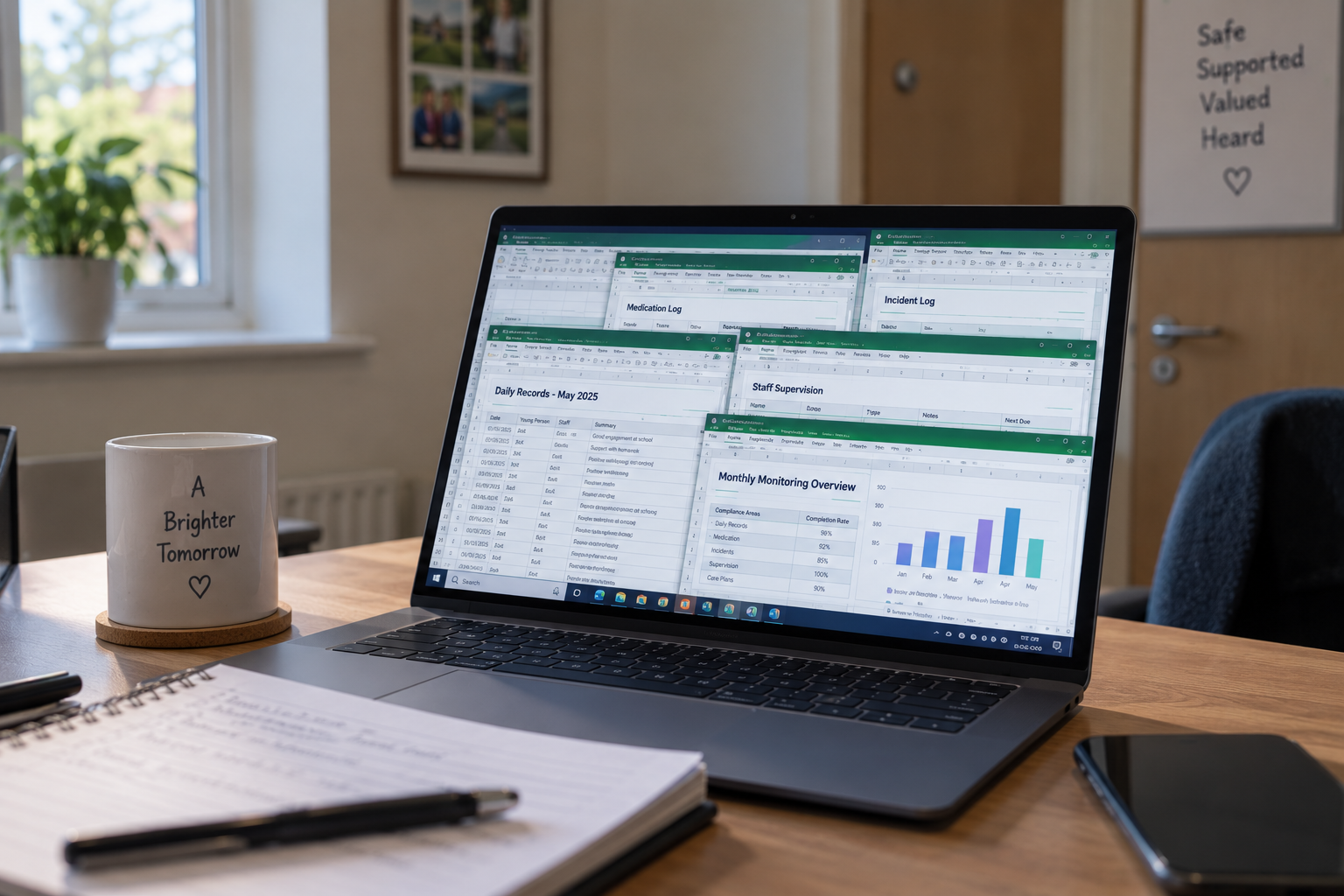
That balance matters. Too little detail and leaders miss risk. Too much raw information and they lose sight of what needs attention. Chasing updates across texts, emails, paper forms and separate spreadsheets is not a reporting process, it is a sign the reporting process is missing.
What Features Make A Real Difference
A reporting system does not need every possible feature. It needs the right ones, designed around how children's homes operate day to day. Four tend to matter more than the rest.
Structured Incident Recording
Staff should be able to log incidents quickly, with structure that supports accuracy rather than forcing clumsy workarounds. Managers should then review, escalate, analyse and report on those incidents without re-entering the same information somewhere else.
Daily Logs And Handover Records
Daily logs and handovers are the records used most often, so when they are awkward the whole team feels it. A well-designed system makes it easier to record meaningful updates, keep continuity and stop key information getting lost between shifts.
A Full Audit Trail
In a regulated setting it is not enough to know something was updated. You need to know when, by whom and why. That traceability supports accountability and gives confidence during inspections or internal investigations, and it is one of the clearest dividing lines between a filing cabinet and a reporting system.
Dashboards That Lead To Action
Dashboards are powerful only when they show something useful. Leaders need practical visibility into incidents, missing from home episodes, sanctions, complaints, medication issues, staff training compliance and overdue actions. A dashboard full of numbers without context can look impressive and still tell you very little.
Where Residential Care Reporting Systems Fall Short
Plenty of providers have used software that promised simplicity and created more admin instead. The problem is rarely the technology. It is fit.
Some systems are too generic. They work reasonably well in broader social care but do not reflect the workflows, language and regulatory demands of children's residential homes, so staff adapt the system constantly and the point is lost. Others are too rigid. Standardisation helps up to a point, but residential care is complex, and homes need structure without losing the room to reflect context and professional judgement.
Then there is adoption. If a platform is built mainly for senior reporting and not for the people entering data every day, record quality suffers. Frontline usability is not a nice extra, it decides whether the information in the system can be trusted at all.
If the people on shift cannot use it easily, nothing above them in the system is reliable.
How To Choose A System That Supports Every Role
Role-based design is often what separates a specialist platform from a generic one. If your team has to click through irrelevant screens or build manual reports outside the system, something is missing. The tools a manager relies on should connect safeguarding, compliance, workforce and reporting rather than adding one more screen to check.
A few practical questions tell you more than any feature list. Ask them of any system you are seriously weighing up.
- Can staff complete records efficiently during a busy shift?
- Can managers track actions without keeping separate notes?
- Can leaders compare homes consistently, without manual reports?
- Does it help you prepare for inspection rather than scramble when notice comes?
- Does it reflect the language and workflows of children's residential care?
How A Reporting System Supports Inspection Readiness
Inspection readiness is where reporting quality becomes visible. When records are complete, consistent and easy to reach, managers can evidence their practice with confidence rather than piecing files together at the last minute or explaining away gaps. A system does not guarantee a good outcome, since practice still matters most, but the right one supports stronger practice by making it easier to evidence decisions, track actions, monitor standards and respond quickly when issues emerge. Under the Children's Homes Regulations 2015, that evidence trail sits behind the Quality Standards an inspection tests against.
There is a cultural side too. When teams see the system as something that supports them rather than one that catches them out, recording becomes more consistent. Staff record in real time, managers review promptly, and senior leaders act on emerging concerns before they escalate. That move from reactive to proactive oversight changes the feel of a service, because people know where information lives, what needs attention and who is responsible for it.
What Implementation Really Takes
Even the best system will not fix everything on day one. Implementation needs clear ownership, sensible training and realistic expectations. Homes often underestimate the change involved. Moving from paper or scattered digital tools to one central system is a big shift, particularly for teams already under pressure, so staff need to understand not just how to use it but why it makes their work easier and safer over time.
Phasing helps. In the early weeks the focus can simply be consistency of recording. After that, managers start using reports more actively, and then leaders build stronger cross-home oversight. Trying to perfect every workflow at once usually creates frustration. A worked implementation example shows how that sequence tends to play out over the first few months. This is also where sector-specific support pays off, because a supplier who knows children's homes recognises the common sticking points and the difference between a technical issue and an operational one.
A Better Question Than Which Software
Providers often start by asking which system has the most features. A sharper question is which system will help our people record well, respond quickly and keep control. That shifts the focus from software as a product to software as an operational backbone, the thing that reduces duplication, improves communication, strengthens accountability and gives each level of the organisation the visibility it needs.
For children's homes, that is not a minor efficiency gain. It creates more time for care, less time chasing information, and a firmer grip on the standards that matter most. The best reporting systems work quietly in the background, supporting the work of looking after young people rather than distracting from it. If your current reporting still runs on workarounds, memory and an end-of-week catch-up, that is usually the clearest sign the system is not doing its job. The right one leaves your team with more clarity at the end of the day than they had at the start.
Frequently Asked Questions
It is software that records and reports the daily practice of a children's home or supported accommodation service, from frontline logs and incidents through to management oversight and organisational reporting. A good one connects those three layers so the right information reaches the right people at the right time, rather than sitting in separate spreadsheets, inboxes and paper files.
The ones that match how a home runs, rather than the longest list. Structured incident recording, daily logs and handover records that are quick to complete, a full audit trail showing who changed what and when, and dashboards that surface trends like incidents, missing from home episodes, medication issues, overdue training and outstanding actions. Frontline usability matters more than any single feature, because it decides whether the data is reliable.
When records are complete, consistent and easy to find, managers can evidence their practice rather than assembling files at the last minute. A reporting system does not guarantee a good outcome, since practice matters most, but it supports stronger practice by making it easier to evidence decisions, track actions and respond quickly when issues emerge. It also produces the audit trail an inspection relies on.
Because they are built for broader social care and do not reflect the specific workflows, language and regulatory demands of children's residential care. Staff end up adapting the system constantly, or building manual reports outside it, which defeats the point. A system designed around children's homes fits the records and the pace of the work instead of fighting them.
It varies with the size of the provider, but it helps to phase it. Early on, the focus is consistency of recording. Once that settles, managers use reports more actively, and then leaders build cross-home oversight. Trying to perfect every workflow at once tends to create frustration. Sector-specific support from a supplier who knows children's homes makes the change far smoother.