How To Monitor Children's Home Performance Daily
A missed medication signature, a behaviour incident not yet reviewed, a training certificate close to expiry: none of these starts as a crisis, but when the information is spread across folders, handovers and inboxes, a small gap can grow before anyone sees it. Daily monitoring is your early warning system.
It gives leaders the visibility to act early, while a problem is still small, and it does a different job from the monthly audit.
Monitoring daily does not mean asking managers to produce more paperwork. It means holding a reliable picture of what is happening in the home right now, what needs attention next, and what is starting to look like a pattern. Get that right and problems get smaller, because they are caught earlier.
What Is the Difference Between Daily Monitoring and a Monthly Audit?
These are two separate tools, not the same tool run at different speeds. A monthly or quarterly review is for spotting trends, measuring improvement and giving governance assurance. Daily monitoring is the early warning system that runs alongside it. A lot of homes lose time by treating one as a substitute for the other.
- Are children safe and their plans being followed?
- Was the home staffed safely overnight?
- Have significant events been recorded and reviewed?
- What needs action today, while it can still be contained?
- Which patterns are developing over weeks?
- Is the home improving against its own baseline?
- What does governance need to see and sign off?
- Where should leadership focus next quarter?
The right level of daily detail depends on the size and circumstances of the service. A stable single home may need a short daily review, while a provider running several homes, carrying agency staffing pressure or a run of incidents may need more frequent visibility. The aim is not to collect every possible metric. It is to make sure the information that changes a decision is seen every day. Done consistently, this is also what keeps a home inspection-ready, because Ofsted expects leaders to know their service and act on what they see, not to reconstruct it the week before a visit.
How To Monitor Home Performance Daily Without Creating More Admin
Start by agreeing one consistent set of indicators. If each manager decides what to check, monitoring drifts from shift to shift and home to home. A shared framework makes the expectation clear while still leaving room for professional judgement about individual children. Your daily view should bring together safeguarding, care delivery, workforce readiness and operational risk.
Incidents, safeguarding concerns, missing from home episodes, restraints and notifications that need management review.
Medication administration, recording gaps, health appointments and any actions arising from a child's health needs.
Staffing levels, shift cover, supervisions due, absence, and qualifications or training that affect safe practice.
Key work, education, contact arrangements, appointments and care-plan actions that need to happen or be followed up.
Outstanding tasks, maintenance or environmental issues, and records left incomplete at the end of a shift.
These are not simply compliance measures. Each one can shape a child's day. An overdue key-work session may only mean a busy week, but it might also mean a young person has missed the chance to talk about a difficult family contact. A staffing gap may be filled on the rota and still leave a team without the right experience for a child's current needs. The value comes from connecting the information rather than reading it line by line. One incident may be isolated, but repeated incidents at the same time of day, after the same activity, or in similar circumstances deserve a closer look. Seeing that daily lets a manager ask a better question before a pattern sets in, and it is what visibility across the service is for.
Daily monitoring is not more paperwork. It is the chance to catch a small problem while it is still small.
How Do You Build a Daily Monitoring Routine Staff Can Keep Up?
Monitoring works best when it has a fixed place in the working day. It should not be a task done at 10pm because someone remembered it was due. For many homes, a manager or deputy reviews the previous 24 hours at the start of the day, confirms that overnight events were recorded, sets the priorities for the current shift and allocates any follow-up. A shorter second check later on helps where incidents, admissions or staffing changes are moving quickly.
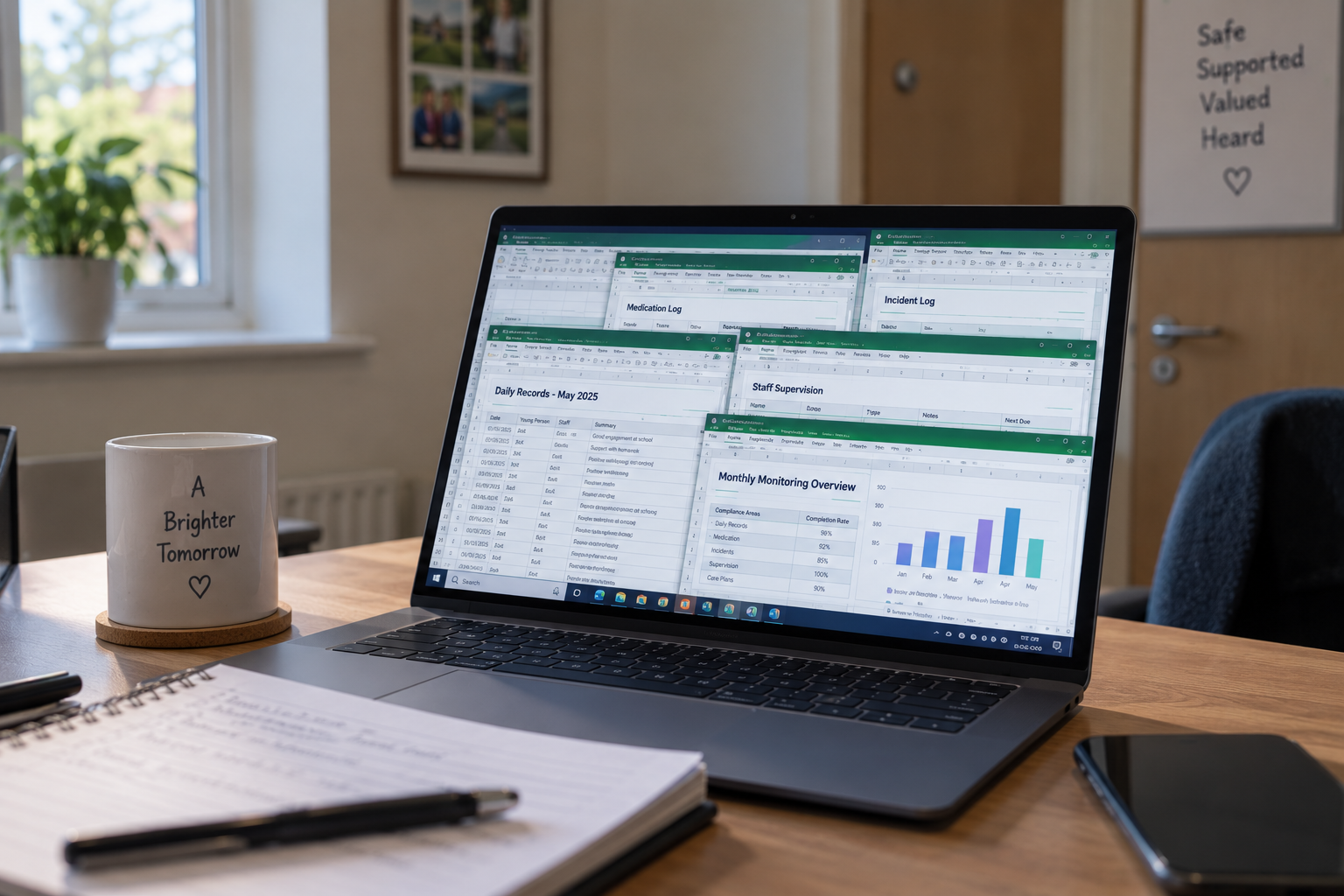
The morning review needs to be brief enough to happen every day and meaningful enough to lead to action. Read the records rather than scanning for green status indicators, because a record can be complete and still need a management response, a reflective debrief or an update to a risk assessment. Let handovers feed this process rather than repeat it. Careworkers should know what has to be communicated, what must be recorded before they leave, and who owns any next step. The manager can then see whether those actions happened, instead of chasing information across paper, messages and separate spreadsheets.
When a task is assigned it needs an owner and a due date. "Follow up with school" is too vague. "Deputy manager to contact school by 11am and record the outcome" creates accountability without making the task heavy, and if it is not done, the reason should be visible too. Sometimes a delay is the right call. As long as the reason is recorded and the task is still tracked, a delay is fine. A task that simply disappears is not. Connecting daily tasks to the wider care record keeps that ownership in one place.
Why Does the Context Matter More Than the Status?
A dashboard shows what is overdue or outside an expected threshold. It does not replace leadership judgement, and managers need time to weigh the context behind the numbers. If a child has had several hard days, look wider. Was there a change in staffing? Was family contact cancelled? Has there been poor sleep, a health concern or tension with a peer? Are staff recording consistently enough to see the triggers and the responses that helped? Daily information used this way supports child-centred care rather than just measuring it.
Workforce performance works the same way. A rise in recording gaps might reflect one person's practice, but it might also point to a team under pressure, unclear expectations, or a system that makes routine tasks harder than they should be. Fixing the cause does more than reminding staff to complete records. A live risk assessment system helps here, because it keeps the link between an incident and the controls that follow from it in view. Directors and responsible individuals need a view scaled to their role, too. They should not have to read every daily log to know a home is safe and well led. They need confidence that serious matters are escalated promptly, that recurring issues are visible, and that local managers are completing the actions that protect standards.
When Should You Escalate a Concern to Senior Leaders?
Not every concern needs a senior leader. Over-escalating creates noise and wears down confidence in the process, while under-escalating leaves leaders exposed and managers unsupported. Clear thresholds, agreed in advance, help a team make sound calls.
Safeguarding concerns, serious incidents, allegations, missing from home events and significant staffing risks need swift senior attention.
Events that need a management review before the day ends, including lower-level issues that are starting to repeat.
Everything else, followed as part of normal daily oversight, so nothing is dropped and nothing is over-escalated.
An escalation should carry more than a notification. The person receiving it needs to understand what happened, the immediate action taken, whether the child is safe, what is planned next and when an update will follow. That is what makes oversight useful rather than a box ticked. A calm process helps staff as well. A careworker should never be left alone with a serious concern because they are unsure who to tell or whether a record has been seen. Clear routes make professional responsibility visible and shared, which links closely to reporting across homes for providers running more than one service.
What Should Each Role See in the Daily Picture?
Careworkers, managers and directors each need a different view of the same daily picture. Show everyone everything and it becomes noise. Each role needs the slice of the picture that helps it act.
A straightforward way to record events, complete tasks and see what is expected on the shift, so recording feels part of care rather than admin.
An operational view of what is outstanding, what needs review and where risk is emerging, with the ability to evidence decisions and follow-up.
Assurance across homes: comparable indicators, visible variation, and informed questions without adding manual reporting for managers.
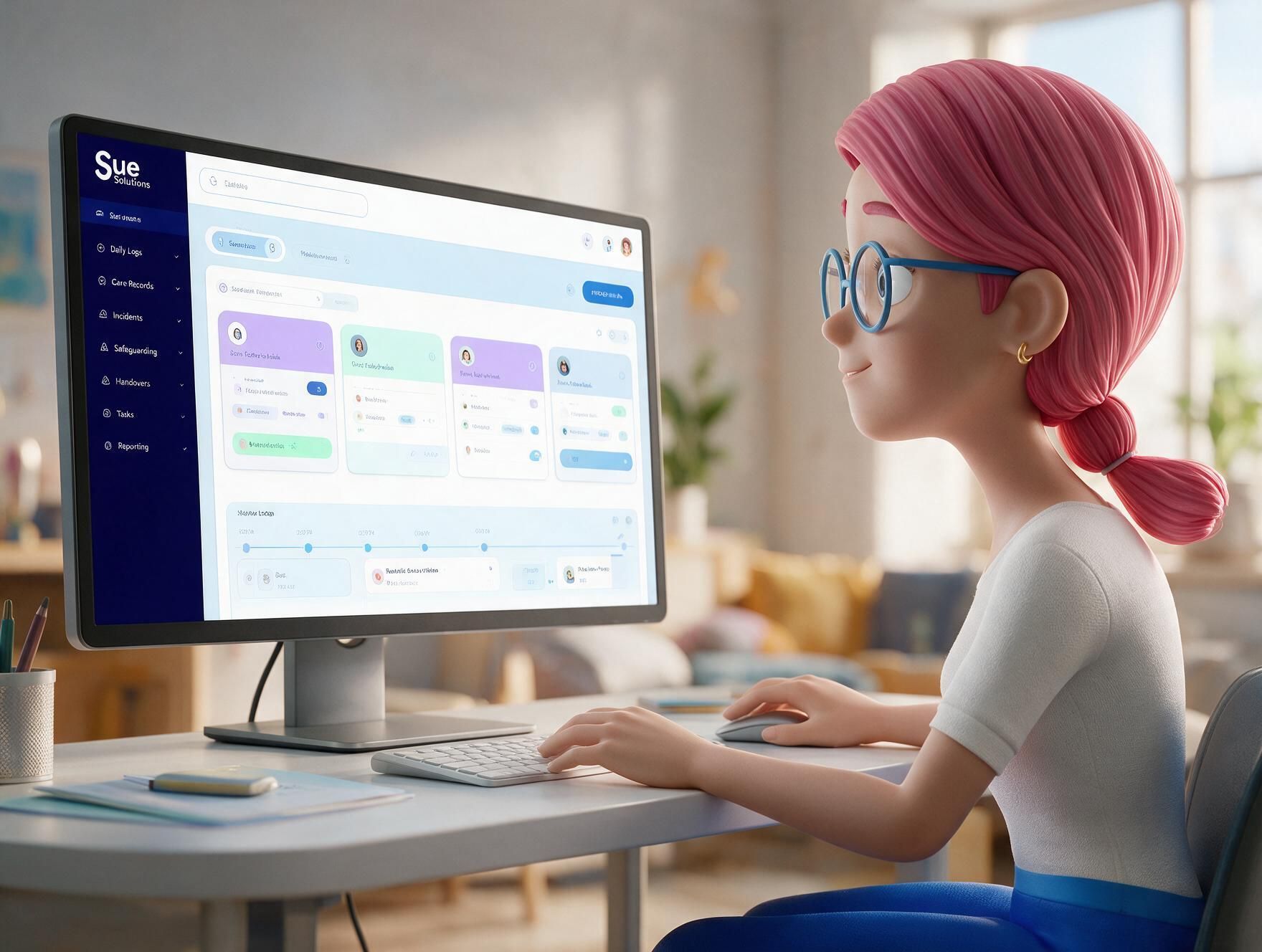
This matters more as an organisation grows. A process that runs on personal knowledge in one home will not give reliable oversight across five or ten. A platform built for children's residential care and supported accommodation can bring daily records, tasks, incidents, training and reporting into one operational view, which cuts the time spent gathering updates and gives every role information at the level they need to act. That is part of what good children's home management software is for.
Keep the Process Useful, Not Perfect
Daily monitoring fails when it turns into a tick-box exercise. Ask a team to check too many measures and they will focus on completion rather than reflection. Review the process regularly and drop any check that does not lead to a decision, a conversation or an action. At the same time, do not treat a completed dashboard as proof that a home is doing well. Spend time in the home, listen to staff and young people, and test whether the recorded picture matches daily life. This is the same triangulation an inspector uses, comparing records against practice and the child's own experience. The data gives direction, and leadership gives it meaning.
The best daily monitoring process is the one your team trusts. When staff can see that concerns are noticed, actions are followed through, and good work is recognised, recording becomes part of safer, more consistent care. That is how a daily check becomes more than compliance, and turns into a dependable way to keep a home steady and act early. The same care that goes into reducing admin without reducing standards applies here. Sue Solutions was built for that, by people who worked in the sector, across children's residential homes and supported accommodation.
Frequently Asked Questions
Daily monitoring is an early warning system. It gives a registered manager a picture of what is happening now, what needs attention next, and what may be becoming a pattern, while the details are current and something can still be done. A monthly or quarterly audit is for trends, measuring improvement and governance assurance. They do different jobs, and a home needs both.
Bring together safeguarding, care delivery, workforce readiness and operational risk. That means the incidents, safeguarding concerns, missing from home episodes, restraints and notifications that need review, the medication and health actions, the staffing, supervision and training that affect safe practice, the key work, education, contact and care-plan actions, and the outstanding tasks or records left incomplete at the end of a shift.
Agree one consistent set of indicators so monitoring does not vary between managers, give the review a fixed place in the day rather than a rushed late check, and use handovers to feed the process rather than duplicate it. When information already sits in one place, the daily review reads what is there instead of chasing it across files, messages and spreadsheets.
Agree clear thresholds in advance. Safeguarding concerns, serious incidents, allegations, missing from home events and significant staffing risks usually need swift escalation, and repeated lower level issues need attention when they point to a developing concern. Each escalation should carry what happened, the immediate action taken, whether the child is safe, what is planned next and when an update will follow.
No. A dashboard shows what is overdue or outside a threshold, but a green status is not proof of good care. Spend time in the home, listen to staff and young people, and test whether the recorded picture matches daily life. The data gives direction, and leadership gives it meaning.
Yes. Ofsted expects leaders to know their service and act on what they see, rather than prepare evidence at the last minute. When daily monitoring is consistent, records, actions and management oversight build as the work happens, so inspection readiness becomes a by-product of running the home well. It also mirrors how inspectors work, comparing records against staff practice and the child's own experience.