Data Visibility Across Children's Care Homes
Data visibility across care homes is being able to see the right operational information, for the right home, at the right time, without chasing for it. Get it right and problems surface while they are still small. Get it wrong and a manager spots a missing follow-up at quarter past eight while a director only hears about it three days later, buried in a weekly report.
In children's residential care that gap is where stress builds, actions slip and oversight starts to feel reactive. This is a look at what visibility really means, what fragmented information costs, and how to give each role the view it truly needs.
For children's residential providers, this is not a nice extra. It touches safeguarding, staffing, compliance and quality of care, and the confidence leaders have in what is really happening across the service. When information sits in separate spreadsheets, paper files, inboxes and staff memory, even strong teams work with partial pictures. That makes it harder to support homes before a small issue becomes a bigger one.
What Data Visibility Across Care Homes Really Means
Visibility is not the same as more reports. It means seeing live, relevant operational information for each home without asking three people and waiting a day. A registered manager might need to know whether daily tasks, key work sessions and medication records are complete. A responsible individual may need to compare incidents, restraints, missing from home episodes, staff training and audit outcomes across several settings. A director needs confidence that growth is not quietly creating blind spots.
Context is what turns figures into something useful. A dashboard full of numbers helps no one if nobody can tell what needs attention. The systems that earn their place surface patterns, exceptions and overdue actions plainly, so leaders act early rather than after the fact.
That matters more in children's homes, where a single figure rarely tells the whole story. A rise in incidents in one home could point to placement pressure, a staffing challenge, a recording habit, or a young person going through something hard. Visibility should help a team ask a sharper question, not jump to a tidy conclusion. That is the real test of whether a system is built for this work.
In a children's home, one number is a prompt to look closer, not an answer on its own.
Why Fragmented Information Causes Problems
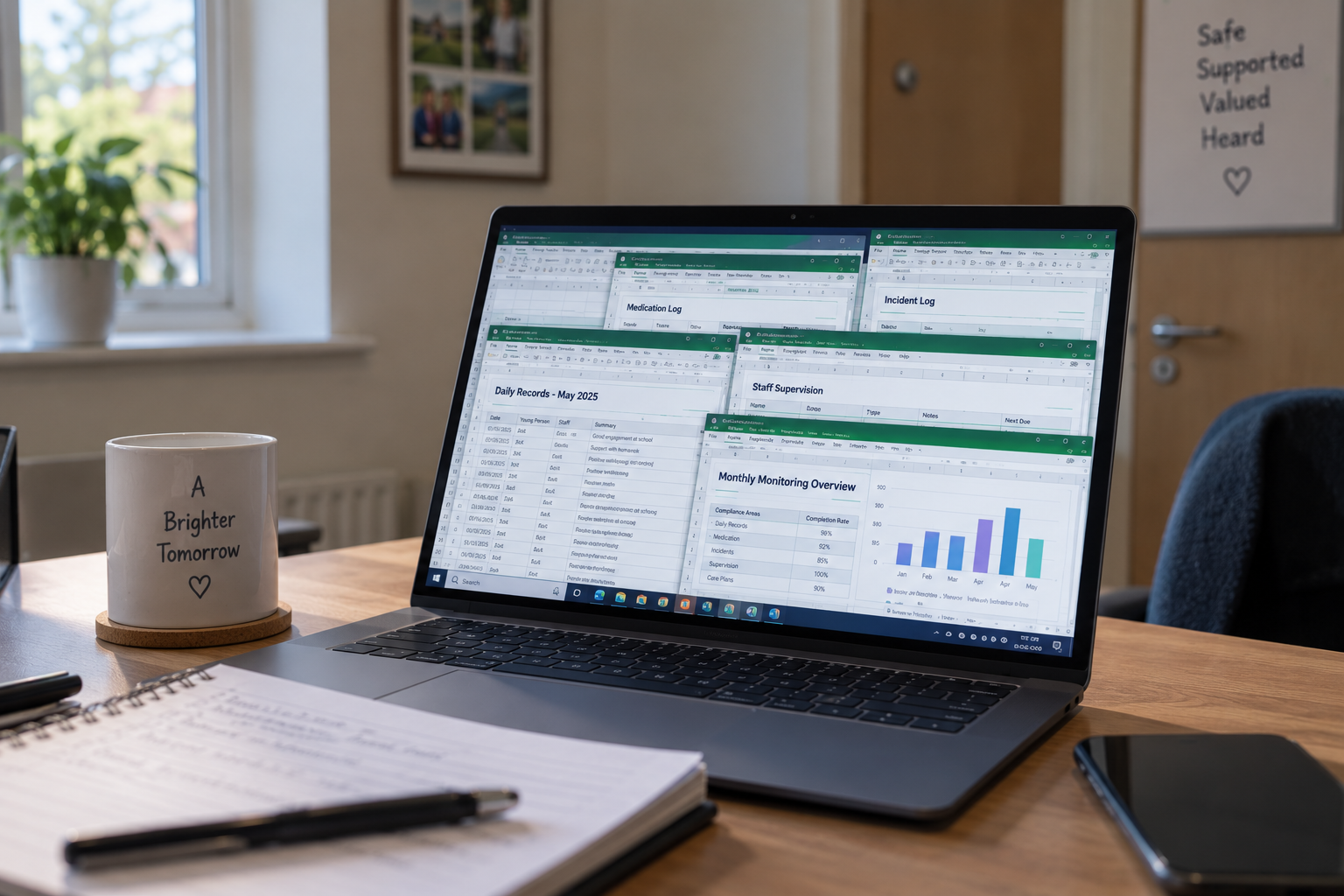
Most providers do not struggle for want of committed staff. They struggle because information is spread too widely and updated too unevenly. One home records an event straight away. Another logs it at the end of the shift. Training sits in one place, maintenance actions in another, supervision notes somewhere else again. Leaders then spend real time assembling a service-wide picture by hand.
That manual effort carries its own risk. A report can be out of date by the time it is finished. Actions get duplicated, missed, or assigned with no follow-up. Managers feel they are chasing updates rather than leading their homes. Directors can end up too far from the operational reality, which bites hardest in multi-home groups. If you are weighing this up as you grow, our guide to multi home care reporting software covers what changes when one service becomes several.
There is a human cost too. Frontline staff usually carry the burden of duplicate entry and last-minute requests for figures. In an already demanding job, that admin pulls attention away from children and young people. Better visibility should lift that weight, not add to it, which is why reducing admin without reducing standards and improving oversight are really the same project.
How Visibility Changes at Each Level
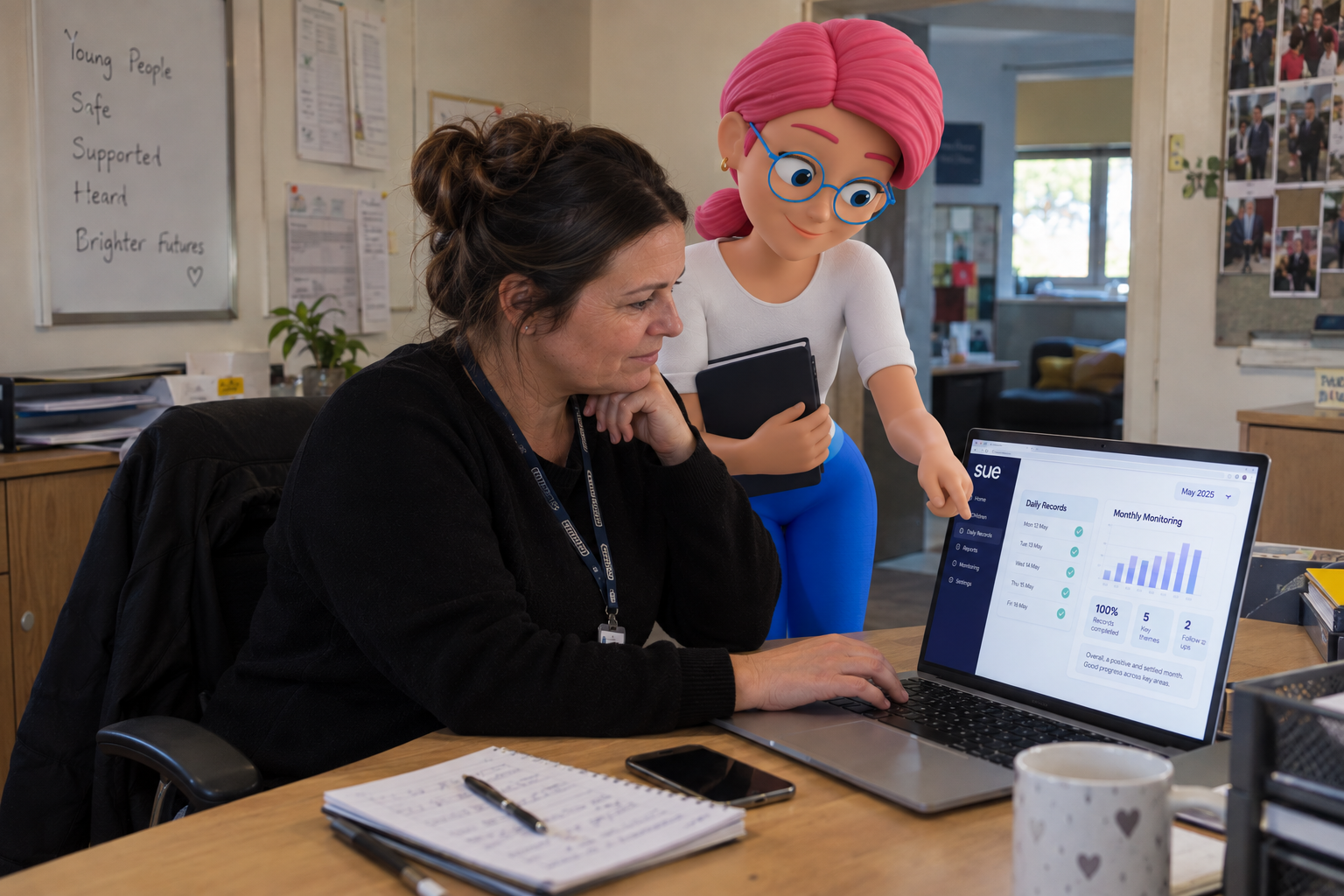
The reason role-based visibility works is that a careworker, a manager and a director each need a different view of the same information. Showing everyone everything is not generous. It is just noise. The point is to make each person more effective in their own responsibilities.
What needs recording, what is done, and what still needs attention before handover. Fewer loose ends passed to the next team, and less uncertainty about whether something was captured.
Outstanding tasks, patterns in incidents, compliance activity and staffing pressure, without waiting for separate updates. It becomes easier to see where the home needs support and where practice is healthy.
Comparison across homes without losing local detail. Trends across the organisation, whether policy is applied consistently, and where risk is building early enough to act. Growth tends to expose weak information flow long before anything else.
Strong support plan monitoring is a good example of the same information serving three people at once. A careworker sees the current plan at the start of a shift, a manager sees whether reviews are on time, and a responsible individual sees consistency across the service, all from one record rather than three versions of it.
Better Visibility Supports Safer Decisions
In children's residential care, delayed information usually means a delayed decision. That can affect a safeguarding follow-up, a placement response, a staffing call or regulatory preparation. When leaders see a concern sooner, they are better placed to act proportionately.
Good visibility does not mean escalating everything to the top. In fact it helps an organisation decide what should stay local and what needs wider attention. A home manager should be equipped to resolve day-to-day issues with confidence, while senior leaders catch the repeated concern across homes that no single service would notice on its own. Linking incidents to the wider record is part of this, which is where clear risk assessment software earns its place, prompting a review when an incident is logged rather than leaving the two disconnected.
It also improves handovers between levels of responsibility. Instead of a verbal update or a flood of emails, everyone works from a shared operational picture. Accountability tends to improve, because it is clear what was recorded, what action was assigned, and whether it was closed. A dependable audit trail is what makes that hold up weeks later.
Inspection Readiness Is Stronger When Information Is Visible Every Day
Plenty of providers know the feeling of scrambling before an inspection, pulling files together, checking for gaps, chasing signatures and trying to prove oversight after the fact. The pressure is not only administrative. It can shake the confidence of a whole team.
Consistent visibility changes the shape of that. When records, actions, audits and management checks are captured and monitored as normal practice, readiness becomes part of daily operations rather than a separate project. You are not recreating the story of the home at short notice, you are already holding a clearer, more accurate version of it. That is close to what Ofsted looks for in records: a trail that was built as the work happened.
Software alone does not create good practice. Weak recording habits and thin management oversight are not fixed by a dashboard. But the right digital structure makes good practice easier to hold consistently, which matters most across several homes where standards need to stay steady even as teams, occupancy and pressure change.
What Good Visibility Looks Like in the Real World
It tends to share a few features. Not a longer feature list, but these, working together.
- One version of the truth. Incidents, tasks, checks, training, staff records and home-level performance sit in a single operational environment rather than scattered across disconnected tools.
- Role-specific views. A careworker does not need a director's screen, and that is a strength. Each person sees what makes them effective in their role.
- Timely, not just historic. A monthly report has its place, but in a fast-moving setting it cannot be the only way leaders understand performance. Homes need current information.
- It drives action. If a system shows a missed supervision or a recurring incident but does not help the team respond, the visibility is only half done.
If you are comparing systems against this standard, our rundown of the top tools for care managers is a useful companion, and the practical guide to compliance shows how the same records carry the regulatory weight too.
Signal or Noise, the Difference Is the Design
The gap between a system that helps and one that overwhelms is not the amount of data. It is whether the data is shaped into something a busy person can act on. The same week's information can land either way.
- Every figure shown with equal weight
- Patterns left for the reader to spot
- Reports that describe last month
- Numbers with no route to the record behind them
- Exceptions and overdue actions surfaced first
- Trends drawn out, with the detail one click away
- Current information, updated as work happens
- A clear next action attached to what it shows
The Honest Trade-Off, Visibility Needs Discipline
There is a real trade-off worth naming. The more visibility an organisation wants, the more consistent recording has to be. If teams use different language, log information late or work around the system, the quality of oversight drops with it.
This is why usability matters so much. Staff keep records accurate when the system fits the reality of residential care rather than forcing awkward workarounds. Software here has to support people under pressure rather than slow them down. Get that wrong and the visibility you built rests on data nobody trusts.
Good operational oversight should feel supportive, not punitive. The aim is to help homes succeed, spot pressure early and give managers what they need to hold standards with confidence. Treat visibility as surveillance and recording quality falls, which quietly undermines the very thing you were trying to see.
From Reactive Reporting to Controlled Operations
The real shift is cultural as much as technical. Organisations with poor visibility work in bursts, chasing updates, answering urgent queries, preparing for inspections and stitching fragmented information back together after a problem surfaces. Organisations with good visibility are still busy, but they are steadier. They can see what is happening, where support is needed, and how performance is moving over time.
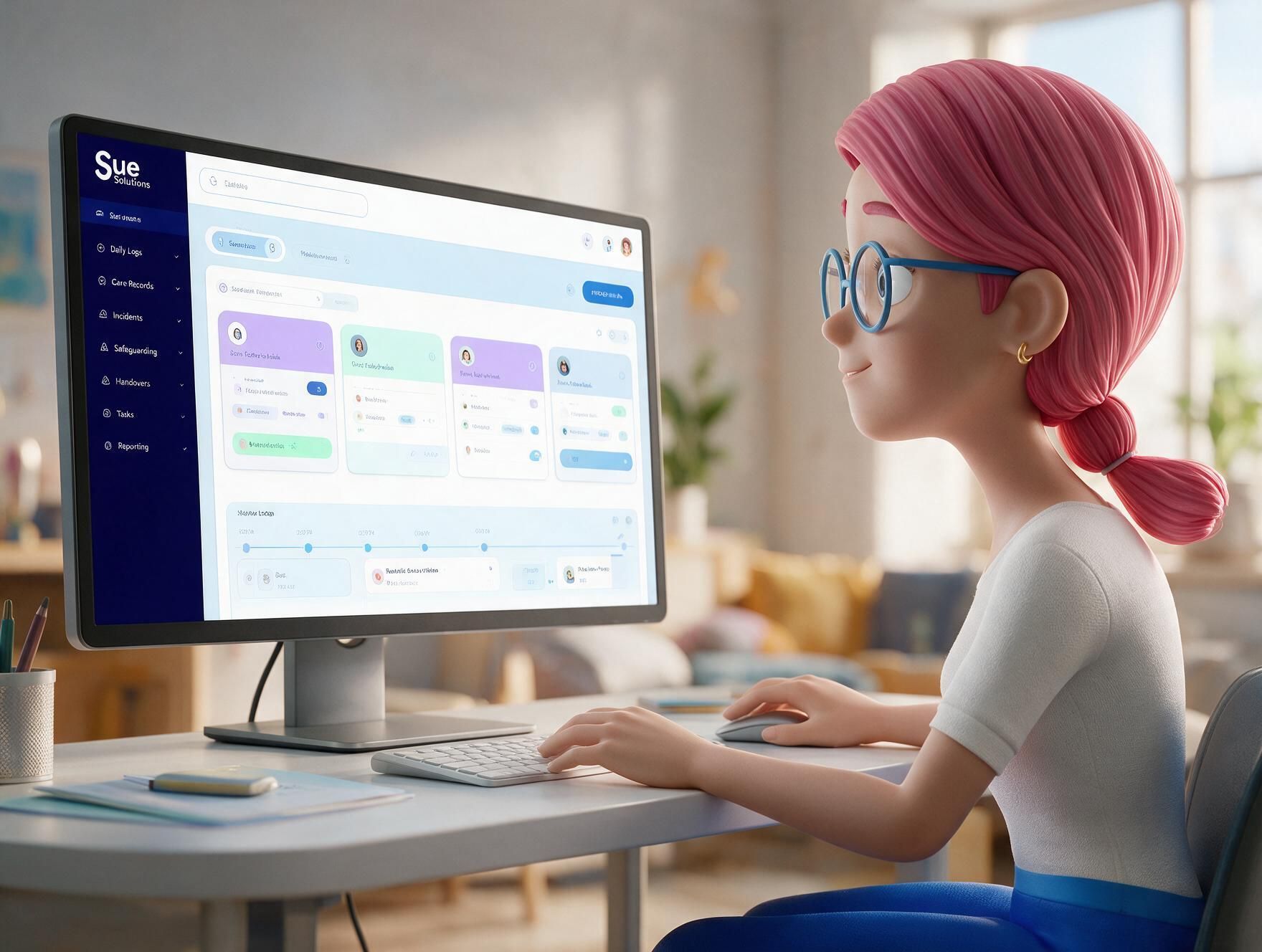
Sector fit is what makes the difference. In a children's residential setting the details matter, so the software needs to understand incident workflows, compliance demands, staffing oversight and the pressure of home management. Sue Solutions was built around those realities by people who worked in the sector, giving each level of the organisation a clearer view across children's residential homes and supported accommodation, each recorded against the standards that apply to it.
When leaders can trust the information in front of them, they spend less time chasing and more time leading. When managers can see what matters quickly, they support staff and young people more effectively. And when frontline teams are not buried in duplicate admin, they have more capacity for the work that counts. Better data visibility across care homes is not about collecting more for its own sake. It gives your people a clearer view, stronger accountability and a calmer way to run high-pressure services, and in a sector where small gaps carry serious consequences, that clarity is part of good care.
Frequently Asked Questions
Data visibility across care homes means being able to see live, relevant operational information for each home without chasing for it. In children's residential care that includes daily tasks, incidents, medication, staffing, training and audit outcomes, shown so that patterns, exceptions and overdue actions are clear. The aim is not more reports. It is the right people seeing the right information early enough to act.
When information sits in separate spreadsheets, paper files, inboxes and staff memory, leaders piece the picture together by hand. Reports go out of date as they are produced, actions get duplicated or missed, and directors sit too far from what is happening on the ground. In a sector where a delayed safeguarding follow-up carries real consequences, that lag is a safeguarding and compliance risk, not just an admin inconvenience.
If records, actions, audits and management checks are captured and monitored as part of normal practice, inspection readiness becomes part of daily operations rather than a separate scramble. You are not recreating the story of the home at short notice. You already hold a current, accurate version of it, which is what inspectors expect to see.
No, and treating it that way undermines it. Good operational visibility is meant to feel supportive and structured, helping managers spot pressure early and resolve day-to-day issues confidently. It surfaces exceptions and patterns so leaders can offer support, not to monitor every keystroke. If staff experience it as surveillance, recording quality drops and the visibility becomes unreliable.
Yes. A responsible individual or director needs one view across children's residential homes and supported accommodation services, while each service is recorded against the standards that apply to it. The frameworks differ, so the records differ, but the principle holds: consistent recording feeding a shared operational picture, filtered by role and service.