5 Signs Your Care Home Tools Are Working Against You
Most children's homes do not lack technology. They have a system for incidents, a spreadsheet for training, a rota tool, an inbox full of updates. The problem is rarely too little software. It is software that adds work instead of removing it, a few minutes here and there, until chasing information is just how the home runs.
Tools that work against you do not come with a warning. It shows up in smaller ways: a manager staying late to pull a report together, a careworker who meant to log something and forgot, an inspection week that turns into a scramble. Here are five signs worth taking seriously, what each one costs, and what good looks like instead.
- You check three places to answer one question
- Staff record it later, or not at all
- You only spot patterns once they are problems
- Inspection prep means a scramble
- Your reports tell you what, but never why
You Check Three Places to Answer One Question
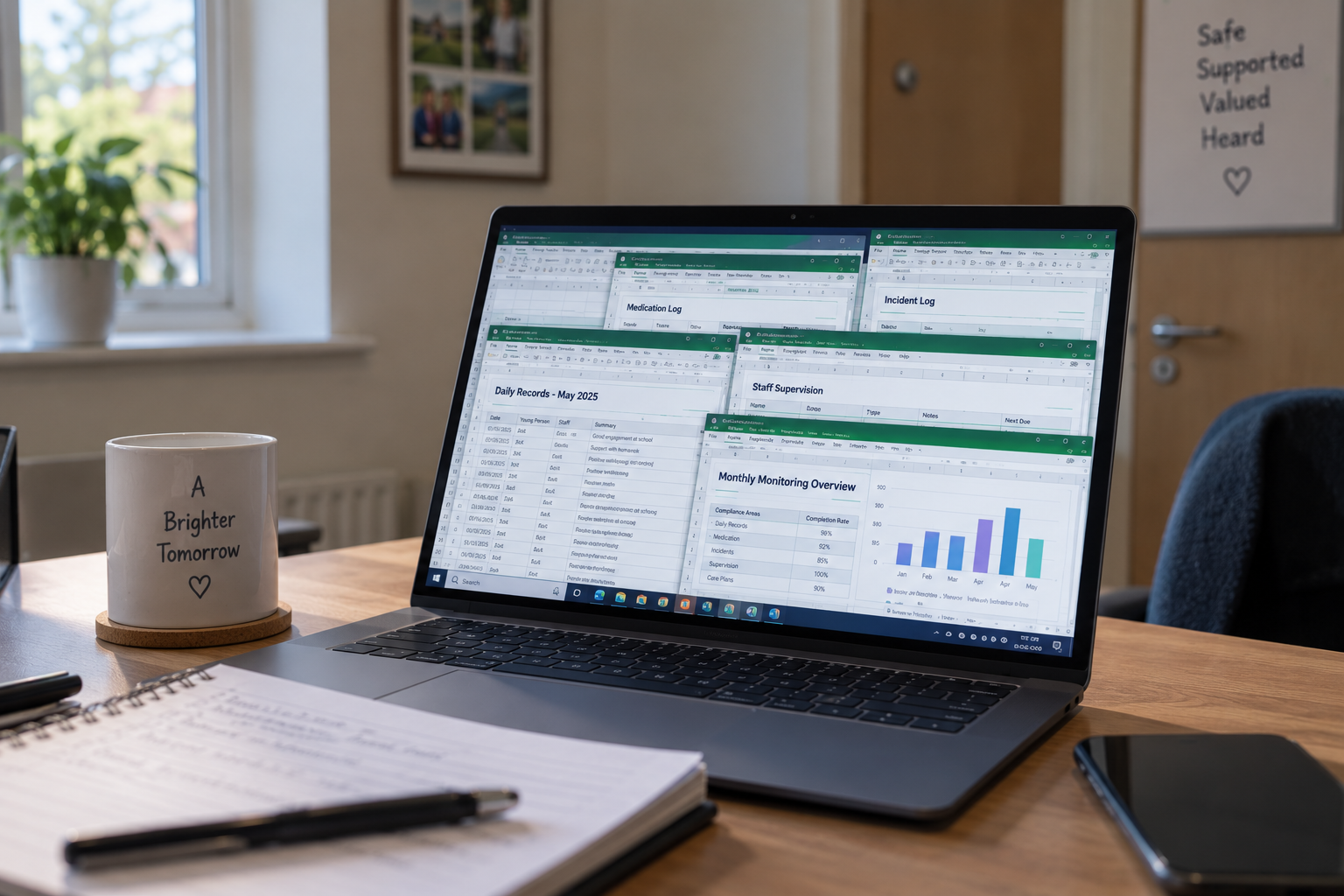
A manager wants to know why one home feels harder this month. Incidents are in one system, training compliance in another, staffing pressure in the rota tool, and the fuller story in people's heads. Each source is fine on its own. Together they never quite line up, so the answer takes an afternoon of cross-referencing instead of a glance.
This is the most common sign, and the easiest to normalise. Teams get so used to assembling the picture by hand that they stop noticing the effort. It is still a cost, and still a risk, because the gaps between those sources are where problems tend to sit.
Slow answers, blind spots between systems, and a manager who spends the day chasing rather than leading. Risk that sits across two tools goes unseen in both.
One operational view where incidents, tasks, compliance and staffing sit together, so the question is answered in a glance and the connections are visible. Our piece on data visibility across care homes goes deeper on this.
Staff Record It Later, or Not at All
If logging an incident means opening a laptop, finding the right form and working through fields that do not fit what happened, a busy careworker will do it at the end of the shift, from memory, or not at all. The system has taught the team to record less. On a calm day that is a gap. On a hard day it is a safeguarding record that never gets written while it is fresh.
Usability is not a nicety here, it is what determines whether your records are reliable. A tool that fits the pace of a residential shift gets used properly. One that fights the pace gets worked around, and every workaround is a hole in the evidence base.
Thin or late records, detail lost between the event and the entry, and recording quality that drops exactly when pressure is highest and accuracy matters most.
Quick recording on a phone or tablet during the shift, with prompts that fit residential childcare. A strong safeguarding incident recording approach guides the account without slowing the person down.
A record your team records late, or not at all, is the system telling you it does not fit the shift.
You Only Spot Patterns Once They Are Problems
A run of incidents at the same time of day. A young person whose presentation has shifted over three weeks. A home where a particular concern keeps recurring. These patterns are visible early if the information is joined up, and invisible if each event sits in isolation. Tools that only store events, without helping anyone see across them, leave you reacting to the serious version of a problem you could have caught small.
The shift from reactive to proactive is not about more data. It is about the system surfacing the theme rather than leaving a manager to notice it by memory across dozens of separate entries. That connection is where early, proportionate action becomes possible.
Late intervention, repeated concerns that were foreseeable, and decisions made after an issue has grown rather than while it was still manageable.
Incidents linked to the wider record, so a logged event prompts a review of the relevant risks. Clear risk assessment software keeps those connections live rather than leaving them to chance.
Inspection Prep Means a Scramble
If getting ready for inspection means pulling files together, chasing signatures and reconstructing the story of the home at short notice, the tools are working against you. Readiness built in a fortnight of late nights is fragile, and inspectors can usually tell the difference between evidence that was lived and evidence that was assembled.
The alternative is not more effort before an inspection. It is a system where records, actions, audits and management checks are captured as normal practice, so the evidence is already current. Readiness stops being a project and becomes a by-product of running the home well, which is close to what Ofsted looks for in records.
Days lost to preparation, a team under strain before the inspection even starts, and gaps that only surface when there is no time left to fix them properly.
A current, accurate picture held day to day, so audits and checks build as the work happens. The practical guide to compliance sets out how that habit forms.
Your Reports Tell You What, but Never Why
A dashboard that shows incidents are up ten percent has told you something, and almost nothing. Up because of a staffing gap? A pattern in one young person's needs? Incomplete follow-up? Inconsistent recording between homes? A report that counts events without letting you reach the record behind them leaves a manager with a number and no next step.
This matters most for responsible individuals and directors who cannot be in every home every day. A figure with no route to its cause invites the wrong conclusion. The useful version draws out the trend and keeps the detail one click away, so the number becomes a question you can answer.
Confident-looking reports that mislead, decisions made on a headline figure, and senior leaders who feel informed while sitting a step away from what is really happening.
Reporting that surfaces exceptions first and links straight to the underlying records. Our look at multi home care reporting software covers what that needs across several services.
Why Disconnected Tools Create the Most Pressure
It is tempting to solve each of these signs with a separate purchase, a better incident tool here, a training tracker there. Sometimes that works, especially where a provider already has strong systems in place. More often it deepens the first sign, because now there is one more place to check.
For children's homes, the value usually comes from joining information up rather than adding to it. When records, actions, compliance and oversight sit together, a manager can see that overdue training, rising incidents and a staffing gap are the same story rather than three unrelated ones. A set of tools and a system are not the same thing, and it is why reducing admin without reducing standards depends on connection rather than on better individual apps.
The Test Worth Applying
Every provider has heard software promises before. One question matters more than the feature list. Does this give managers and staff time back without reducing quality? If it speeds up oversight, improves accountability and removes duplicated admin, that time goes back into staff support, young people's needs and stronger leadership on the floor. If it does not, a longer feature list will not save it.
- Does it reflect children's residential care and supported accommodation specifically, not care in general?
- Will staff use it properly on a busy shift, or work around it?
- Does each role get the view it needs, rather than the same screen for everyone?
- Does it replace fragmented processes, or add another layer alongside them?
Hold tools to that standard rather than to the length of their feature list or the polish of the demo. A tool earns its place when it helps a home run with more clarity, less chasing and fewer avoidable surprises, especially when the pace is at its toughest.
What Changing It Frees Up
Care managers carry a great deal of responsibility, often under relentless pressure. The right system should take weight off the team, helping them stay on top of what matters, evidence good practice properly and hold standards without making the day harder than it already is.
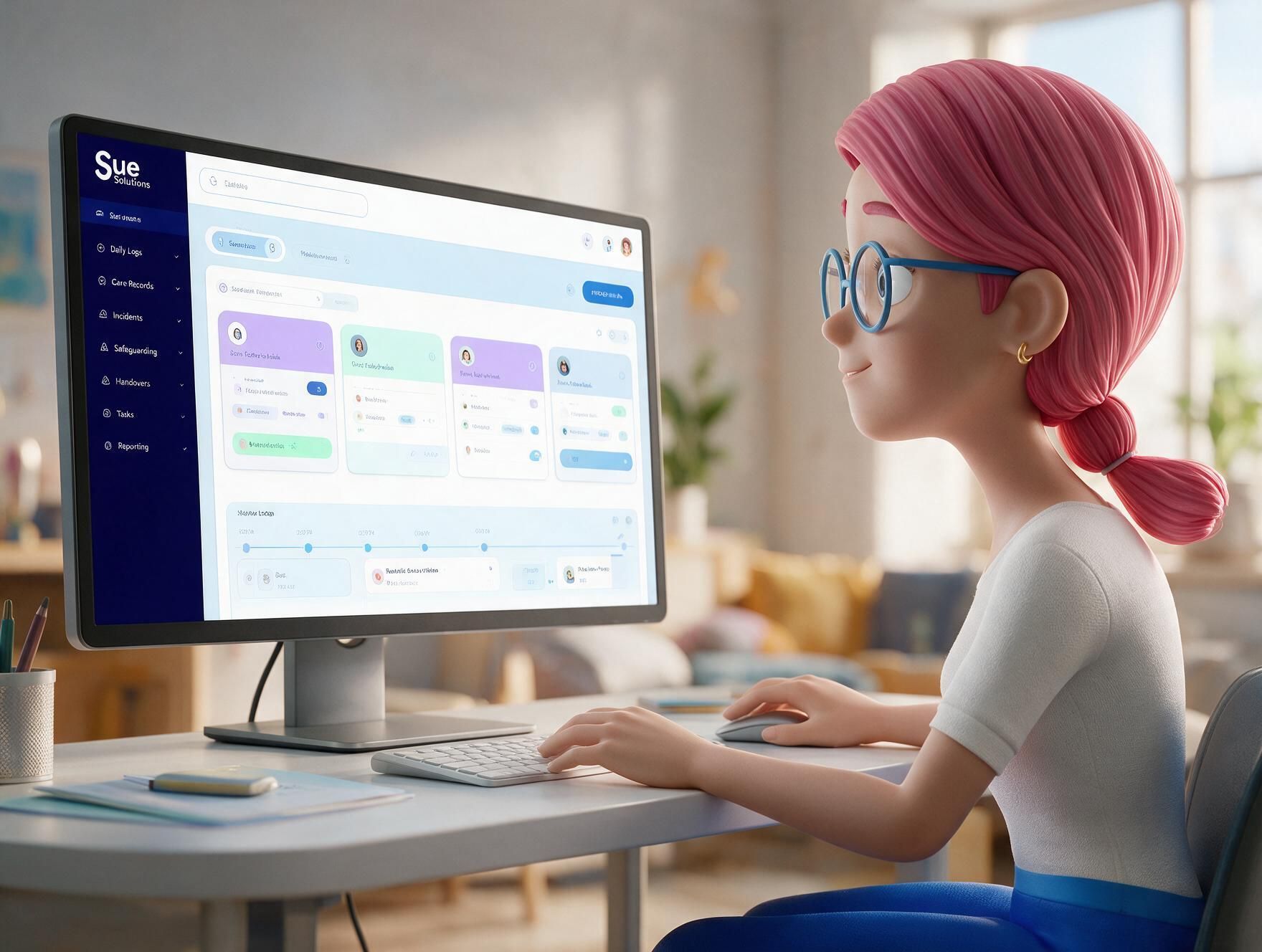
Sue Solutions was built for exactly this, by people who worked in the sector. It brings safeguarding, incidents, compliance, workforce and reporting into one operational backbone across children's residential homes and supported accommodation, each recorded against the standards that apply to it, so information entered once supports oversight, compliance and reporting rather than being rewritten three times. When the tools stop working against the team, the time they give back goes to the children and young people in the home.
Frequently Asked Questions
The clearest signs are practical. You check several places to answer one question, staff record late or not at all because the system is slow on shift, you only notice patterns after they have become problems, inspection prep turns into a scramble, and your reports tell you what happened but never why. Each one points to tools that store information without helping your team act on it.
When incidents, staffing, training and reporting each live in a separate system, no single view connects them. A manager might see overdue training in one place and rising incidents in another without seeing that they are linked. That fragmentation hides operational risk and forces leaders to assemble the picture by hand, which is slow and easy to get wrong under pressure.
No. The useful test is whether the tool gives managers and staff time back without reducing quality. A long feature list means little if the system is slow on shift, sits apart from daily work, or stores information without helping anyone act on it. Sector fit and everyday usability matter more than the number of features.
Check four things. Does it reflect children's residential care and supported accommodation specifically, will staff use it properly on a busy shift, does it give each role the view it needs rather than the same screen for everyone, and does it replace fragmented processes rather than add another layer alongside the spreadsheets and email trails you already run.
Yes. When tools cut duplication and join information up, managers complete oversight faster and accountability improves, which frees time for staff support and young people's needs. Joined-up records also surface risk earlier, so teams respond before a small issue becomes a serious one. The goal is time given back to care, not technology for its own sake.